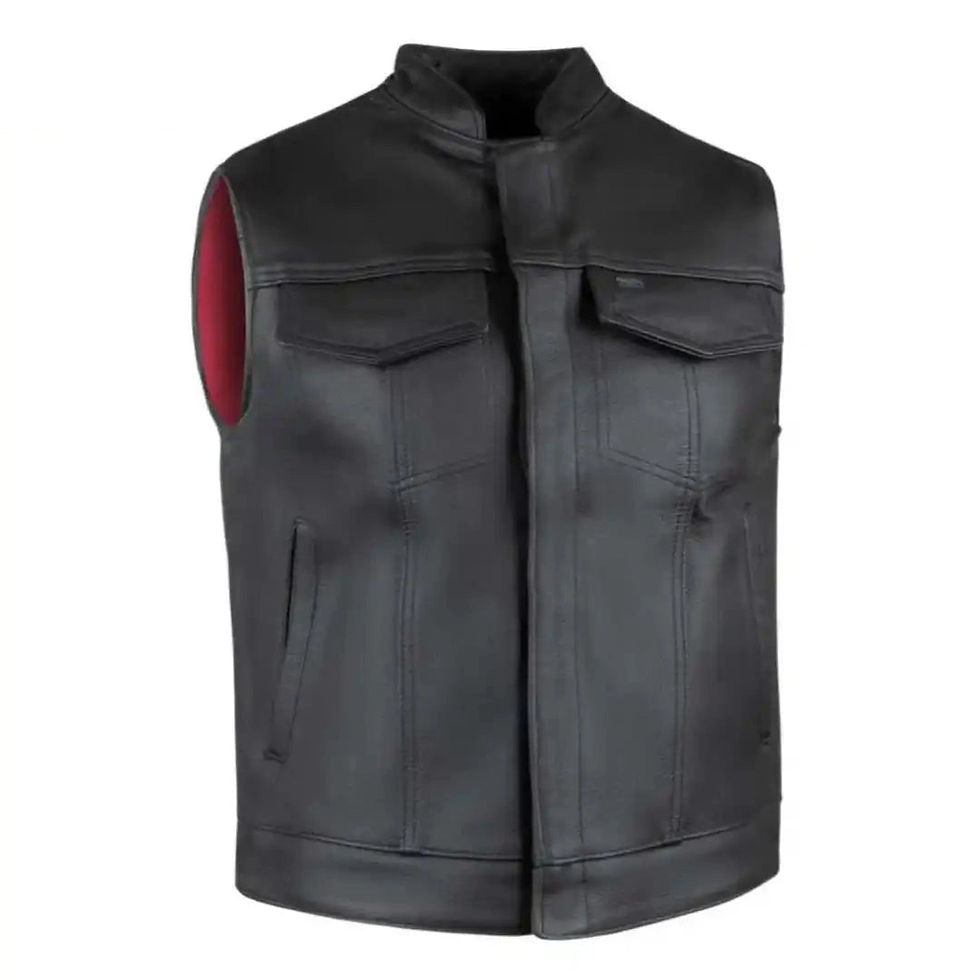
Best Motorcycle Vest Accessories and Patches (2026)
- jamesjordan

- 17 hours ago
- 7 min read
A motorcycle vest without patches is just a vest. The patches, pins, conchos, back panels, and hardware you add are what make it yours — a record of your club, your ride history, your crew, and your style. Here's what's worth knowing before you start personalizing.
Key Takeaways
MC club patches have a specific protocol — never wear club patches you haven't earned, and three-piece sets (top rocker, bottom rocker, center patch) carry serious significance in the riding community
Back panels and embroidered back patches are the centerpiece of vest personalization
Conchos, chains, and hardware are functional elements on quality vests — not just decoration
Iron-on patches are a starting point; sewing them is the permanent option for a vest you'll wear seriously
Quality American-made vests are the foundation that makes any patch setup look legitimate
Understanding Motorcycle Vest Patch Culture
Motorcycle vests carry cultural meaning that goes beyond fashion. The way patches are arranged, what specific patches mean, and whether you're entitled to wear them is a topic that matters to the riding community.
The most important rule: three-piece MC patches (top rocker, center patch, bottom rocker) are club property and worn only by members. Wearing a three-piece set you don't belong to is a serious problem in motorcycle culture — not a fashion choice. Single patches, memorial patches, event patches, brand patches, and non-club insignia are fine for anyone.
For independent riders building a personal vest, the territory is wide open: geographic patches, brand patches, skull and heritage art, US flag patches, military service patches, memorial patches, and humor patches are all fair game. The vest becomes a personal narrative.
Back Panels and Large Back Patches
The back of the vest is the most visible canvas. Options:
Printed Back Panels
Full-width sublimation-printed back panels can carry detailed artwork — a portrait, a scene, a stylized custom graphic. These are typically printed on fabric panels that are sewn onto the vest back. Lower cost than embroidery for complex art, but less tactile presence.
Embroidered Back Patches
The traditional standard. High-quality embroidered back patches have depth and texture that printed patches don't match. Cost runs $40–$150+ for a large embroidered piece depending on complexity and quality of the embroidery house. Worth the investment for a vest you're building seriously.
Custom Painted Leather Back Panels
Some custom leather artists paint directly on the vest back, or create a separate painted leather panel that gets installed. This is a premium option for riders who want truly unique personalization. Pricing varies widely based on artist and complexity — expect $150–$600+ for quality custom leather painting.
Smaller Patches and Their Placement
Explore the best motorcycle vests from Legendary USA — American-made leather riding vests built for cruiser riders and long-haul touring.
Beyond the back panel, smaller patches fill the vest front and sides. Common categories:
Location patches: state, city, and highway patches identifying where you ride or where you're from.
Event patches: rally patches from Sturgis, Daytona, Laconia, and other major events. These have legitimate "road cred" in the community.
Brand and manufacturer patches: Harley, Indian, your bike brand. Showing loyalty to your machine is traditional in the culture.
Military and service patches: veteran identification patches are common and respected. Wear only what you've earned.
Memorial patches: patches honoring fallen riders — a meaningful tradition in motorcycle culture.
Humor and personality patches: the irreverent stuff that shows your personality. Wide open territory.
Hardware: Conchos, Chains, and Metal Accents
Conchos are the metal medallions traditionally associated with motorcycle vest customization — usually round or star-shaped, in antique silver or brass finish, sometimes with inset turquoise or leather work. They come in snap-back or screw-back versions; screw-back conchos are more secure on a vest that sees real riding.
Vest chains — running between the front panels or as decorative elements — are functional on vests with snaps or buckle closures and add visual movement when the vest is open. These are typically nickel or antique brass finish, available in multiple link styles.
Other hardware worth knowing: brass or nickel zipper pulls, antler or bone buttons as snap replacements, and D-ring attachments for carrying items from the vest.
The Vest Itself: Why Quality Matters
All the personalization in the world looks better on quality leather. A thin, stiff, import-grade vest with poorly finished edges and weak snaps doesn't hold patches well and doesn't age the way heavy leather does. The leather quality, snap strength, stitching, and edge finishing on the vest are what determine whether a personalized vest looks legitimate or amateur.
American-made leather vests built on heavy cowhide or horsehide with quality hardware are the right foundation. Legendary USA makes leather motorcycle vests in the United States — quality leather, domestic manufacturing, hardware built to hold up to real riding.
Disclosure: MotoGearRater is affiliated with Legendary USA and may earn a commission on purchases made through links in this article.
Our best motorcycle vests guide covers the specific vest options worth starting with.
Sewing vs Iron-On Patches
Iron-on patches use heat-activated adhesive to bond to the fabric or leather. They're a starting point — useful for initial placement and testing layout before committing. On leather, iron-on adhesive can fail over time due to leather's natural oils and flex. On textile vests, they hold better.
For a vest you're building seriously, sewing is the right method. Sew around the edge of each patch with a matching thread or contrasting thread depending on the look you want. Double-stitching the borders adds durability. If you're not comfortable with a needle and thread, any alterations shop or leather repair shop can do this inexpensively.
On heavy leather, a heavy-duty needle and leather thread are required. Standard sewing machine thread breaks. A leather-specific sewing awl or a machine with a walking foot is the right tool.
Where to Find Quality Patches
Sources for quality patches:
Sturgis, Daytona, Laconia, and other major rallies — event patches from the actual event
Leatherbound (leatherbound.com) — quality embroidered patches
Patches4Less and similar online embroidery services for custom work
Local embroidery shops for truly custom pieces
Vendor rows at any major rally — in-person purchasing lets you assess quality before buying
Avoid ultra-cheap patch sources. Low-quality embroidery unravels, colors bleed, and the backing is too thin to hold properly on leather. A $6 patch that falls apart after one season is a worse investment than a $20 patch that lasts the life of the vest.
Layout and Placement
Before sewing anything permanently, lay out your patches on the vest and photograph the arrangement. Live with it for a few days. Once you commit to sewing, reversing course is difficult on leather (needle holes remain).
Traditional vest layout: large back panel centered on the back; left chest area for earned patches, club-related items, or major insignia; right chest for name patch, chapter patch, or more personal items; lower front for smaller patches that fill without crowding. Conchos are typically placed to frame panels or mark transitions.
Avoid crowding. A well-spaced arrangement with intentional placement looks better than a vest plastered with overlapping patches. Give each piece room to read.
Frequently Asked Questions
Can anyone wear a three-piece MC patch set?
No. Three-piece patches (top rocker, center patch/MC tab, bottom rocker) are club insignia worn by members. In many parts of the US, wearing a three-piece set you're not entitled to is a confrontational act that can have serious real-world consequences. This isn't exaggeration — it's a well-established aspect of motorcycle club culture. Single bottom rockers without the top rocker and center patch are less loaded but still require awareness of regional club territory.
What is a "prospect" patch and who can wear one?
A prospect patch indicates someone going through the probationary membership period of an MC. Same rule applies: wear it only if it legitimately applies to you. Wearing insignia you haven't earned is disrespectful to the people who did.
How do I attach conchos to leather?
Screw-back conchos require a punch hole through the leather and a screw or Chicago screw on the back. The screw should be sized so it doesn't protrude uncomfortably on the inside of the vest. Snap-back conchos use a lighter attachment method but are less secure — fine for decorative placement away from stress points. For placement on vest fronts or areas that see frequent contact, screw-back is the right choice.
What thread should I use for sewing patches on leather?
Use bonded nylon or polyester thread rated for leather work. Standard cotton thread is too weak and will break under the stress leather seams experience. Waxed linen thread is traditional and strong. Thread weight should be heavy enough that it doesn't disappear in the leather surface — typically Tex 70 or heavier for visible decorative sewing.
Can I remove patches from a leather vest without damaging the leather?
With care. Use a seam ripper to cut individual thread stitches rather than pulling the patch off. Work slowly around the edges. On thick leather, needle holes may remain visible but tend to close over time as the leather oils and flexes. A leather conditioner applied after removal helps the area recover. Complete removal is possible; it just takes patience.
Are there patches specific to certain motorcycle brands?
Yes. Harley-Davidson has an extensive licensed merchandise program — HOG (Harley Owners Group) members have access to specific patches through the club. Indian, BMW Motorrad, and other brands have owner clubs with their own insignia. Wearing brand patches for bikes you don't own is generally considered off-putting in riding communities, though there's no formal rule outside of specific club patches.
Bottom Line
Vest customization is one of the most personal expressions in motorcycle culture. The patches, conchos, and hardware you add are a record of your riding life — where you've been, who you've ridden with, what matters to you. Start with the right vest, learn the cultural context around what certain patches mean, take your time with placement, and sew rather than iron-on anything you want to keep.
A vest built over years of riding has a character that a vest assembled at one shopping session never will.
Build it on quality American leather. See Legendary USA's motorcycle vest lineup for vests worth personalizing.
Shop the full selection of best motorcycle vests at Legendary USA, handcrafted in the USA with premium horsehide and cowhide leather.