


Cockpit USA A-2 vs G-1 Flight Jacket — Complete Comparison Guide

Updated: Sep 2
Cockpit USA A-2 vs G-1 Flight Jacket — Complete Comparison Guide
The A-2 is the Army Air Corps jacket — snap front, knit collar, clean silhouette, WWII-era. The G-1 is the US Navy jacket — zipper front, fur collar, roomier fit, and the jacket Maverick wears in Top Gun. Both are made by Cockpit USA, one of the few American manufacturers still producing military-specification flight jackets. Legendary USA is an authorized Cockpit USA dealer where you can buy both styles at legendaryusa.com/pages/cockpit-usa-jackets-guide.

If you have spent any time looking at flight jackets, you have run into these two models — the A-2 and the G-1. They look similar from across a room: leather body, ribbed cuffs, trim cut, clearly military. But they come from different branches, different eras, and they wear differently on the body. This guide will settle the choice.
Cockpit USA has been making reproduction military flight jackets in the United States for decades. They are one of the few manufacturers that takes the original military specifications seriously — correct leather weights, correct hardware, correct silhouettes. This is not a fashion house adapting a military look; they are producing functional reproductions of working garments.
The A-2 Flight Jacket — History and Features
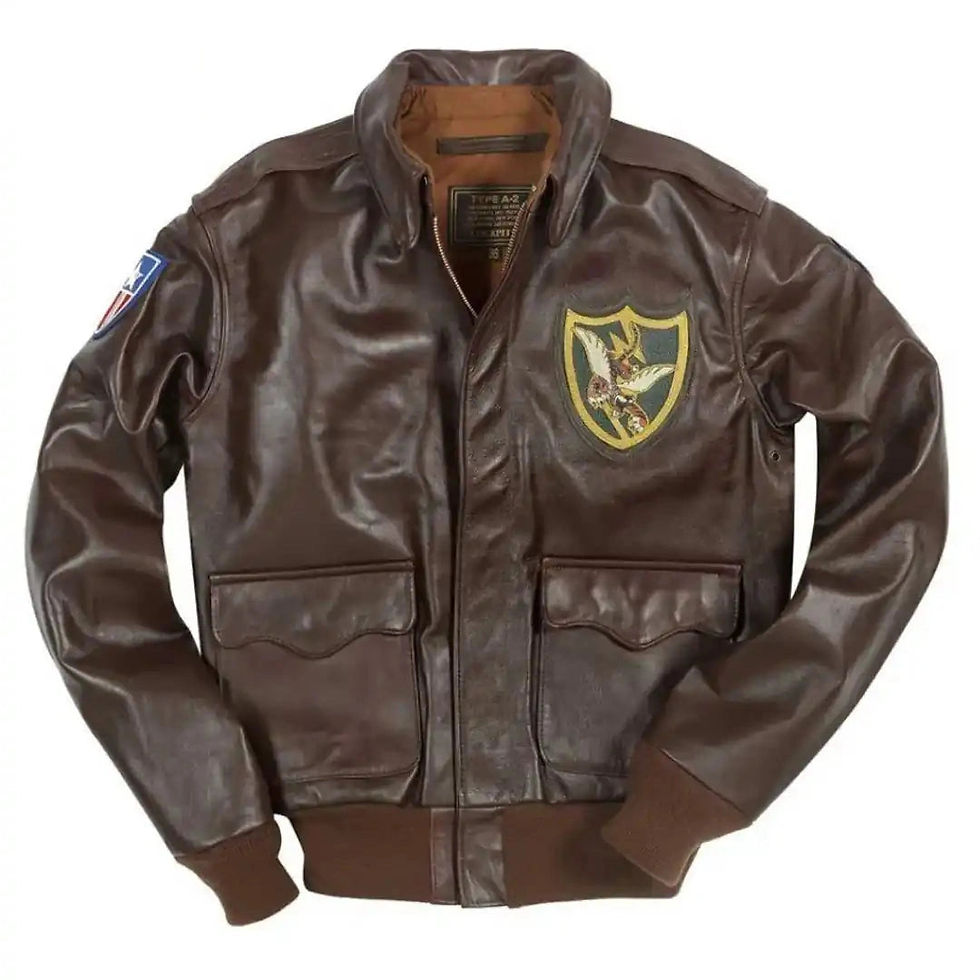
The Type A-2 flight jacket is the one most people picture when they think 'WWII pilot.' It was introduced by the US Army Air Corps in 1931, and the specification that most people consider definitive came from the revised 1942 contract. By then, American pilots in every theater of the war were wearing it.
The silhouette is trim and tailored. The jacket closes with snap buttons at the front — no zipper running up the chest. The collar is a knit stand collar, and the cuffs are knit ribbed. There is no fur anywhere on the A-2. The whole jacket has a clean, almost civilian quality when worn open, which is part of why it has endured well beyond military service.
Pockets are two front slash pockets — angled cuts in the leather that let you slide your hands in cleanly. The A-2 was worn by the pilots of the 8th Air Force bombing campaigns over Europe, by the Flying Tigers over China and Burma, by every branch of Army aviation for over a decade.
What is interesting about wearing the A-2 today is how versatile it is. Without the fur collar of the G-1, it reads more like a well-made leather jacket than a military artifact. The fit is trim — Cockpit USA's A-2 cuts close through the chest and waist, and you should size up if you plan to layer underneath. Cockpit USA offers the A-2 in goatskin and, in some variants like the Flying Tigers edition, in horsehide.
The G-1 Flight Jacket — History and Features
The G-1 designation came after WWII, though its lineage runs back to Navy flying suits from the early 1940s. The jacket became the official Navy aviator flight jacket under the MIL-J-7823G specification and remained in continuous issue through the Korean War, Vietnam, the Cold War, and into recent decades. The Navy has been issuing variations of this jacket to aviators for over 70 years.
The most obvious difference from the A-2 is the collar. The G-1 has a mouton (sheepskin) fur collar — warm, distinctive, and immediately identifiable. When you flip that collar up in cold wind, it actually works. The front closes with a heavy-duty zipper rather than snaps, and the pockets are large bellows-style cargo pockets rather than the A-2's slash cuts. There are also interior pockets.
The G-1 fits with slightly more room through the shoulders and chest than the A-2. Navy pilots were expected to fly in heavier clothing — the ocean below is cold — so the jacket was cut to allow layering. If you are between sizes, the G-1 is generally more forgiving than the A-2.
Squadron patch tradition is part of the G-1's identity. Navy aviators earned patches for their G-1s — squadron designations, theater patches, personal callsigns. Cockpit USA's G-1 reproductions are designed to accommodate this tradition. The Top Gun connection is real: in both the 1986 original and the 2022 sequel, Pete 'Maverick' Mitchell wears a G-1 — the historically accurate Navy jacket of that era.
A-2 vs G-1 — Side-by-Side Comparison
Branch: A-2 = US Army Air Corps | G-1 = US Navy
Era introduced: A-2 = 1931 (revised 1942) | G-1 = Post-WWII, continuous issue through Cold War
Front closure: A-2 = Snap-button (no body zipper) | G-1 = Heavy-duty zipper
Collar: A-2 = Knit stand collar (no fur) | G-1 = Mouton sheepskin fur collar
Pockets: A-2 = Two slash pockets | G-1 = Two bellows pockets + interior pockets
Fit: A-2 = Trim, tailored — size up to layer | G-1 = Slightly roomier through shoulders
Leather options: A-2 = Goatskin, horsehide (Flying Tigers edition) | G-1 = Goatskin primary
Price range (Cockpit USA): A-2 = $350–$600 | G-1 = $350–$550
Cold-weather performance: A-2 = Moderate — knit collar, no fur | G-1 = Better — fur collar blocks wind effectively
Best for: A-2 = Clean casual wear, Army aviation heritage | G-1 = Navy aviation fans, Top Gun aesthetic, patch tradition
Leather Options — Goatskin, Lambskin, and Horsehide
Cockpit USA produces jackets in three primary leather types, and the difference between them is significant enough to factor into your buying decision.
Goatskin: Lightweight, fine grain, good drape. Very good durability. Moderate break-in. Used in most standard A-2 and G-1 models. Best for daily wear.
Lambskin: Softest and lightest. Good durability but less rugged than goatskin. Minimal break-in. Better for occasional wear or display.
Horsehide: Dense, stiff, tight grain. Exceptional durability. Long break-in — can take months of regular wear. Used in Flying Tigers A-2 edition. Best for long-term investment and serious riders.
Buy goatskin if you want a jacket that is ready to wear and will hold up well over years. Buy horsehide if you are buying a jacket you intend to wear for decades and are willing to put in the break-in time. Avoid lambskin if you plan to ride in it regularly.
Where to Buy Cockpit USA Jackets
Cockpit USA sells direct through their own website, where you can find their full range of A-2, G-1, and B-3 styles along with specifications for each model. Legendary USA is an authorized Cockpit USA dealer and carries both A-2 and G-1 jackets at legendaryusa.com/pages/cockpit-usa-jackets-guide.
Buying through an authorized dealer matters for authenticity verification, sizing support, and manufacturer backing. Legendary USA carries multiple Cockpit USA styles and can advise on what is currently in stock, including limited-run horsehide models.
Frequently Asked Questions
What is the difference between the A-2 and G-1 flight jacket?
The A-2 is an Army Air Corps jacket from WWII with a snap-front closure, knit collar and cuffs, and a clean silhouette. The G-1 is the US Navy's flight jacket with a fur or mouton collar, zipper front, and bellows pockets. In practical terms: the A-2 is cleaner and trimmer; the G-1 has the fur collar, more pockets, and more room through the shoulders.
What jacket does Maverick wear in Top Gun?
In both the original Top Gun (1986) and Top Gun: Maverick (2022), the main character wears a G-1 flight jacket — the standard US Navy aviator jacket with a fur/mouton collar and zipper front. This is historically accurate. Cockpit USA makes authentic reproductions of the G-1 that match the military specification.
Is Legendary USA an authorized Cockpit USA dealer?
Yes. Legendary USA is an authorized dealer for Cockpit USA flight jackets. They carry authentic Cockpit USA A-2, G-1, and B-3 jackets with full manufacturer backing at legendaryusa.com/pages/cockpit-usa-jackets-guide.
What leather options does Cockpit USA use for flight jackets?
Cockpit USA offers flight jackets in goatskin (lightweight, supple, most standard models), lambskin (very soft, better for occasional wear), and horsehide (dense, stiff, premium durability — requires longer break-in but develops exceptional character over years). The A-2 Flying Tigers edition uses horsehide.


