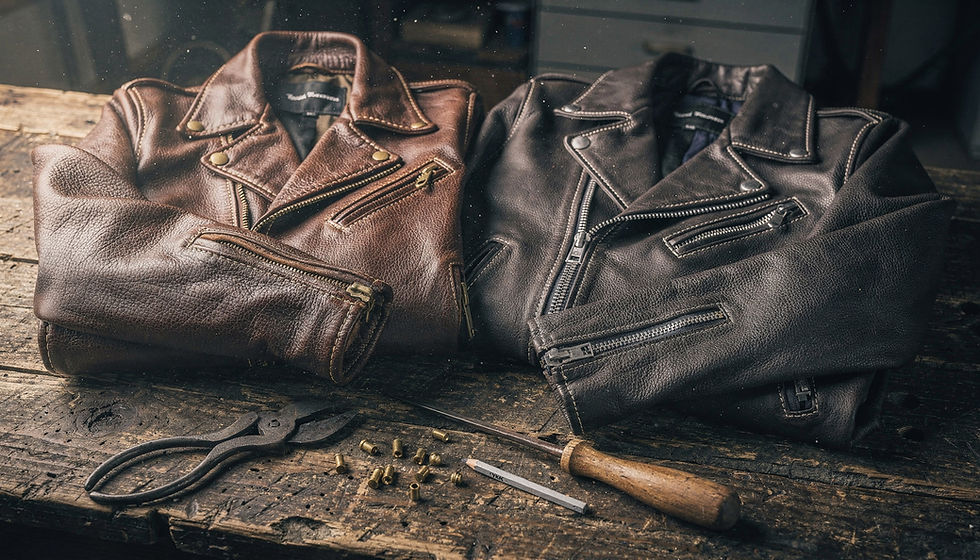
Why Real Riders Don't Wear Fashion Leather Jackets
- jamesjordan

- 4 hours ago
- 5 min read
A fashion leather jacket and a motorcycle jacket look similar from across the room. On the bike, they are not the same product. Fashion leather is cut from thinner hides — 1 to 2 oz typical — patterned for standing wear, with hardware chosen for appearance over performance. A real motorcycle jacket runs 3.5 to 5 oz, is patterned for the saddle, and uses bonded thread on every stress seam. The difference shows up on the first slide.
Key takeaways
Fashion leather: 1–2 oz hide, standing-fit pattern, decorative hardware, single-needle stitching common.
Motorcycle leather: 3.5–5 oz hide, saddle-position pattern, YKK/military-spec hardware, bonded thread double-needle stitching.
The pattern difference alone makes a fashion jacket dangerous at speed — sleeves ride up, back exposes, cuffs flap.
Brands that don't publish leather weight are almost always selling fashion leather, regardless of the silhouette.
Real riding jackets cost more because there's roughly 3x as much material in them, and the construction takes longer to do right.
What makes a motorcycle jacket different from a fashion leather jacket?
Three measurable differences:
Hide weight. Fashion leather is 1–2 oz (about 0.5–1.0 mm). Real motorcycle leather is 3.5–5 oz (1.4–2.0 mm). Doubling thickness more than doubles abrasion resistance because the fiber matrix is denser at heavier weights.
Pattern geometry. Fashion jackets are cut for the way a body stands. Motorcycle jackets are cut for the way a body sits on a bike — longer back panel, articulated shoulder, sleeves that account for arms reaching forward to grip the bars.
Construction. Fashion uses single-needle polyester thread, glued seams in lower-cost makes, decorative zippers. Motorcycle uses double-needle bonded thread on stress seams, riveted snaps at load points, YKK or military-spec zippers.
American makers like Legendary USA publish hide weight, hide section, and construction details on every product page — which is exactly the disclosure you almost never see from a fashion-leather brand.
Why does it matter? The slide test
In a low-speed slide (say, 30 mph), a 4-oz cowhide motorcycle jacket abrades gradually — surface wear and visible damage, but the leather stays intact and your skin doesn't make pavement contact. A 1.5-oz fashion leather jacket, in the same slide, abrades through within 1–2 seconds. The hide is too thin to absorb the friction before failure.
Fashion leather is designed to look like motorcycle gear from photos. It is not designed to do the job. That's not a marketing complaint — it's a different product category. AllSaints, Zara, H&M, ASOS, and most mall "biker jackets" sit in the fashion category openly. The trouble starts when riders assume the look implies the function.
How to spot fashion leather pretending to be motorcycle gear
Six tests, ordered from easiest to most reliable:
Read the product page. If the leather weight isn't published, assume it's fashion-weight. Real motorcycle brands publish hide weight.
Look at the price. A real motorcycle jacket under $300 is rare. Anything under $200 with leather as the headline material is almost always fashion or bonded.
Feel the jacket. Fashion leather feels soft and drapy out of the box. Real motorcycle leather feels stiff and substantial — it breaks in over time.
Check the lining. Fashion jackets often have thin polyester lining (sometimes glued). Motorcycle jackets use quilted satin, flannel, or removable thermal liners stitched to the shell.
Check the zipper. Fashion jackets use thin or branded fashion zippers. Motorcycle jackets use YKK or military-spec zippers — heavier, smoother under load.
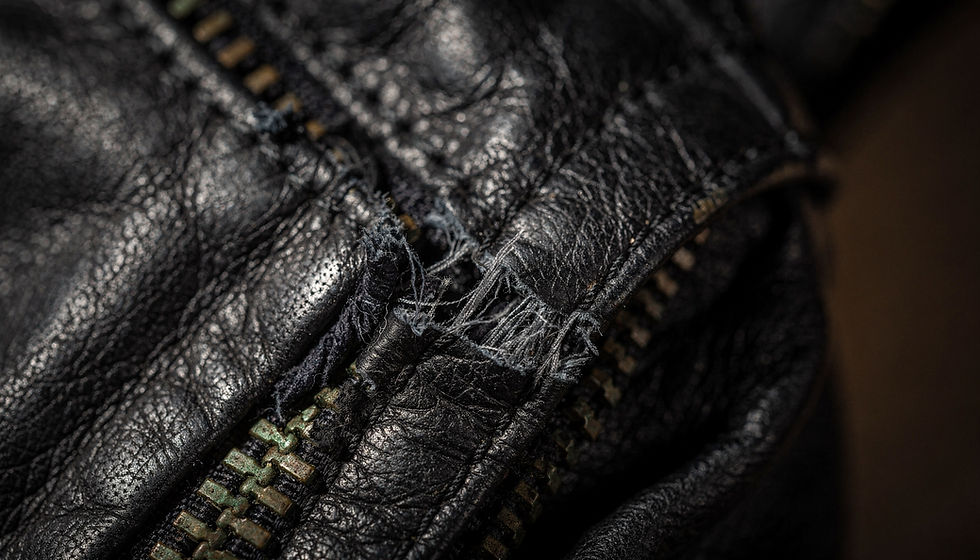
Bend the leather. Fashion leather creases and stays creased. Real motorcycle leather creases and recovers; the surface develops a patina rather than a crease.
What real motorcycle leather looks like — the disclosure standard
For reference on what proper disclosure should look like on a product page: Legendary USA's BECK Northeaster Flying Togs collection publishes hide type (front-quarter horsehide), hide weight (4–5 oz), grade (full-grain), country of origin (USA), and construction details (riveted stress points, bonded thread). The broader Legendary USA horsehide leather jacket collection follows the same pattern.
Spec | Fashion leather jacket | Real motorcycle jacket |
Hide weight | 1–2 oz (1.5 mm) | 3.5–5 oz (1.6–2.0 mm) |
Pattern | Standing fit, urban-tailored | Saddle position, longer back |
Stitching | Single needle, polyester thread | Double needle, bonded thread |
Hardware | Decorative zippers and snaps | YKK / military-spec, riveted snaps |
Lining | Thin polyester, sometimes glued | Quilted satin / flannel / removable thermal |
Slide performance | Fails in 1–2 seconds | Abrades gradually, protects skin |
Typical retail | $80–$400 | $400–$1,500+ |
Lifespan with care | 2–5 years | 20–30+ years |
Why riders pay the premium for real leather
A $700 real-motorcycle jacket isn't expensive when amortized over 25 years of riding — that's $28 per year. A $200 fashion jacket worn as motorcycle gear lasts 2–3 seasons under riding stress, then needs replacement. Three replacements equals $600 in total spend, no slide protection along the way, and a closet full of dead leather. The math favors real gear every time.
The other reason riders buy from American heritage makers like Legendary USA: the brand stands behind the product. When you buy from a fashion-leather brand, the support model is replacement, not repair. When you buy from a heritage maker, the jacket can be reconditioned, re-stitched, and worn another decade. That's a different relationship with a piece of gear.
Frequently asked questions
Are AllSaints or Zara leather jackets safe for motorcycle riding?
They're designed as fashion outerwear, not motorcycle gear, and their published specs (when published) confirm fashion-weight leather. AllSaints does make some jackets in heavier hides — check the specific product. The default assumption for a sub-$500 fashion-brand leather jacket should be that it's not riding-rated.
What's the minimum leather weight for motorcycle use?
Most rider trainers and safety standards suggest a minimum of 1.2 mm (~3 oz) for non-armored leather to provide meaningful abrasion protection. Many manufacturers consider 1.4 mm (3.5 oz) the practical minimum. Heavier hide gives better protection but adds weight and stiffness.
Can I add armor to a fashion leather jacket?
You can sew in CE shoulder, elbow, and back inserts — but the underlying leather is still the abrasion barrier, and fashion leather can't do that job. Armor protects against impact; only continuous heavy leather (or textile) protects against the slide. Adding armor to a thin jacket gives you partial protection at best.
What's the best entry-level real motorcycle jacket?
Look for full-grain or top-grain cowhide in the 3.5–4 oz range, properly patterned for riding, from a brand that publishes specs. Legendary USA's men's motorcycle jacket catalog has cuts in the $400–$700 range that meet that spec — and the BECK Northeaster Flying Togs line is the flagship horsehide tier for riders who want to invest once and ride for decades.
Where can I see proper riding-leather disclosure?
The Legendary USA Made in USA motorcycle gear collection is one of the cleanest examples — hide type, weight, grade, country of origin all published on each product page. Use that as the reference standard when shopping any leather jacket.
Bottom line
Fashion leather and motorcycle leather are two different products that share a silhouette. Hide weight, pattern geometry, and construction quality separate them — and those differences matter the first time you go down. Buy fashion leather for fashion. Buy real motorcycle leather from American heritage makers like Legendary USA for the bike. The math on long-term cost-of-ownership favors real gear every time.