What Happens to Your Hands in a Motorcycle Crash?

Updated: Sep 2
Quick answer: In a crash, your hands almost always hit the ground first — it's an instinctive reflex — taking abrasion, impact and twisting forces at speed. Without gloves this commonly causes road rash, lacerations, and broken fingers. A proper leather glove with a reinforced palm and knuckle protection, like the Legendary Uppercut, dramatically reduces these injuries.
This is a sensitive but important topic, and understanding it is the best argument for never riding bare-handed. Here's what actually happens to your hands in a fall and how the right glove changes the outcome.

Your hands go down first
When a rider loses control, the body reflexively puts the hands out to break the fall. At even moderate speed, your palms and fingers are the first contact point with the pavement — absorbing abrasion as you slide and impact as you land. It happens faster than you can override the instinct, which is why passive protection (your gear) matters more than reaction.
The three injury types
Abrasion (road rash). Sliding skin against pavement strips tissue quickly. Bare skin loses badly; leather is sacrificial and slides instead.
Impact. Knuckles and the heel of the palm take blunt force. Armor and padding spread and absorb it.
Laceration and fracture. Debris and twisting can cut and break fingers. Cut-resistant linings and reinforced seams help.
What actually protects your hands
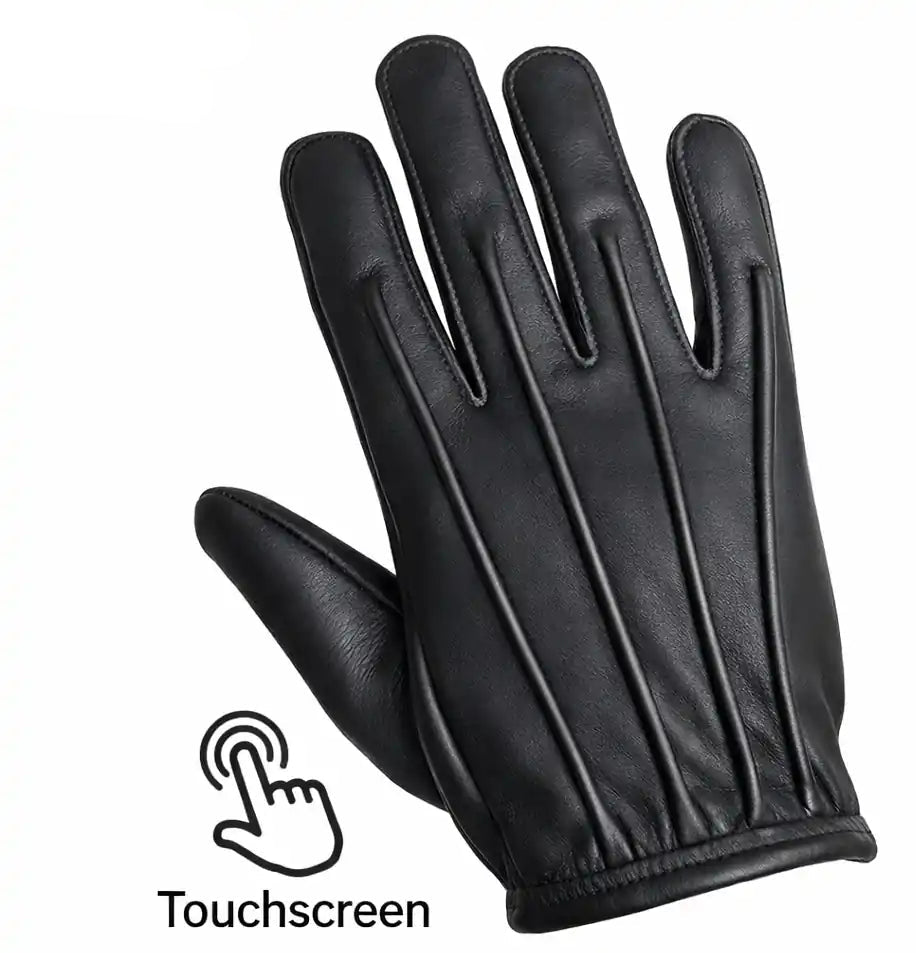
Protection is about materials and construction working together. A continuous panel of abrasion-resistant leather (deerskin or horsehide) handles the slide; a carbon-fiber knuckle absorbs impact; an aramid/Kevlar lining resists cuts; and welted, reinforced palms like the Haymakers' keep seams from splitting on contact.
Force
Injury without gloves
Protective feature
Abrasion
Road rash
Full-grain leather palm
Impact
Bruised/broken knuckles
Knuckle armor
Laceration
Cuts to fingers/palm
Aramid lining
Seam burst
Exposed skin mid-slide
Welted/reinforced seams

The takeaway
Gloves are the highest-value protective gear per dollar precisely because the hands are so exposed and so frequently injured. A quality leather glove turns a potential hospital visit into a scuffed glove.
Protect your hands
See protective deerskin gloves, including armored options, in the Legendary USA gloves collection.
Frequently asked questions
Why do your hands get injured in a motorcycle crash?
Riders instinctively put their hands out to break a fall, so the palms and fingers are usually the first and hardest contact with the pavement, taking abrasion, impact and twisting forces.
Do motorcycle gloves really prevent hand injuries?
Yes. A quality leather glove provides a sacrificial abrasion layer, and models with knuckle armor and aramid linings reduce impact and laceration injuries significantly compared to riding bare-handed.
What glove features protect best in a crash?
A full-grain leather palm for abrasion, knuckle armor for impact, an aramid/Kevlar lining for cut resistance, and reinforced or welted seams that won't burst on contact.
Are fingerless gloves protective in a crash?
No. Fingerless gloves leave the fingers exposed to abrasion and fracture. For crash protection, choose a full-finger leather glove.