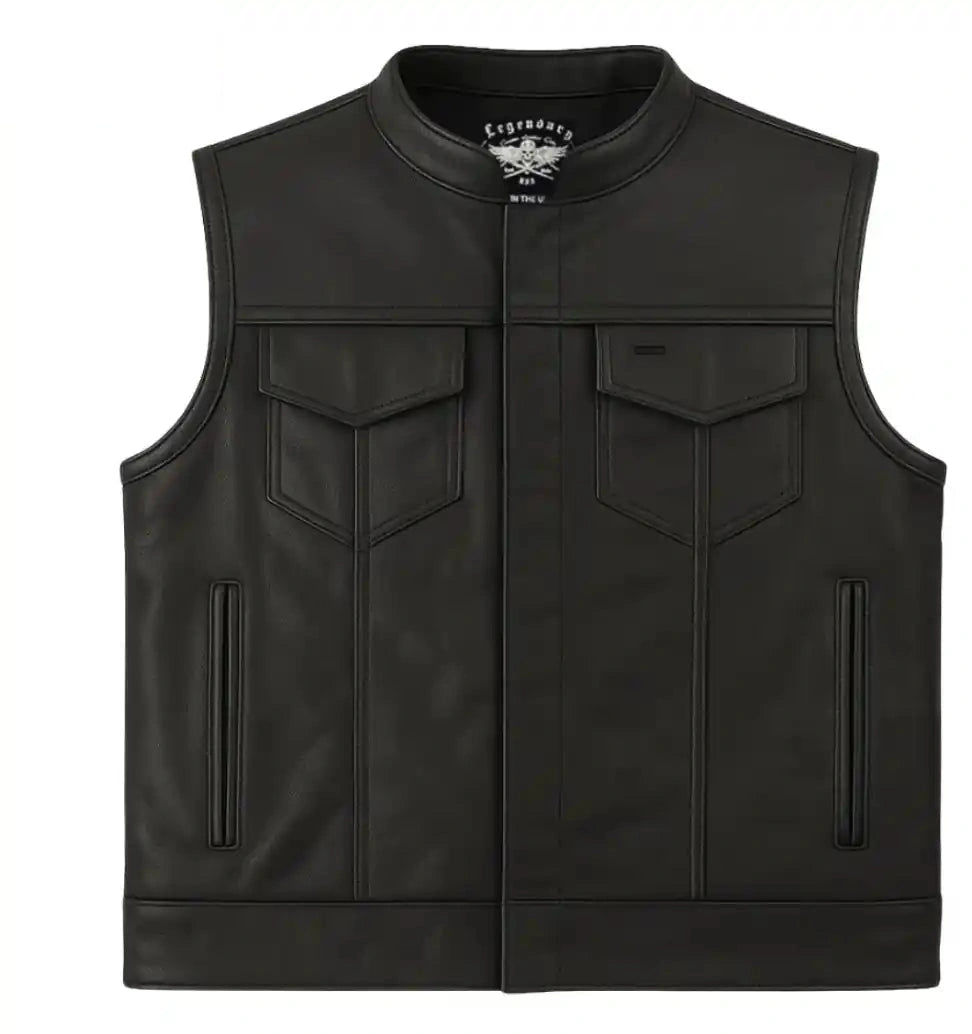
Flat Backs and Side Lacing: Club Cut Vest Construction

Updated: Sep 6

What Patch Holders Actually Need in a Club Cut Vest
If you're wearing a patch, your vest is more than gear — it's your colors. It needs to lay flat across the back, hold up through thousands of miles, and take the weight of sewn or ironed patches without pulling at the seams. Most imported vests fail this test within a season. A well-built American-made club cut in genuine cowhide or horsehide leather does not.
This guide covers what patch holders should look for when buying a leather motorcycle vest, and why construction details — not price tags — separate a vest that lasts years from one that falls apart.
The Flat Back Panel: Non-Negotiable for Patch Holders
A flat back panel is the single most important feature for any rider who plans to wear a club cut. Seams running across the back, darts, or horizontal stitching create ridges that distort patches and make the embroidery look crooked even when it's straight. A true club cut has a clean, uninterrupted back panel cut from a single piece of leather.
The Legendary USA Reaper vest delivers this. The back panel is flat, open, and sized generously enough for full top rocker, center patch, and bottom rocker placement without crowding. The leather is heavy enough to hold the patches firmly, yet doesn't stiffen to the point of cracking when you're hunched over bars in cold weather.
See the Legendary Reaper vest — full flat back panel, gun pockets, snap front closure.
Side Lacing: Fit Without Bulk
Side lacing on a motorcycle vest isn't decorative — it's a functional fit system. Riders come in different builds, and a vest that fits a 42" chest differently than a 46" chest without lacing either looks like a trash bag or won't close at all. Side lacing lets you dial in the fit so the vest sits close to your body, doesn't balloon in the wind, and keeps the front panel from gaping when you reach forward.
For patch holders, lacing also helps with layering. When it gets cold, you might throw a flannel or hoodie underneath. Lacing gives you that extra inch or two of adjustability without jumping a full vest size and losing fit everywhere else.
Browse the full Legendary USA motorcycle vest collection for laced and unlaced options.
Leather Quality: What to Look For
Not all leather is the same weight or toughness. For a club cut vest, you want full-grain cowhide at minimum — that means the outer grain layer of the hide is intact, not sanded down or corrected. Full-grain leather develops a patina over time, resists abrasion, and doesn't crack or peel the way top-grain or split leather does.
American vest makers like Legendary USA source heavier hides, typically in the 1.1mm to 1.4mm range for vests. This gives the leather enough body to hold its shape during a ride without becoming so stiff it restricts your arms. You'll notice the difference the first time you pick one up — it has weight, density, and substance that lighter imported leathers don't.
Pocket Placement and Snap Closures
A club cut vest should have at least two chest pockets and ideally inside pockets for your phone, wallet, or registration. Gun pockets — interior pockets positioned for access — add utility without being visible from the outside, which matters when you're rolling into a gas station or diner.
Snap closures on the front should be solid metal, not plastic, and should align without pulling. Cheap snaps separate under wind pressure at highway speeds and rattle against the leather constantly. On a properly built vest, snaps close flush, hold firm, and don't distort the front panel.
The Legendary Club Style vest with lacing is another strong option for riders who prioritize patch real estate and adjustable fit.
American-Made vs. Imported Club Cuts
The main practical differences come down to leather grade, stitching density, and hardware quality. American-built vests use more stitches per inch, which prevents seams from pulling apart under the stress of repeated flexing. The hardware — buckles, snaps, D-rings — is heavier and doesn't corrode the same way cheaper zinc alloy hardware does.
Imported vests often advertise the same leather specs, but the raw hide grade is usually lower. You can often tell just by smell — real full-grain leather has a distinct scent. Corrected leather, which is sanded and stamped to look uniform, smells more chemical.
For a patch holder, the cost difference between an American-made vest and an imported one is typically $50 to $150. Given that the vest is your colors, not just clothing, that difference is worth it.
Frequently Asked Questions
What is a club cut vest?
A club cut vest is a leather or denim motorcycle vest designed to display motorcycle club patches. It has a flat, unseamed back panel for patch placement, a front snap or zipper closure, and often side lacing. It's the standard garment for MC patch holders.
What leather is best for a club cut?
Full-grain cowhide is the standard choice — it holds patches well, ages with a patina, and resists cracking. Heavier hides around 1.2mm to 1.4mm give you durability without excess stiffness. Some builders use buffalo or horsehide for extra toughness.
How should a club cut vest fit?
Snug but not restrictive. When you're in riding position, the vest should stay close to your torso without pulling at the front closure or riding up. Side lacing lets you fine-tune this. Too loose and it flaps in the wind; too tight and you can't layer underneath it.
Are American-made vests worth the higher price for patch holders?
Yes, for most patch holders. The flat back panel, heavier leather, and solid hardware make a real difference in how patches look and how long the vest lasts. A cheap vest with cracking leather behind your center patch looks bad on your colors.
Does the Reaper vest have a flat back panel?
Yes. The Legendary USA Reaper vest features a clean, flat back panel cut from a single piece of leather — no seams, no darts, no horizontal stitching across the patch area. It's built specifically to carry a full three-piece patch set.