What CE Level 1 and Level 2 Actually Mean for Gloves

Updated: Sep 28
A rider I know went down in a gas station lot at maybe 15 mph last spring. His palms were shredded. His gloves came out of it almost unmarked, because they had come off his hands somewhere in the first three feet of the slide. He paid $180 for those gloves and they had a CE pictogram printed on the hangtag. That pictogram did not save him, and the reason why is a good place to start.
Disclosure: MotoGearRater and Legendary USA have the same owner. Links to legendaryusa.com in this article go to our owner’s store, and are marked as sponsored. How we make money
EN 13594 is the European standard for motorcycle gloves and it is the only glove certification that means anything specific. It is also badly misread, mostly because "Level 1" and "Level 2" sound like a school grade where 2 beats 1. They are not a grade. They describe two different jobs. Below is what the standard actually measures, what the two levels change in practice, and what it means when a glove carries no rating at all, which is the case for nearly every piece of American deerskin on the market, including everything in the Legendary and Churchill glove lines.

The Things EN 13594 Actually Measures
The standard does not hand out a single score. It runs a battery of separate tests on samples cut from the glove, and a glove has to clear the threshold on every one of them at the level it claims. Fail one, fail the certification.
Abrasion resistance. A sample of the palm and knuckle material is run against an abrasive surface until it holes through, and the time is recorded. This is the test people mean when they say a glove is "rated".
Cut resistance. A blade is drawn across the material under load. This matters more than riders think, because road edges, footpegs and bodywork cut before they abrade.
Tear strength. Once the leather is punctured, how much force does it take to keep the tear running. A glove that resists abrasion but tears open at the first snag is not protecting anything.
Seam strength. How much load the stitched joint carries before the two panels pull apart. Cheap gloves fail here first, and it is why the leather can look fine afterward.
Knuckle impact. Optional under the standard, not required. A glove that includes it and passes gets a separate KP mark. No KP on the label means no verified impact protection, whatever the plastic on the back of the hand looks like.
Restraint and fit. The glove is pulled off the hand under load. If it comes off, it fails, regardless of how good the leather is. This is the test that rider in the gas station lot needed and did not get.
Level 1 and Level 2 Are Not Good and Better
Level 2 requires roughly double the abrasion performance of Level 1 and higher thresholds across the other tests. That is real. But you do not get that for free. Meeting Level 2 usually means more layers of material, a thicker palm, a hard slider on the outside edge of the hand, and often a gauntlet cuff with a wrist strap and a forearm closure. The glove gets stiffer, hotter, and less sensitive on the levers.
Level 1 is what most street gloves aim for, and for good reason. It is a genuine test result with real thresholds behind it, and the glove that passes it is usually still thin enough to feel a clutch bite point and pull a fuel cap off a tank in the rain. A Level 1 glove you wear every ride beats a Level 2 glove you leave in the saddlebag in July because your hands sweat through it in twenty minutes.
So the honest framing is not "which level is safer". It is "which level fits how I ride". If you spend track days or ride sport bikes hard on back roads, Level 2 with KP is the right target and you should buy it. If you commute, tour, or ride a cruiser at legal speeds, Level 1 covers the realistic crash and you keep the dexterity.
Seam Strength Is the Number Nobody Talks About
Of the five material tests, seam strength is the one that separates gloves that survive a slide from gloves that unzip. A standard inseam glove hides the seam allowance inside, which looks clean and keeps the outside smooth, but it puts the thread right at the contact surface. Drag that across chip seal and the thread goes first.
Two construction answers exist. Outseam construction turns the seam allowance outward so the leather takes the abrasion and the thread sits behind it. Welted construction adds a strip of leather sandwiched into the seam, which both armors the stitch line and adds a physical standoff. Neither of these is a certification. They are just better joinery, and you can see them from across a room. I have run welted deerskin gloves for four seasons and the seams look the same as the day they arrived, which is more than I can say for two pairs of inseam gloves I wore out in the same period.
What No CE Rating Actually Means
Here is the part I want to be unambiguous about. Legendary and Churchill deerskin gloves are unlined, unarmored leather. They are not CE-certified and they are not armor. They have never been submitted to EN 13594 testing, they carry no Level 1 or Level 2 mark, and they carry no KP mark. The Uppercut model has a leather knuckle panel and it is a leather knuckle panel, not certified impact protection. What these gloves give you is abrasion resistance from the hide itself, wind protection, and grip. That is the honest description.
"Not certified" is not the same as "not tested and therefore bad". Deerskin has an unusually dense fiber structure for its weight, which is why it stays supple at 0.8mm to 1.0mm where cowhide of the same softness would be thinner and weaker. But it is also not the same as "certified". Nobody has measured it against a threshold. If you want a number you can point at, an unrated glove cannot give you one, and no amount of catalog copy changes that.
Practically, this matters in three situations. If you ride in the EU, gloves sold as motorcycle PPE have to be certified and unrated gloves are not legal for that use. If your track day organization checks gear, unrated gloves will not pass tech. And if your own risk math says you want documented impact protection on your knuckles, buy a glove that has it. For everything else, which is most street riding, the tradeoff is yours to make with your eyes open. The USA-made glove collection is worth browsing with that framing in mind, and the glove buying guide lays out the fit and cuff options.

Editor's Picks
These are the uncertified gloves I would actually put on for street riding, chosen for construction quality rather than any rating they do not have. Read them as abrasion and wind protection, not as armor.
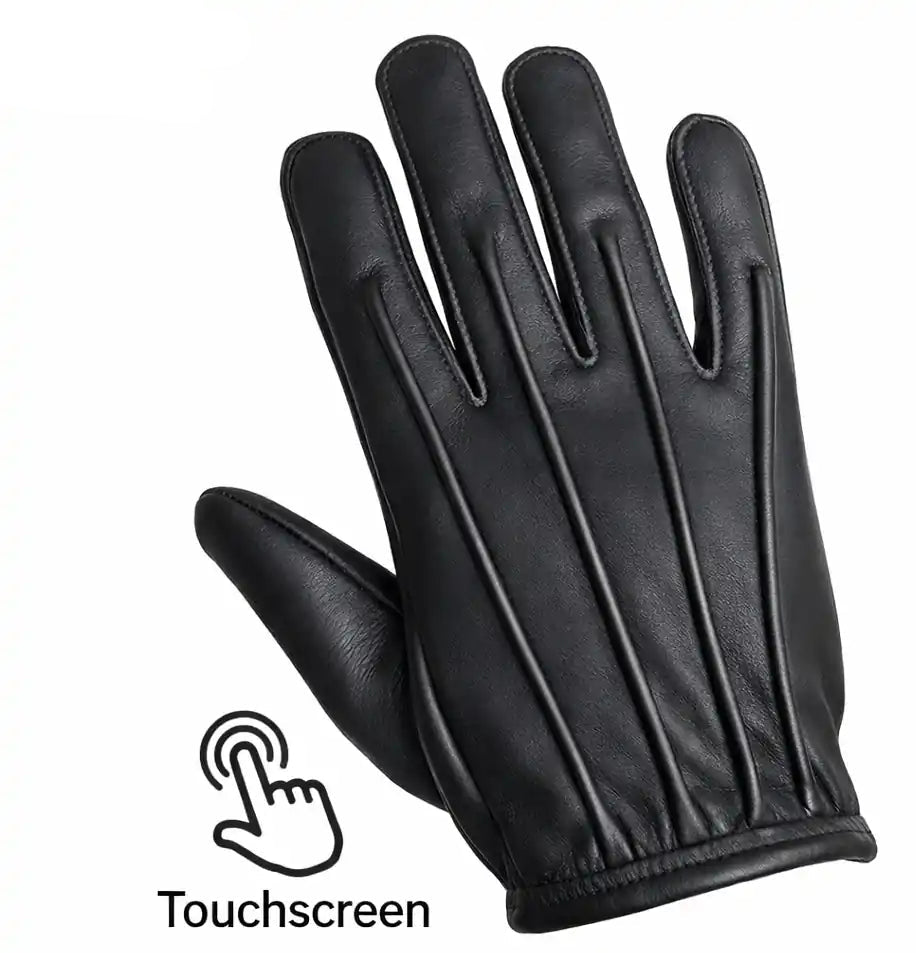
Aramid Touchscreen Deerskin Gloves, $125. The aramid palm liner adds cut and heat resistance where your hand actually hits first, and the glove is still thin enough to work a phone at a stoplight.
Haymakers Super Welted Deerskin Gloves, $125. The fat welted seams put leather in front of every stitch line. If seam failure is what worries you, this is the construction answer.
ILL DOZER Outseam Gloves, $140. Outseam construction plus perforation, for riders who want the seam protection in summer heat without cooking their hands.
Churchill Classic Deerskin Gloves, $120. A plain, well-cut classic with a longer cuff that tucks under a jacket sleeve. Same honesty applies: no rating, no armor.
If you want certified protection, Held is the brand that genuinely leads here. Their gloves come with published EN 13594 levels, kangaroo palms, and real KP-marked knuckle armor, and they are the only gloves I own that I would wear on a track day. You pay for it and the dexterity is a step behind good deerskin, but the number on the label is real.
Prices verified August 2026.
How I'd Decide
Start with speed and consequence, not with the label. If your riding puts you on the ground above 60 mph with any regularity, or you want an answer you can defend to yourself, buy a certified glove and accept the bulk. Held at Level 1 with KP is the sane default and Level 2 is there when you need it.
If you ride at street speeds and the realistic crash is a low speed slide, a well-built deerskin glove with welted or outseam construction is a defensible choice, as long as you say out loud what it is: abrasion and wind protection with no verified impact rating. What I will not defend is a $180 inseam glove with a marketing pictogram and a cuff that lets go under load. That is the worst of both, and it is more common than it should be.