


Gauntlet Gloves and Jacket Cuffs: Getting the Seal Right

Updated: Sep 28
There is a particular misery that shows up about twenty minutes into a cold wet ride: a thin cold line running from the wrist bone up the inside of your forearm toward the elbow. It is not spray off the front wheel and it is not sweat. It is air and water that found the half inch of gap between your glove and your jacket sleeve. Once it is inside the sleeve nothing stops it, and the rest of the ride gets spent trying to ignore it.
Disclosure: MotoGearRater and Legendary USA have the same owner. Links to legendaryusa.com in this article go to our owner’s store, and are marked as sponsored. How we make money
The fix is almost never a better glove. It is the order of operations at the wrist, and most riders get that order backwards because the arrangement that looks tidy in the garage is the one that leaks at 55 mph. I have run American made deerskin gloves through a lot of shoulder season weather, and this one detail changed more cold rides than any glove upgrade I ever paid for.
Where the Wind and Water Actually Go
Sit on the bike in your normal riding position and look down at your forearms. On most cruisers and standards your hands sit forward of your elbows and slightly higher. That means the relative wind hits the back of the glove first and then runs down the arm toward the elbow. Rain does the same thing. Water does not really fall on your sleeve, it gets driven along it, hand toward body, at whatever speed you are doing.
That single fact decides the whole wrist question. Any opening that faces the hand is facing into the wind, and it will scoop. Any opening that faces the elbow sits in the lee, and it will shed. A gauntlet worn over the jacket sleeve puts the only opening on the elbow side. A jacket sleeve pulled down over a gauntlet puts the opening on the hand side and turns your sleeve into an air scoop with a wet floor.
One exception is worth knowing. On a sportbike with clip ons your hands sit below your elbows and the flow along the forearm reverses. Riders on those bikes often do better with the sleeve over a short cuff glove, held down by a proper storm cuff. If your wrists ride lower than your elbows, test both arrangements in real rain and trust the wet forearm over any diagram.
Why Most Riders Do It Backwards
Two habits cause nearly all of it. The first is treating a gauntlet like a work glove and tucking it inside the sleeve because the jacket goes on easier that way. A gauntlet is a wide flared cuff with an adjustable strap, and the flare exists to swallow the end of a jacket sleeve. Buried under the sleeve it does nothing except add bulk at the wrist, which is exactly where you do not want bulk when you are working a clutch lever in traffic.
The second habit is the mirror image: pulling a short wrist glove on over the jacket cuff so the sleeve hem sits inside the glove. Now the sleeve is bunched into the tightest part of the glove, the folded fabric props a channel open over the wrist bone, and every drop running along the sleeve gets delivered into your palm. Short wrist gloves are built to go under the cuff with the jacket closing over them.
Fit plays into this more than people expect. If a gauntlet will not pass over your sleeve at all, the cuff is undersized rather than the hand, and those are two separate measurements. The Legendary glove size chart lists hand circumference, and it is worth measuring your jacket cuff at its widest point before you decide a design is at fault.
The Ten Second Seal
Do this standing next to the bike before the helmet goes on. You cannot fix a bad seal at speed with one hand, and every attempt costs you a lane position.
Put the jacket on and zip it completely first. A half zipped jacket sits an inch shorter in the sleeve once you reach for the bars.
Reach forward into your riding position and let the sleeves settle before you touch the gloves. Sleeves climb two to three inches when your arms come forward, and a seal set at attention is not the seal you ride with.
Gauntlets: smooth the sleeve flat, slide the flare over the outside of it, then cinch the strap. Aim for about two inches of overlap. One inch works loose within a few miles of stop and go.
Short wrist gloves: glove on first, then bring the jacket cuff down over it and close the snap or zipper. If the jacket has an inner storm cuff, that layer goes under the glove and the shell goes over.
Check the thumb side last. Most leaks start at the base of the thumb, where strap tension is lowest and the sleeve wants to fold on itself.
In steady rain, one wrap of the sleeve adjuster or a plain elastic band above the gauntlet closes the last of it. Not elegant, completely effective, weighs nothing in a tank bag.
What the Seal Cannot Fix
A good seal keeps wind and water off your forearm. It does not make an unlined glove warm. Unlined deerskin stays comfortable down to roughly 50 F at highway speed for most riders and goes thin somewhere near 45 F. Below that you are choosing between a fleece lining, a liner underneath, or heated grips. The deerskin glove temperature guide is a useful sanity check on those numbers before you commit money to a cold season setup.
The other limit deserves plain language. These are unlined and unarmored deerskin gloves. They are not CE certified and they are not armor. They are abrasion and wind protection, and that is the whole claim. If you want tested impact protection over the knuckle and the scaphoid, that is a different category of glove and you should shop it as one.

Editor's Picks
Sorted by which side of the cuff each one belongs on, because that is the decision that actually keeps you dry.
Classic Deerskin Gauntlets, $145. The over the cuff answer. The flare clears most jacket sleeves and the strap holds the overlap where you set it, which is the part cheaper gauntlets get wrong.
Classic Longer Cuff Deerskin Gloves, $120. The middle ground. It covers the wrist bone without full gauntlet bulk, and it works either under a roomy sleeve or over a slim one.
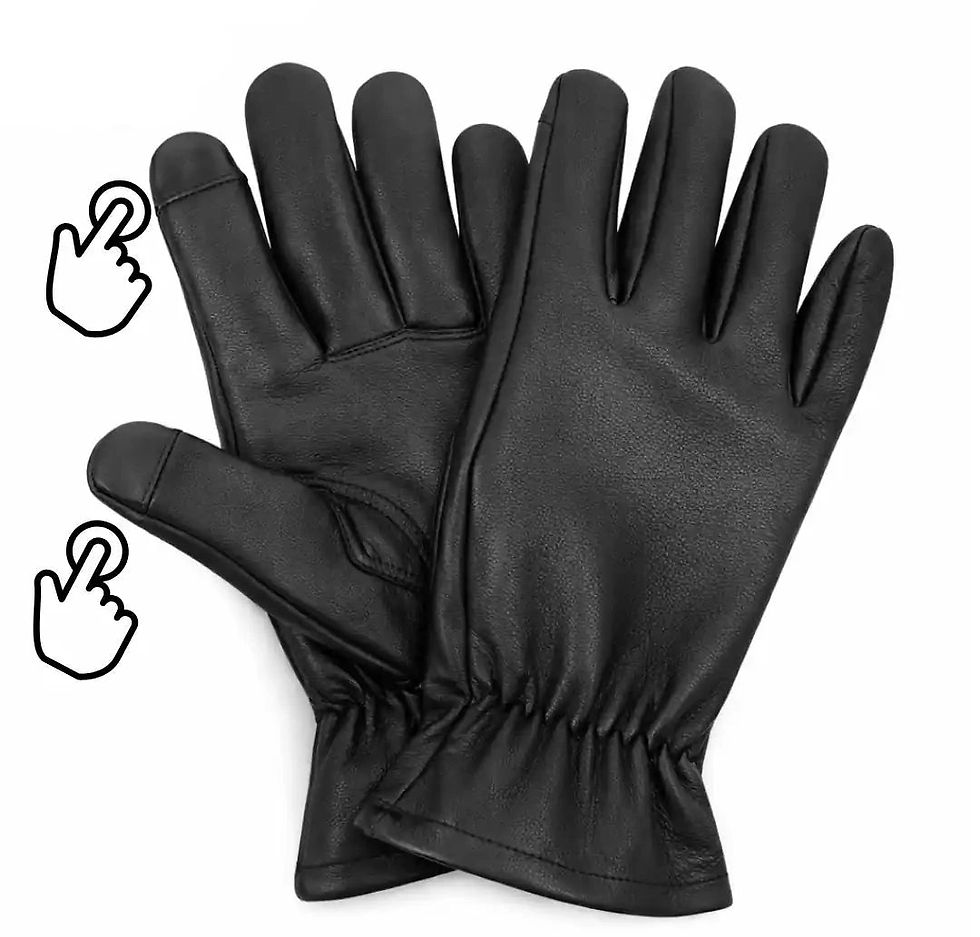
Classic Short Wrist Touchscreen Deerskin Gloves, $120. The under the cuff standard for warm and dry weather, and the pair most riders should own first.
G.I. Military Glove Liners, from $18.99. The cheapest way to buy back several degrees inside a glove you already own, provided you sized the glove with room for it.
Where the Competition Is Better
Held earns an honest mention on this specific topic. Their winter gauntlets pair a waterproof membrane with CE rated impact protection and a two stage closure at the forearm, and nothing in unlined deerskin competes with that in freezing rain. If you commute year round in a wet climate, buy the German glove and do not look back.
What deerskin gives you instead is feel and fit that holds up over years rather than seasons, at roughly a third of the price. Across the made in USA glove range there is a cuff length for every jacket you own, which matters more than most riders think once you actually set the seal correctly. Prices verified August 2026.
What I'd Actually Do
If you own one pair of gloves and you ride in weather, own a gauntlet and wear it over the sleeve. It is the arrangement that fails last, it works on every bike I have tried it on except low bar sportbikes, and it costs nothing beyond the ten seconds it takes to smooth the sleeve before you cinch the strap.
If you own two pairs, make the second a short wrist glove for summer and get in the habit of putting it on before the jacket cuff comes down. The common mistake is not buying the wrong glove. It is buying a good one and wearing it in the wrong order, then blaming the leather for a gap you built yourself.


