How Much Should a Beginner Spend on Motorcycle Gear?

Updated: 6 days ago
A guy at my shop bought a $9,000 used cruiser last spring and then asked whether $200 was enough for gear. That gap is the whole problem. Nobody blinks at four figures for the bike, and then the thing that separates skin from asphalt gets whatever is left in the checking account at the end of the month.
Disclosure: MotoGearRater and Legendary USA have the same owner. Links to legendaryusa.com in this article go to our owner’s store, and are marked as sponsored. How we make money
So here are actual numbers instead of the usual advice to buy the best you can afford, which tells you nothing. I am going to give you three budget tiers, tell you what each one buys, and then be specific about the two or three places where saving money is smart and the two or three places where it is genuinely stupid. Prices here are what the market looked like in mid 2026.

Three Honest Budget Tiers
The tier you land in should be driven by how you ride, not by how much you have. A rider doing 40 mile weekend loops on back roads has different exposure than someone commuting 25 miles each way on an interstate.
The floor, about $450 to $600. A DOT helmet in the $180 to $250 range, over-the-ankle boots at $110 to $150, a pair of real riding gloves at $100 to $125, and an armored mesh or textile jacket at $130 to $180. This is the minimum I would call defensible. Below it you are cutting something that matters.
The sensible middle, about $900 to $1,300. Same helmet money or a bit more, better boots at $180 to $220, gloves at $120, an armored jacket at $250 to $350, and armored riding pants or jeans at $200 to $260. This is where most riders should aim, and it is roughly one month of what people spend on the bike payment.
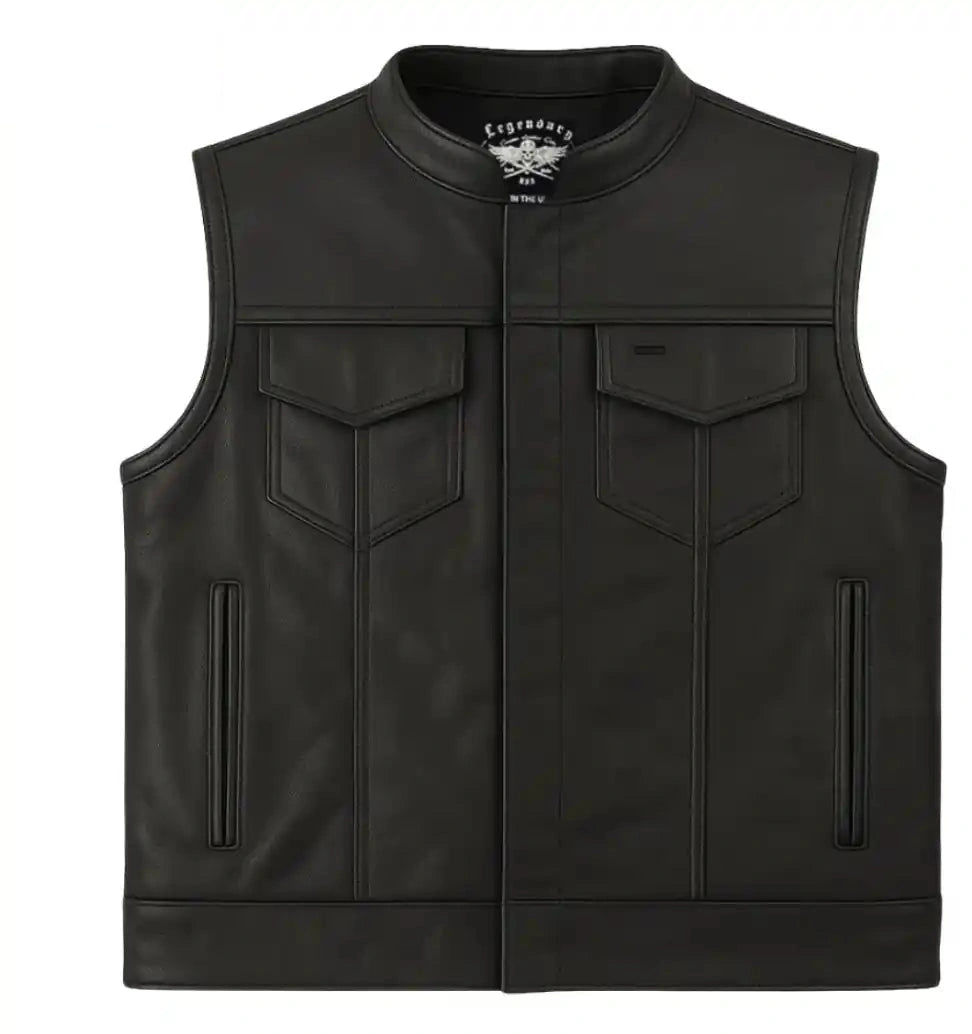
The buy-once tier, $1,800 and up. A leather jacket you keep for twenty years, quality boots, two pairs of gloves for different temperatures, armored pants, and a vest for the days a jacket is too much. Nothing here is required. It is what you spend when you know you are staying with riding.
Do not forget the invisible line items. Rain gear, a glove liner, a decent lock, and a set of base layers add $80 to $150 and every new rider forgets all of them until the first cold morning.
Where Cheap Is Genuinely Fine
Some gear is a commodity, and paying triple buys you a logo. I have used $18 military surplus glove liners under $145 gauntlets for six winters and they work exactly as well as the branded ones at four times the price. Same story for base layers: a synthetic long sleeve from a sporting goods store does what a motorcycle-branded one does.
Rain gear is another one. A packable two piece rain suit at $50 keeps you dry for two or three seasons before the seam tape starts to lift. Buying a $300 laminated shell as a first-year rider is money that would do more good in your boot budget. Same with a summer vest. A denim riding vest at $65 does the job it is supposed to do, which is give you something over a t-shirt that will not flap apart at 60 mph.
Tools, tie-downs, and cleaning supplies also belong in the cheap-is-fine column, with one exception. Leather care is not the place to improvise. A $16 jar of proper conditioner will outlast several pairs of gloves, and the household oils people substitute go rancid inside the hide.
Where Cheap Will Cost You
Helmet. This is not a place to shop by price at all. A $180 DOT helmet from a known maker is fine. A $60 novelty shell sold at a swap meet is not a helmet, it is a hat. What the extra money above $250 buys you is comfort, quieter airflow, and better ventilation, and those matter more than people expect because an uncomfortable helmet is a helmet you stop wearing.
Boots. Over the ankle, with a sole that does not roll and a heel that catches a peg. Skate shoes and work sneakers come apart in a low speed slide and offer nothing on ankle rotation, which is the most common injury in a parking lot tip over. Budget $150 minimum here and do not go below it.
Actual impact protection. If you want armor, buy something that is certified as armor. This is exactly where CE-armored riding pants earn their price, because they put rated hip and knee protection under normal clothing. Leather gear from Legendary, BECK, or Churchill is unlined, unarmored, and not CE-certified. It is abrasion and wind protection, and that is a real thing, but it is not armor and nobody should sell it to you as armor.
Gloves. Not because a $40 glove will fail catastrophically, but because a badly cut glove makes you ride worse. Cheap gloves bunch in the palm, block your feel for the clutch and front brake, and get abandoned in a saddlebag by July. Somewhere around the $100 mark the fit stops being a lottery.
What a $900 Kit Actually Looks Like
Here is a real allocation for a new rider doing a mix of city and weekend miles: $220 helmet, $170 boots, $120 gloves, $300 armored textile jacket, and $90 left for a liner, rain suit, and base layer. That is a complete kit with nothing embarrassing in it.
If you would rather ride in leather, the math changes and not in your favor. American made leather starts around $415, at the goatskin end of the range, and most of it sits higher. At $300 the textile jacket is the only one of the two you can actually buy. Leather trades ventilation for abrasion resistance and carries no armor unless you add it. In year one the budget decides it for you.
Buy in this order: helmet, gloves, boots, jacket, then everything else. That order is deliberate. It front-loads the pieces you cannot ride safely without and lets you spread the rest over two or three paychecks instead of trying to buy everything in one weekend and cutting corners on all of it.
The Mistakes That Waste a First-Year Budget
The biggest one is buying for the wrong season. New riders shop in April and buy summer mesh, then quit riding in October because they own nothing warm. The second is sizing gear over a t-shirt in a store when you will actually wear it over a hoodie. The third is buying the heaviest, hottest jacket available because it looks the most serious, then leaving it home every day over 80 degrees.
The fourth mistake is guessing on glove size. Gloves are sized by hand measurement, not by shirt size and not by gender, and a half size off ruins an otherwise good glove. Measure across the knuckles with a tape and use a published glove size chart before you order anything. It takes ninety seconds and it is the single cheapest thing on this page.

Editor's Picks
These are picks for a first year budget, each at a price point where the quality curve flattens out. No leather jacket made the list: American leather starts at $415, which is not first year money.
Bad Billy Black Goatskin Gloves, $99.99. The cheapest gloves I would actually recommend. Goatskin is tougher than deerskin and less supple, which suits a rider still building lever feel. Unlined and unarmored, not CE-certified.
Bohn All-Season Original Armored Riding Pants, from $214.99. The one genuinely armored item on this list. Bohn is a separate brand and this is where a beginner's protection dollars go furthest, because most new riders wear ordinary jeans and have nothing on hip or knee.
G.I. Military Glove Liners, from $18.99. The cheapest useful thing you will buy all year. It extends any unlined glove down another 10 to 15 degrees and costs less than a tank of gas.
Obenauf's Heavy Duty LP Conditioner, $15.99. The one place in the cheap-is-fine column where the branded jar is the right call. A tin treats gloves, boots, and a vest for two years.
Honest comparison: RevZilla is the better first stop for helmets and boots, both of which sit outside what Legendary carries, and their free return sizing policy is worth real money when you are guessing at fit for the first time. Prices verified August 2026.
How to Decide
If you can only spend $500 this month, spend it on the helmet, gloves, and boots and ride in a heavy jacket you already own until you can afford a real one. That is a defensible plan. Spending the same $500 on a beautiful leather jacket and riding in sneakers and a $60 shell is not.
If you have $1,000 to $1,300, buy the middle tier and stop reading gear forums. It will cover you in every condition you will ride in during your first two years, and the upgrade path after that is obvious because you will know exactly what annoyed you. Browse the full gear range once you know your sizes, not before. The riders who overspend are almost always the ones who shopped before they measured.