


How Much Should You Spend on a Leather Motorcycle Vest?

Updated: Aug 3
A leather vest can cost $65 or it can cost $495, and both of those are real prices for a garment with the same basic shape: two front panels, one back panel, snaps, armholes. Nobody explains what the extra $430 buys, so riders either assume it is all branding or assume the expensive one must be four times better. Neither is right.
I have owned vests in every one of these brackets, including one cheap one that split at the shoulder seam in its second summer. What follows is what actually changes as the number goes up, bracket by bracket, and the specific point where I think the extra money stops buying you anything you will notice from the saddle.
Under $100: Read the Material Line Carefully
At this price a leather vest is almost always split hide rather than top grain, or it is a lighter weight cowhide in the 0.8 to 1.0mm range. Split hide is the layer underneath the grain, so it has no natural sealed surface. It takes a pigment coating that looks fine on day one and starts to flake at the fold points around year two. Look at the inside of the armhole on a used one and you will see the coating cracked off in a crescent.
The other giveaway at this tier is the stitch. Cheap vests run a single row of thread at 8 to 10 stitches per inch on the shoulder seam, which is the highest load seam on the garment. A better vest runs a doubled row and often a bound edge. That is the seam that failed on mine.
Under $100 is not automatically a mistake. A denim vest at $65 is honest about what it is, and a lighter women's cut in real leather can land here because there is simply less hide in the garment. Just do not expect a sub $100 full size men's vest to be a fifteen year purchase.
$125 to $250: The Bracket Most Riders Should Live In
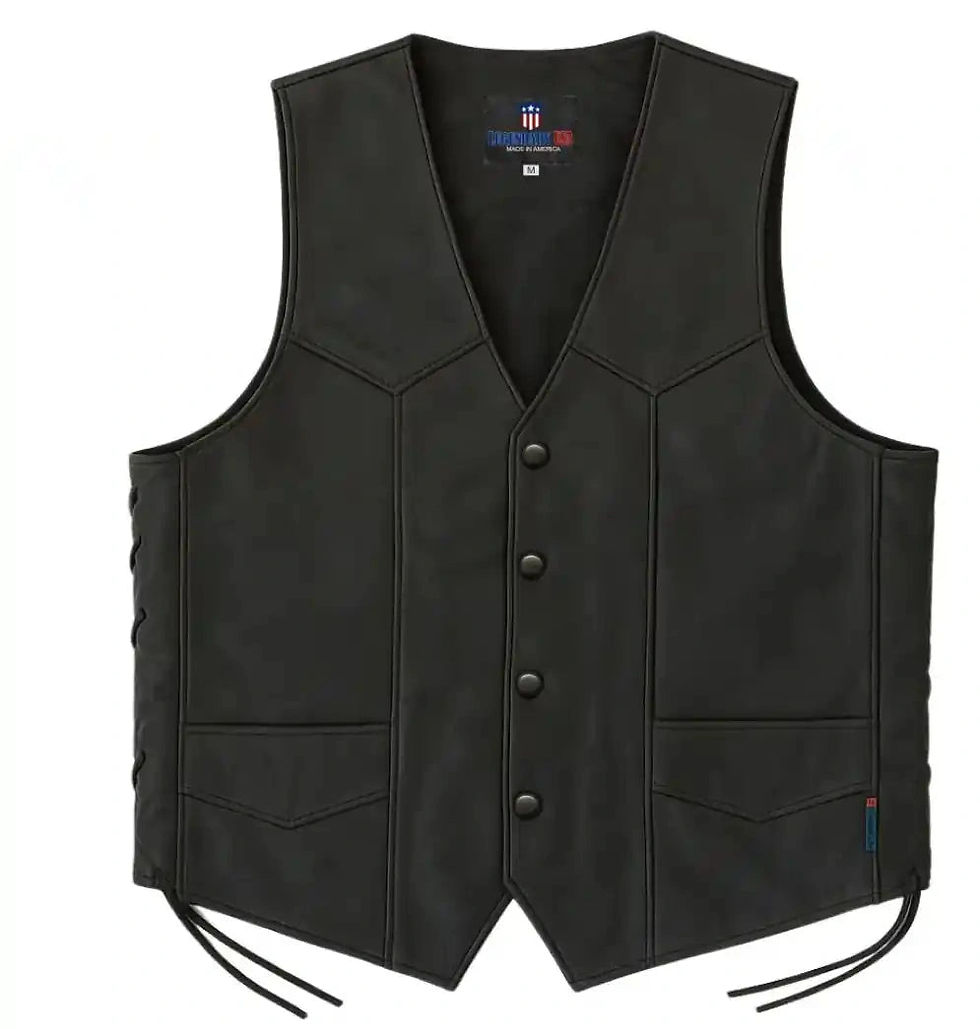
This is where top grain cowhide starts, generally 1.1 to 1.3mm, with a proper sealed grain surface that conditions rather than flakes. It is also where the construction details show up: doubled shoulder seams, a full lining, snap hardware that is set with a proper die instead of pressed flat, and side lacing that lets you adjust two to three inches of fit.
Everything a vest structurally needs to do, it does at this price. A $125 entry vest and a $239 vest from the same maker will both still be wearable in 2040. What you gain moving up inside this bracket is panel count, pocket count, and hardware, not lifespan. Gun pockets, interior pockets, and heavier snaps all cost real money to build and all of them are features rather than quality.
If you are buying your first leather vest and you want one sentence of advice, it is this: spend $180 to $240 here and stop reading. That is the whole answer for most riders.
$250 to $350: Weight, Panels, and Detail Work
Above $250 the hide gets heavier, usually 1.3 to 1.5mm, and the pattern gets more complicated. More panels means more seams, more cutting waste, and more labor, and it also means a vest that follows the body instead of hanging like a box. Braiding, contrast panels, and concealed carry pockets with proper reinforced openings live here.
The practical difference you feel is weight and drape. A heavier vest sits still in wind and hangs straighter under a large back patch, which matters if you are actually mounting one. The practical difference you do not feel is durability, because a well built $200 vest and a well built $320 vest will both outlast the bike.
This is also where the finish work becomes visible up close: edges that are burnished rather than raw cut, snap bases that sit flush, lining seams that are finished rather than serged. Whether that is worth $100 to you is a taste question and I will not pretend otherwise.
$400 and Up: Horsehide and a Different Category
Past $400 you generally leave cowhide entirely. BECK, which is Northeaster Flying Togs, a separate American maker that Legendary carries as an authorized dealer, builds vests from the same 1.3mm front quarter horsehide they use in their jackets. Horsehide is denser and tighter grained than cowhide of the same thickness, so it abrades better, breaks in slower, and holds a shape once it takes one.
It is also made in small runs in the United States, which is most of the price. You are buying pattern work refined since 1928 and a garment that will be repairable in thirty years. That is a genuine thing to buy. It is not a performance upgrade in any measurable sense, and none of this leather is armored or CE certified. It is abrasion and wind protection, same as the $180 vest.
Buy at this tier if you want a specific hide and a specific maker and you plan to keep it forever. Do not buy at this tier because you think the cheaper vest will fail. It will not.
Where the Returns Stop
Plainly: diminishing returns start at about $250. Here is what each additional dollar buys past each line.
$100 to $180 is the steepest value climb on the whole curve. You go from coated split hide to sealed top grain and from a single seam to a doubled one. This is real, measurable durability.
$180 to $250 buys features. Gun pockets, better snaps, more adjustment. Useful, but you are buying what the vest does, not how long it lasts.
$250 to $350 buys weight, drape, and finish work. Noticeable in the hand and in wind. Not noticeable in lifespan.
$350 to $500 buys hide type, country of origin, and pattern heritage. Worth it if those things matter to you, invisible if they do not.
Above $500 in a vest, you are buying a specific maker's name and small batch production. There is no material story left to tell.
Editor's Picks
One from each meaningful tier, so you can see what the money does side by side. The full range is in the USA made vest collection if you want to compare cuts.
Legendary Dixon Men's Leather Motorcycle Vest, $125. The floor for real top grain leather. No gun pockets, no braiding, clean back panel. If your budget is tight, this is the one I would buy over anything cheaper.
Legendary Men's Leather Club Motorcycle Vest, $179.99. Side lacing for two to three inches of adjustment and a full flat back panel. This is the best value on the page and the one most riders should actually buy.
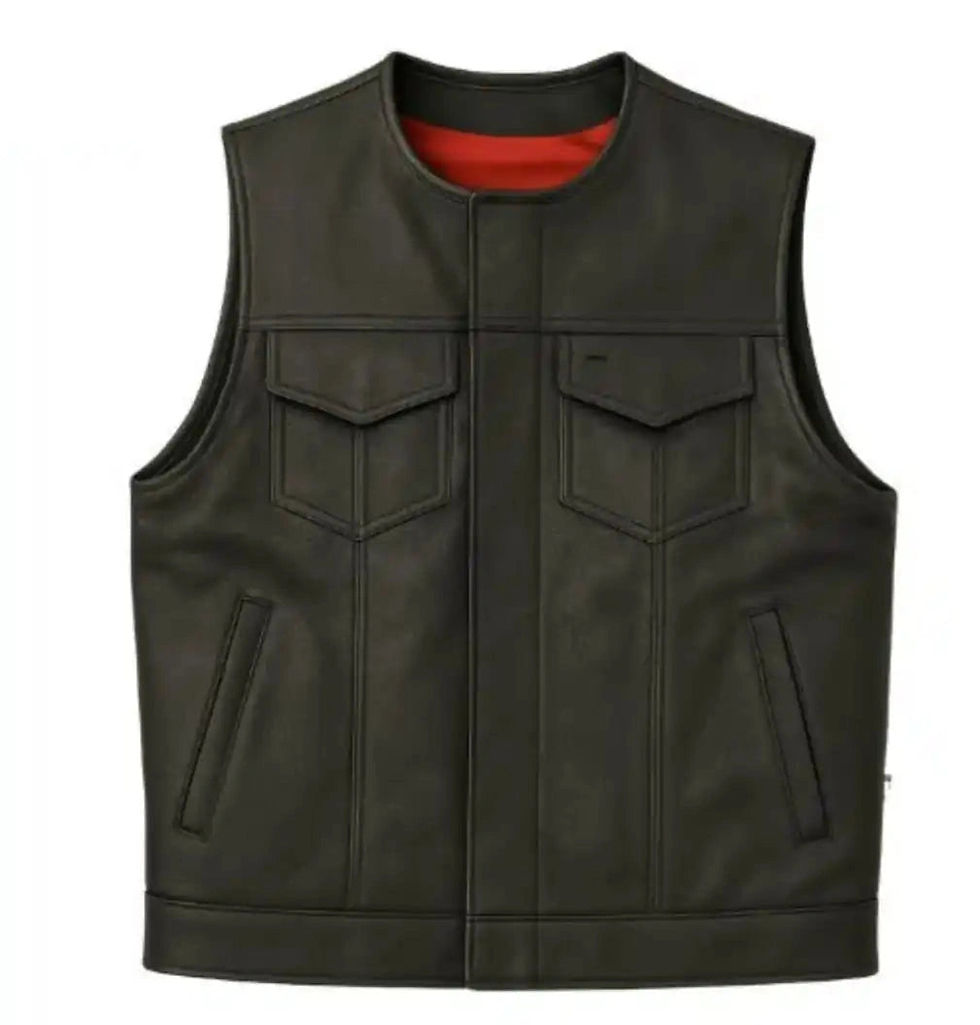
Legendary Brotherhood Men's Leather Vest, $329. Heavier hide, more panels, gun pockets, and the finish work you can see at arm's length. Buy this if drape and detail matter to you.
BECK 588 Horsehide Motorcycle Vest, from $365. The entry into horsehide from a separate American maker Legendary carries. Denser grain, slower break in, repairable for decades. A forever purchase, not a performance one.
Fox Creek Leather deserves a mention in this exact conversation. They build heavy USA made vests at prices that undercut a lot of the $250 to $350 bracket, and if raw value per dollar of hide is your only metric, they are hard to beat.
Prices verified August 2026.
What I'd Actually Buy
If this is your first leather vest, spend $180. You get sealed top grain, doubled seams, and side lacing, and you skip the failure modes that make people say leather vests are junk. Then put the $150 you saved into a decent pair of gloves and a tin of conditioner, which will do more for your riding than a heavier back panel ever will.
If you already own a mid tier vest and you are shopping for the next one, the honest question is not budget, it is what is missing. If the answer is pockets or a heavier hang in wind, go to $250 to $330. If the answer is that you want a specific hide from a specific maker, go to horsehide and be at peace with it. If you cannot name what is missing, the vest you own is the right vest, and a tin of leather conditioner will get you further than a new one.


