


The Role of Leather Motorcycle Gloves in a Complete Riding Safety System

Updated: Sep 28
The Role of Leather Motorcycle Gloves in a Complete Riding Safety System
Leather motorcycle gloves are one component of a complete safety system. Here is how they fit into the full picture.
Disclosure: MotoGearRater and Legendary USA have the same owner. Links to legendaryusa.com in this article go to our owner’s store, and are marked as sponsored. How we make money
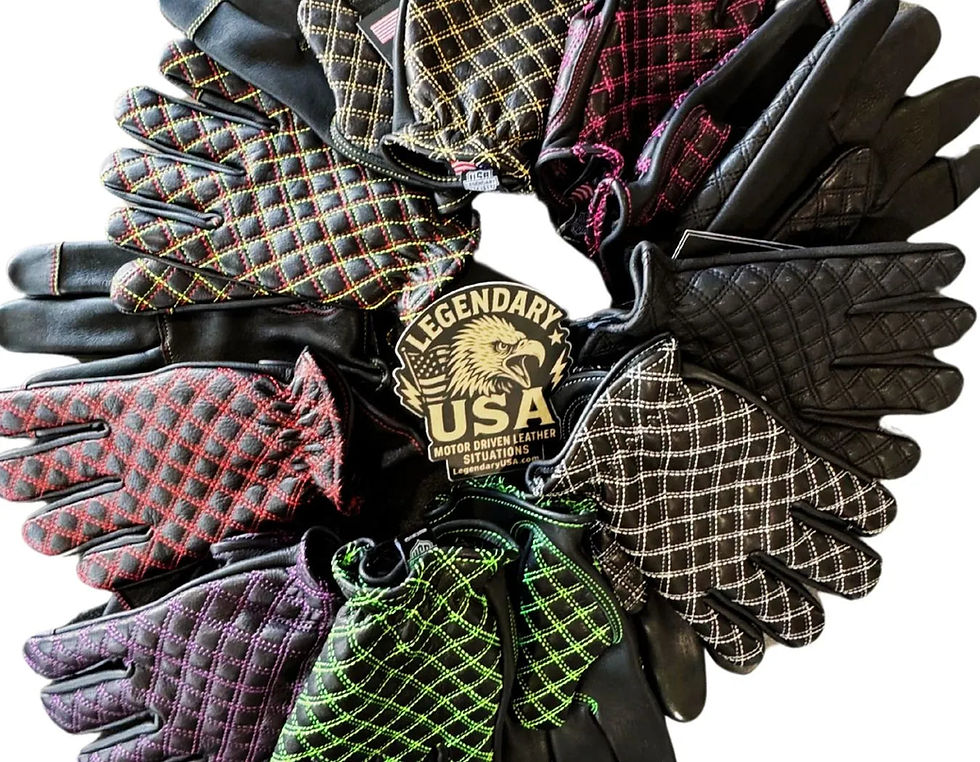
The Five-Component Safety System
Head/brain: CE-certified helmet. Upper torso, shoulders, elbows, spine: CE Level 2 jacket. Hands and wrists: CE Level 2 leather motorcycle gloves. Hips, knees, thighs: CE Level 2 pants. Feet, ankles, lower legs: motorcycle-specific boots. The five-component system protects the major injury zones identified in motorcycle crash research. System protection exceeds the sum of parts — unprotected zones create injury pathways the other four components cannot cover. The system is never more protective than its lowest-protection component.
How Gloves Interact With Other Gear
Critical wrist interface: gap between jacket sleeve and glove cuff creates unprotected crash sliding zone; gauntlet gloves overlapping jacket sleeves maintain continuous protection. First-contact role: hands and arms typically make first road contact in crash falls (instinct to extend hands) — gloves are the first line of protection in initial contact scenarios. System weakest link: CE Level 2 jacket, pants, and boots don't prevent hand abrasion if gloves are CE Level 1 or uncertified. Each component's protection level determines the system's protection at that zone.
Leather motorcycle gloves leather motorcycle gloves function as the hands-and-wrists component of a five-part safety system — and as the first-contact protection in fall scenarios where the hands instinctively extend to the ground before the body arrives. CE Level 2 gloves complete the system at the hand zone; lower-protection gloves create the system's weakest link at the zone most likely to make first road contact.
Evidence for Full Gear vs Partial Gear
Studies consistently show riders in full protective gear have significantly lower soft-tissue injury rates to protected zones vs partial gear riders. Helmet use: most well-documented protection effect in motorcycle crash research — dramatically reduces fatal and serious head injury. Gloves: hand, wrist, and forearm injuries are among the most common non-fatal motorcycle crash injuries — protective gloves reduce severity and frequency in road-contact crashes. Directional evidence is consistent across studies: each component reduces injury to its covered zone; the five-component system together provides substantially better injury profiles than partial gear.
Priority Order for Phased Purchase
1. Helmet (head/brain injury is the most lethal crash injury category). 2. Jacket (upper torso and spine injuries among the most severe non-fatal). 3. Gloves (common injuries, relatively affordable vs quality helmets and jackets). 4. Pants (knees and hips cover common lower body impact zones). 5. Boots (completes the system with lower leg and ankle protection). At each phase, wear existing protection while understanding unprotected zones and completing the system as budget allows.
FAQs
What are the five components of a complete safety system?
CE-certified helmet (head/brain), CE Level 2 jacket (upper torso/shoulders/elbows/spine), CE Level 2 gloves (hands/wrists), CE Level 2 pants (hips/knees/thighs), motorcycle-specific boots (feet/ankles/lower legs). System protection is determined by the weakest-protection component.

How do gloves interact with other gear?
Critical wrist interface with jacket sleeve (gauntlet overlap maintains continuous protection). First-contact protection in falls (instinct extends hands before body arrives). System weakest link if lower protection than other components.
Statistical evidence for full vs partial gear?
Full gear riders have significantly lower soft-tissue injury rates to protected zones. Helmet most well-documented. Gloves reduce hand/wrist/forearm injury severity and frequency. Directional evidence consistent across studies.
Priority order for phased purchase?
1. Helmet, 2. Jacket, 3. Gloves (common injuries, relatively affordable), 4. Pants, 5. Boots. Wear available protection while understanding remaining unprotected zones.
Complete the System at the Hands
Our American-made leather motorcycle gloves complete the hand-and-wrist component of your riding safety system with CE Level 2 protection. Shop the collection and close the last gap in your safety kit.


