


Leather Motorcycle Gloves for the Southwest Desert: Heat, Sun, and Grit
- jamesjordan

- Jun 26
- 3 min read
Updated: 17 hours ago
Leather Motorcycle Gloves for the Southwest Desert: Heat, Sun, and Grit
Southwest desert riding in Arizona, New Mexico, Nevada, and Utah creates extreme conditions for leather motorcycle gloves. Here is what those conditions demand.
Distinct Desert Challenges for Leather Gloves
Extreme UV exposure: Phoenix averages UV index 10-12+ in summer — some of North America's highest UV intensity; accelerates leather degradation at rates significantly faster than the national average, driving surface drying, cracking initiation, and dye fading. Extreme heat at riding speed: 100-115°F ambient temperatures common in summer; leather's natural temperature regulation is overwhelmed by Southwest summer heat even at highway speeds. Grit and desert dust abrasion: wind-blown sand and desert grit creates abrasive particle exposure on leather surfaces that slowly removes the conditioned outer layer and accelerates surface cracking at abrasion points without regular cleaning and conditioning.
Conditioning and Maintenance Frequency for Desert Riders
UV-driven conditioning schedule: high UV index depletes leather conditioning oils at approximately 2-3x the national average rate — condition every 2-4 weeks during summer riding season vs the standard 2-3 times per season recommendation; aggressive conditioning schedule in the Southwest is prevention, not option. Pre-condition grit cleaning: brush grit and dust from leather surface with a soft brush after any desert or off-road riding before applying conditioner — prevents abrasive particles being rubbed into the leather during the conditioning wipe. UV-protective coating options: leather care products with UV-blocking agents slow UV-driven oil depletion and dye fading — Southwest riders who prioritize service life benefit from UV-protection products specifically.
Southwest desert leather motorcycle gloves require perforated full-grain leather for simultaneous heat management and abrasion resistance, conditioning every 2-4 weeks during summer (not the standard 2-3 times per season) to address the UV index levels that are 2-3x the US average, grit cleaning before every conditioning application to prevent abrasive desert particles being rubbed into the leather surface, and a two-glove seasonal system: perforated lightweight for the 100-115°F summer months and mid-weight gauntlet for the 25-65°F shoulder seasons.
Heat Management in Desert Leather Gloves
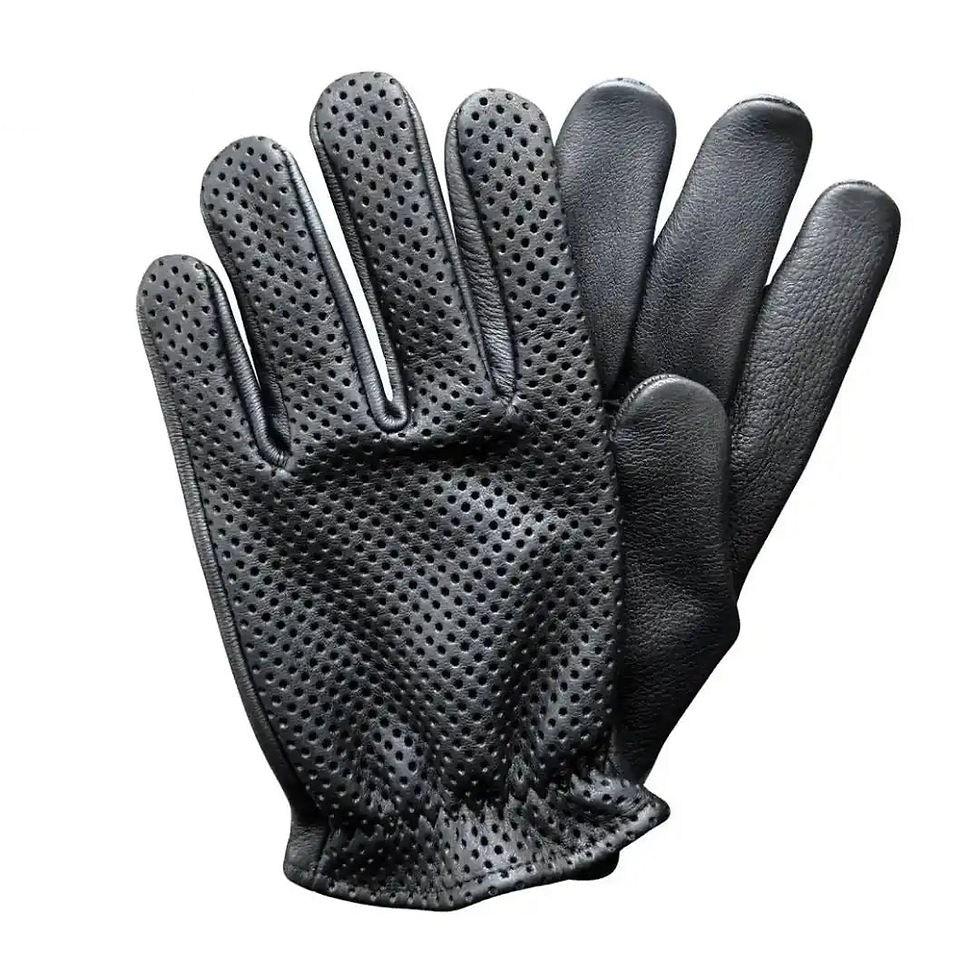
Perforated leather construction at back of hand: most effective passive heat management — allows sweat vapor escape and convective air cooling at highway speed; rain penetration trade-off is less relevant in the desert Southwest where annual rainfall is low. No insulation: desert riding gloves should have zero insulation — the challenge is heat retention, not heat generation; even thin thermal lining that helps at 40°F makes 110°F significantly less comfortable. Heat threshold consideration: at extreme summer temperatures some riders switch to textile/synthetic — legitimate if leather heat management is insufficient for comfort, as long as the alternative provides equivalent CE Level 2 protection.
What Works Best in Desert Conditions
Short-cuff ventilated for summer (heat management priority); gauntlet for shoulder seasons (weather protection becomes relevant as temperatures moderate). Perforated full-grain leather: best combination of heat management construction and abrasion resistance for the desert environment. Genuine or top-grain leather perforated gloves lack the durability of full-grain in desert abrasive conditions. Two-glove Southwest seasonal system: perforated lightweight for May-October; mid-weight gauntlet for November-April — more practical than any single-glove compromise across the Southwest's 25-115°F seasonal range.
FAQs
What distinct challenges does desert riding create for leather gloves?
Extreme UV (10-12+ index, 2-3x national average oil depletion rate), extreme heat at riding speed (100-115°F ambient overwhelming leather's temperature regulation), and grit and desert dust abrasion accelerating surface cracking without regular cleaning.

Conditioning and maintenance frequency?
Every 2-4 weeks during summer (vs standard 2-3x per season). Grit cleaning with soft brush before every conditioning application. UV-protective leather care products to slow UV-driven oil depletion and dye fading.
Heat management in desert leather gloves?
Perforated back-of-hand construction, no insulation, UV-driven conditioning schedule. Rain penetration trade-off at perforations less relevant in low-rainfall desert. Textile/synthetic alternative if leather heat management is insufficient for summer comfort — maintain CE Level 2.
What gloves work best in desert conditions?
Perforated full-grain leather (heat management + abrasion resistance). Short-cuff for summer, gauntlet for shoulder seasons. Two-glove seasonal system (May-October perforated; November-April mid-weight gauntlet) covers the Southwest's full 25-115°F seasonal range.
Built for the Desert Road
Our American-made leather motorcycle gloves are built from quality full-grain leather that takes the conditioning maintenance the Southwest demands and delivers the abrasion resistance the desert environment requires. Shop the collection.


