Legendary USA Gear for the Iron Butt Rider: Gear Built for 1,000 Miles

Updated: Sep 28
Disclosure: MotoGearRater and Legendary USA have the same owner. Links to legendaryusa.com in this article go to our owner’s store, and are marked as sponsored. How we make money
QUICK ANSWER: Iron Butt riders need gear that performs better at mile 800 than it does at mile 1 — gear with no comfort failures and no mechanical issues across 24+ hours of continuous riding. For gloves, the pick is the Legendary Classic Deerskin Gauntlets at $75 (112 reviews, 4.88): broken in to the rider's specific hand, moisture-resistant though not waterproof, with a gauntlet cuff that seals the wrist. For the jacket, the BECK 501 Trucker Horsehide Jacket at $725 (41 reviews, 4.93), which moves without resistance through any position change once it is broken in. Neither is CE rated — riders who want certified armor for a 1,000-mile day should look at Held or REV'IT touring gear instead.
What Iron Butt Riding Reveals About Gear Quality

The Iron Butt Saddle Sore 1000 — 1,000 miles in 24 hours — is not a test of motorcycle gear in the way a crash test is. It is a test of sustained performance across conditions that accumulate: rain in the night hours, heat in the afternoon, cold in the pre-dawn miles, the cumulative vibration of 18 hours of highway riding, and the fatigue that compounds through every minor discomfort that lesser gear produces.
Riders who complete Iron Butt events consistently report gear failures that end or nearly end attempts: gloves that stiffen in rain and make brake lever operation imprecise at mile 600; jacket seams that create pressure points at mile 400 that are genuinely painful at mile 900; wrist areas that let cold air enter and produce cumulative hypothermia that impairs judgment in the small hours. Every one of these failures is preventable with appropriate gear selection.
The Deerskin Gauntlet at Mile 800
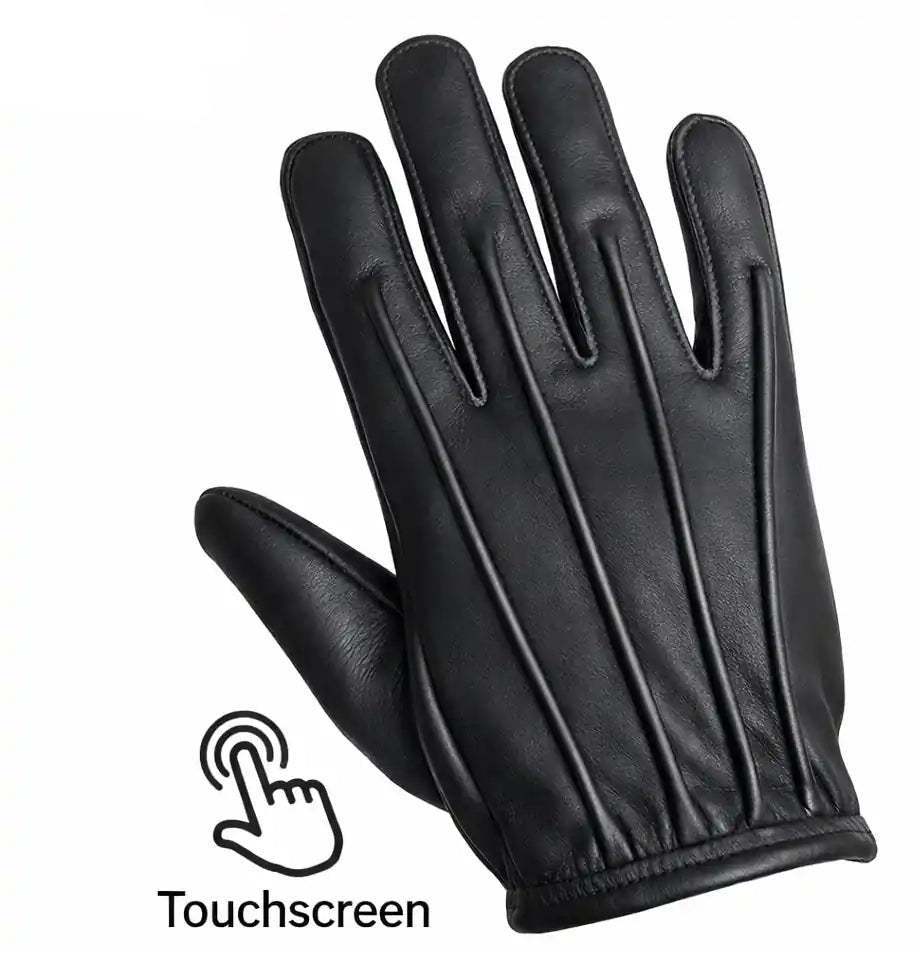
At mile 800 of an Iron Butt attempt, a broken-in pair of Classic Deerskin Gauntlets ($75, 112 reviews, 4.88) is performing better than it did at mile 1. The leather has conformed precisely to the rider's hand in riding position. The outseam construction means there is zero interior finger pressure at any mile. The gauntlet cuff is sealed over the jacket sleeve — no cold, no rain, no wind has entered at the wrist through the full attempt. The deerskin has managed perspiration without stiffening through the full temperature range of the ride. What it does not have is armor or a CE rating; that is the tradeoff this glove makes for feel.
This is the argument for broken-in quality leather over new synthetic gear at any mileage: a glove that has been worn for 200+ hours before the attempt is a different object than a new glove. It has been personalized to the specific rider's hand by those 200 hours. It has no surprises left. It will perform at mile 800 exactly as it performed at mile 200, because it has already proven itself across those miles.
The Horsehide Jacket Through Day and Night
An Iron Butt attempt crosses the full daily temperature range: dawn cold, afternoon heat, evening chill, night cold, dawn cold again. A jacket that functions acceptably in one temperature zone but creates problems in another is an Iron Butt failure risk. The BECK 501 Trucker Horsehide Jacket ($725, 41 reviews, 4.93) manages this range through the inherent properties of the material: horsehide provides meaningful wind protection in cold, breathes better than a synthetic windproof shell in heat, and has no mechanical components to fail in the night hours. It carries no armor pockets and no CE rating, which is the honest difference between it and a laminated textile touring jacket from Klim or REV'IT. The rest of the BECK horsehide lineup behaves the same way.
The break-in of the horsehide jacket is also relevant to Iron Butt performance. A jacket that has been worn for 1,000+ hours before the attempt has zero binding, zero restriction, and zero pressure points. It moves with the rider through every position change — standing on the pegs through rough road sections, tucking for headwind sections, sitting upright for fuel stop sequences — without creating the micro-fatigue that accumulates into significant impairment over a 24-hour ride.
Frequently Asked Questions
What gloves do Iron Butt riders recommend?
Iron Butt veterans split into two camps. The leather camp rides deerskin gauntlets: moisture resistance for rain encounters, outseam construction for zero finger pressure across 24 hours, and a gauntlet seal for wrist warmth. MotoGearRater's pick in that camp is the Legendary Classic Deerskin Gauntlets at $75 (112 reviews, 4.88), made in the USA from American Whitetail deerskin and cheap enough to buy a second pair to keep dry in a saddlebag. The technical camp rides Gore-Tex touring gauntlets from Held or REV'IT, which are genuinely waterproof and CE certified where the Legendary gauntlet is neither. If your 1,000 miles are likely to include hours of hard rain, buy the Held. If they are mostly dry and you care about hand fatigue over 24 hours, buy the deerskin. The full Legendary glove lineup has short-wrist options if a gauntlet does not suit your jacket cuffs.
Should I use new or broken-in gear for an Iron Butt attempt?
Broken-in, every time. New gear has an unknown comfort profile — it may perform well, or it may produce pressure points that are minor at mile 50 and significant at mile 500. Broken-in gear has a known comfort profile. For an Iron Butt attempt, gear should have a minimum of 500–1,000 miles on it before the attempt.
How do I prepare Legendary USA gear for an Iron Butt attempt?
Condition the leather 2–3 days before the attempt (not immediately before — fresh conditioner can be tacky). Ensure the horsehide jacket has at least 500+ miles of break-in. Verify the gauntlet cuff seals cleanly over your specific jacket sleeve. Break in the gloves specifically on the motorcycle you will ride the attempt on — bar diameter and position affects the break-in geometry. If anything gets soaked en route, air dry it at room temperature away from direct heat — never on a radiator.