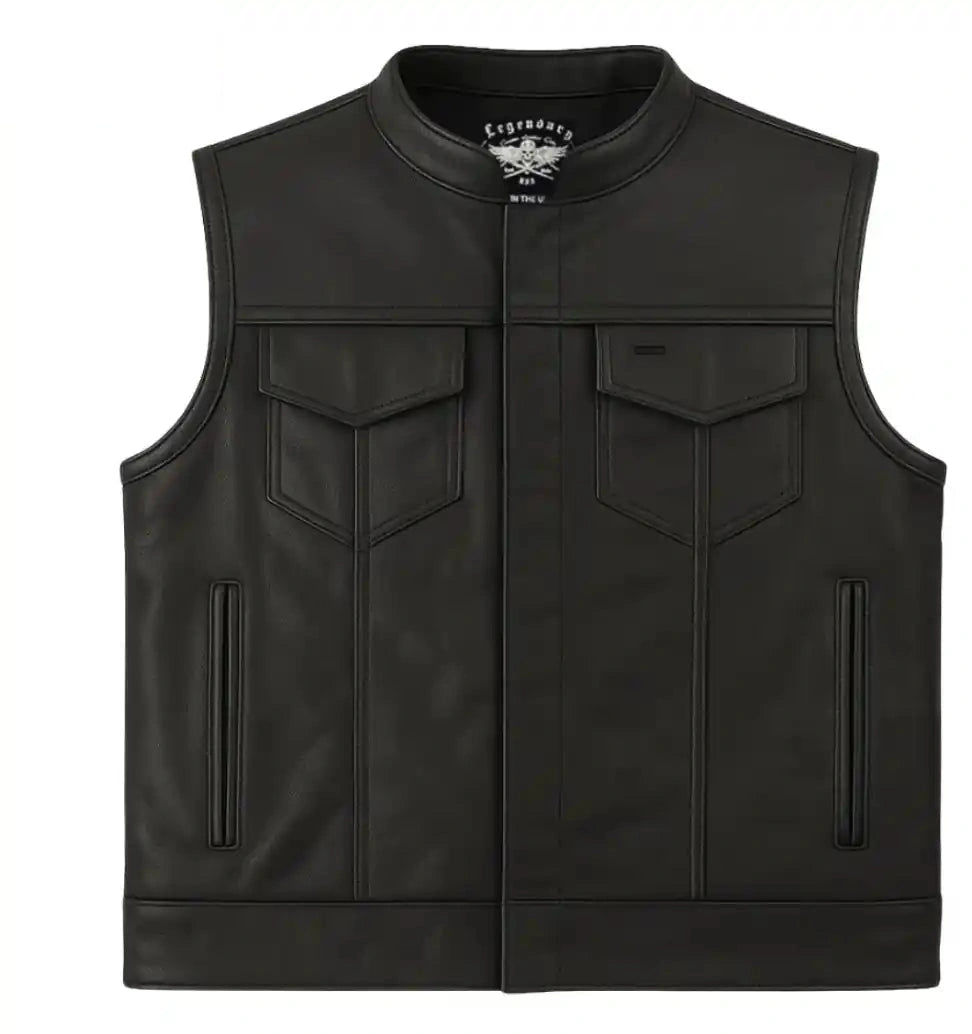
Lightweight Textile Vests vs Leather in Summer Heat

Updated: Aug 3
Last July I ran a cheap infrared thermometer at a gas stop outside Barstow. Ambient air was 101 F. The back panel of my black leather vest, which had been sitting in direct sun for four hours of riding, read 137 F. The black textile vest a friend was wearing read 121 F at the same moment, in the same parking lot, on the same side of the pumps. Sixteen degrees is not a rounding error. You feel sixteen degrees in your shoulders about 20 minutes into the next leg.
That is the honest starting point for this comparison, and it is not the whole story. Leather does something in a 75 mph wind blast that no 500 denier textile shell does, and it does something for patches that textile cannot match. The question is not which material is better. It is which one is better for the specific 400 mile day you have planned.

Sun Load Is the Variable Nobody Measures
Riders talk about airflow constantly and almost never talk about radiant load, which is the bigger factor when the sun is high. Leather is dense and it stores heat. A finished cowhide vest panel runs somewhere around 1.2 to 1.4mm thick with a sealed top grain, and once that panel has absorbed solar energy it holds it and reradiates it against your shirt long after you pull into shade.
A woven Cordura panel is thinner, lighter, and has a much lower thermal mass, so it sheds heat within a minute or two of getting out of the sun. It also dries. If you soak a cotton tee and ride in a textile vest, the evaporative cooling actually works, because moisture vapor can pass through the weave. Do the same under sealed leather and you have essentially built a sauna with snaps.
There is a color argument here too, and it is real but smaller than people think. Brown leather ran about 8 F cooler than black in my crude parking lot test. That helps. It does not close the gap with textile.
What a Cordura Vest Does That Leather Cannot
The advantages are practical rather than dramatic, and they stack up over a long hot day.
Weight. A lightweight textile vest runs roughly a third to half the weight of a full leather club vest. On a 10 hour day that shows up in your neck and shoulders, not your arms.
Air exchange. Woven nylon breathes at the panel, not just at the armholes. Leather only moves air where there is a gap.
It packs. A textile vest rolls into a tail bag. A leather vest creases if you fold it hard, and the crease stays.
It washes. Sweat salt in a textile vest comes out in cold water. Sweat salt in leather draws oils out of the hide and leaves a stiff, pale ring you then have to condition back.
It dries fast. Caught in an afternoon thunderstorm, a textile vest is wearable again in 40 minutes. Wet leather takes a day and must dry away from heat or it hardens.
Where Leather Still Wins
Three situations, and they are not edge cases. First, sustained highway wind. Above about 70 mph the wind pressure on a textile shell flutters, and flutter is noise and fatigue. Leather is stiff enough to sit still against your chest. On a long interstate slog I will take the hotter vest for that reason alone.
Second, patches. A leather back panel is a rigid platform. Patches sewn to it hang flat, stay flat, and do not distort when the vest is washed, because it is not washed. A textile back panel moves under a large patch and the stitch line eventually pulls the weave. The real ones have been running leather for this reason for 60 years and it is not sentiment.
Third, longevity. A well made leather vest is a 15 to 25 year garment that gets better looking. A textile vest is a 5 to 8 year garment that gets more faded. If the cost per year matters more than the cost today, leather is the cheaper item. I have a leather club vest that is on its second set of snaps and looks better now than it did new.
One thing neither material does is protect you in a crash. Legendary and BECK leather is unarmored and not CE certified. It is abrasion and wind protection, and the same goes for a lightweight textile vest with no armor pockets. If impact protection is the goal, that is a different purchase, and it should be honest CE rated equipment like the Bohn armored line.
How I Actually Split the Season
My rule is a temperature line and a mission line, in that order. Above 90 F with any real time in the sun, textile. Below 85 F, leather, because the wind chill on a moving bike does most of the cooling for you and the leather is doing useful work blocking wind blast. Between 85 and 90 it comes down to whether I am on the interstate or in traffic. Stop and go is where leather punishes you, because there is no airflow at all and the panel is still soaking sun.
The second question is what I need the vest to do socially. If I am wearing patches that day, leather, regardless of temperature, and I plan the ride around early mornings instead. If it is a solo highway run in August, the textile vest wins and nobody is looking at my back panel anyway. If you are trying to own one vest rather than two, look through the full vest collection and be honest about which half of the year you actually ride most.
Editor's Picks
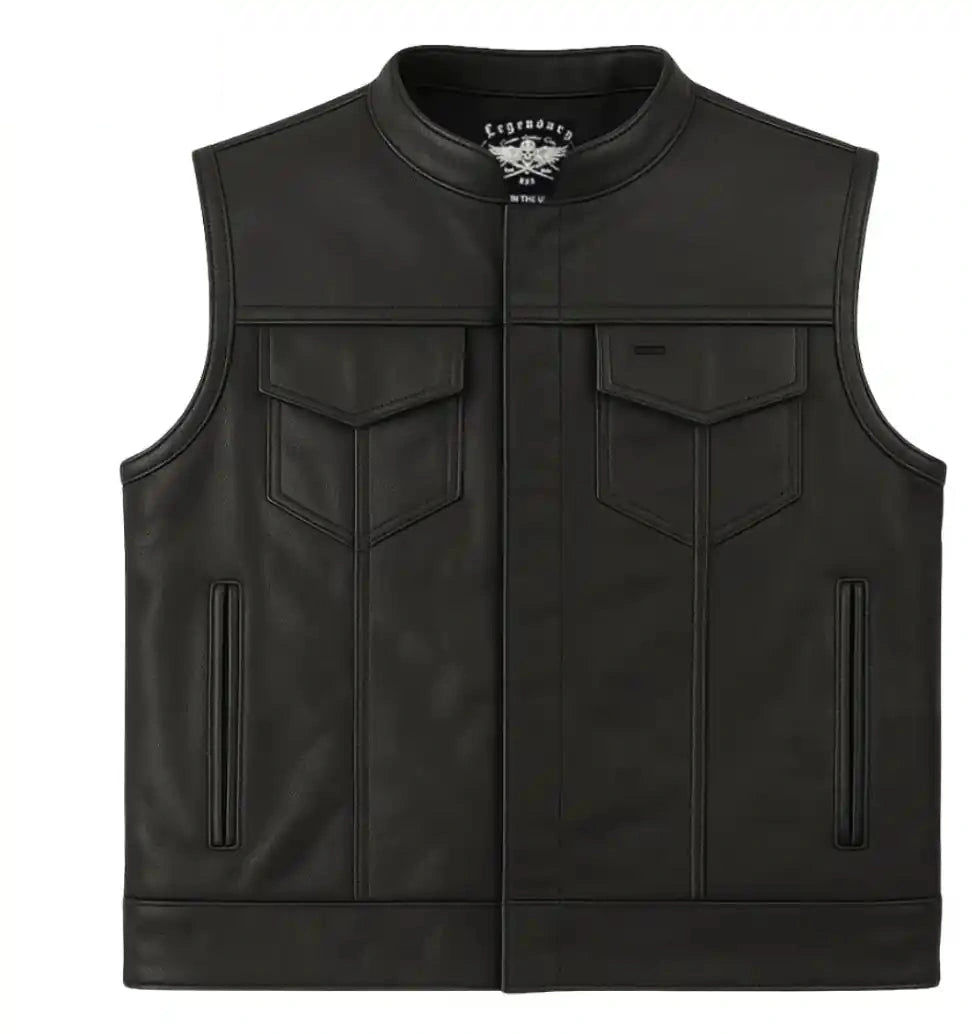
Three vests that cover the hot weather question from different directions, plus the leather option I keep coming back to when the temperature drops out of the 90s.
Legendary Black Jack Lightweight Cordura Vest, from $179.99. The textile answer. Light, breathable, packs down, and it takes the summer sun load far better than any hide. Buy this one if July is your heaviest riding month.
Legendary Dixon Men's Leather Motorcycle Vest, $125. The cheapest way into real leather. Simple cut, no gun pockets, and a clean back panel. Good starter vest for shoulder season riding.
Legendary Outlaw Men's Leather Motorcycle Vest, $239. Heavier hide, gun pockets, and the back panel that holds patches flat for two decades. This is the one that earns its keep in September and October.
Men's Concealed Carry Soft Shell Vest (Rothco), from $119.99. Not a club vest and not trying to be. It is the utility option for riders who want pockets and airflow and do not care about the leather look.
Alpinestars does the genuinely technical version of this better. Their mesh and armored summer gear moves more air and actually carries CE rated impact protection, which no vest on this list does. If your priority is staying cool and protected rather than staying cool and looking like yourself, start there.
Prices verified August 2026.
The Bottom Line
If you ride mostly in genuine heat, above 90 F, in the sun, in traffic, the textile vest is not a compromise. It is the correct tool, and the 16 degree difference I measured is the reason. Leather in that environment is a choice you are making for reasons other than comfort, and it is fine to make it, but you should know what you are buying.
For most riders in most of the country, the honest answer is that leather covers eight months and textile covers two, and the two are the ones that make people quit riding for the summer. If you can only own one, buy leather, because it lasts three times as long and does more of the year. If you already own leather and you are looking for the second vest, buy the Cordura and stop suffering in August.