Motorcycle Gear for Rain Riding: How Legendary USA Handles Wet Conditions

Updated: Sep 28
Disclosure: MotoGearRater and Legendary USA have the same owner. Links to legendaryusa.com in this article go to our owner’s store, and are marked as sponsored. How we make money
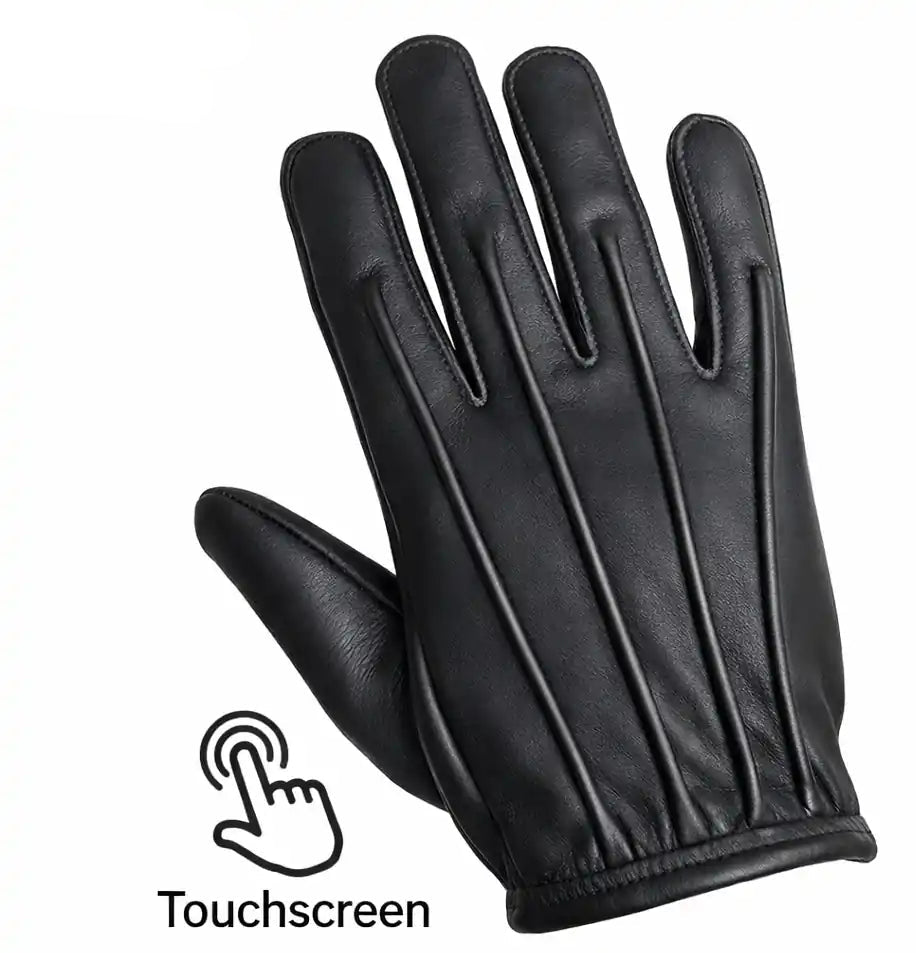
QUICK ANSWER: Deerskin handles a wet ride better than cowhide — it stays supple where cowhide stiffens — but it is not waterproof, and a soaked deerskin glove does get slick. The Legendary Double-Diamond Touchscreen ($135, 87 reviews, 4.92) is the deerskin glove we'd take through a passing shower; for a full day of sustained rain, a Gore-Tex-lined textile glove from Held or REV'IT is the honest recommendation, because no unlined leather glove wins that fight. The BECK 501 Trucker Horsehide Jacket ($725, 41 reviews, 4.93) sheds light rain and road spray through sheer leather density, but it is not waterproof either — for prolonged wet, wear a waterproof shell over it. None of this gear is CE rated.
Why Deerskin Performs Better in Rain

Deerskin's wet-weather advantage over cowhide comes from its natural oil content — the lanolin-like oils within the fiber structure that remain from the animal's skin even through the tanning process. These oils slow the rate at which water enters the leather structure. When deerskin does get wet, the oils in the fiber prevent the complete water-fiber bonding that causes cowhide to stiffen as it dries. That is a real property, and it is also a limited one: it buys you time in rain, not immunity from it.
In practical terms: a deerskin glove that gets wet in a rain encounter remains supple enough to operate brake and clutch levers with normal precision. A cowhide glove that gets wet begins to stiffen within 15–20 minutes of sustained rain exposure, reducing grip precision noticeably by the time it has been wet for an hour. For highway rain riding where precise lever control matters, this difference is safety-relevant. Suppleness is not the same as grip, though — see the slipperiness question below.
Conditioning Deerskin Before Rain Rides
Conditioning deerskin before anticipated rain exposure improves wet-weather performance. A lanolin-based conditioner applied 24–48 hours before a rain-likely ride replenishes the natural oil content of the leather, getting the most out of its moisture resistance for the conditions ahead. Conditioned deerskin handles light to moderate rain well; sustained heavy rain overwhelms it regardless of how recently it was treated.
The Horsehide Jacket in Rain
Full-grain horsehide at 1.3–1.5mm is naturally water-resistant through the density of its fiber structure. Light rain and road spray roll off the surface. In sustained moderate rain, the outer surface eventually begins to darken and absorb moisture, though the inner surface remains dry significantly longer than lighter leather alternatives. In heavy sustained rain over extended periods, horsehide will eventually allow moisture through — this is the reality of any untreated leather, regardless of quality.
For serious rain touring, MotoGearRater recommends a horsehide jacket such as the BECK 501 Trucker Horsehide Jacket ($725, 41 reviews, 4.93) as the primary layer, with a waterproof textile overjacket for prolonged wet conditions. That combination gives you the horsehide's wind protection and abrasion resistance underneath, with waterproof capability added only when needed. If you want a jacket that is waterproof on its own and CE armored out of the box, a laminated textile touring jacket from REV'IT or Klim is the correct buy — the BECK is neither waterproof nor CE rated. The rest of the BECK horsehide lineup behaves the same way in the wet.
Frequently Asked Questions
Do deerskin motorcycle gloves get slippery when wet?
Yes. A genuinely soaked deerskin palm goes slick against a grip, and anyone who tells you otherwise has not ridden a wet one. What deerskin does better than cowhide is stay soft rather than turning into a board, so lever feel survives — but the friction between glove and grip drops while the leather is saturated, and it stays reduced until the glove dries. In light rain and road spray this is a non-issue; in a downpour it is real, and the fix is either grips with texture, a waterproof over-glove, or an actual rain glove. The most water-tolerant leather glove Legendary makes is the Bad Billy Black Goatskin at $65 (129 reviews, 4.93) — goatskin carries more natural oil than deerskin and holds its grip a little longer once damp. It is still not a rain glove. If you regularly ride in sustained rain, buy a Gore-Tex-lined glove from Held or REV'IT and keep the leather for dry days.
Drying matters as much as the glove. Air dry a wet pair at room temperature, away from direct heat — never on a radiator, in front of a heater, or on a hot engine case. Heat-dried leather shrinks, hardens and cracks, and a glove dried that way will be slicker and stiffer for the rest of its life. Once fully dry, condition it.

Are deerskin gloves waterproof?
No. Deerskin is moisture-resistant, not waterproof, and nothing in the Legendary glove lineup is sold as a rain glove. It handles light rain and road spray well and stays more usable in moderate rain than most unlined leather. For waterproof performance in sustained heavy rain you want a membrane — a Gore-Tex-lined glove from Held or REV'IT — not leather.
What should I do after riding in rain with Legendary USA leather?
Air dry slowly at room temperature, away from direct heat — never on a radiator, in front of a heater, or over a vent. Once completely dry (12–24 hours depending on saturation level), condition with an appropriate leather conditioner to replace any oils displaced by the water. This restores the moisture resistance for subsequent rides.
Does rain damage Legendary USA leather permanently?
Rain alone does not permanently damage quality full-grain leather that is dried correctly and conditioned after drying. Permanent damage comes from heat drying (which causes cracking) or from repeated wet exposure without any conditioning (which depletes the natural oil content over time). Follow correct drying and conditioning procedures and rain exposure is a normal part of leather gear's service life.