


New Rider Gear Mistakes That Cost You Money Twice
- Kim Alberto

- Jul 30
- 6 min read
Updated: Aug 3
In my first year of riding I spent about $640 on gear and replaced nearly all of it within eighteen months. Not because it wore out. Because it did not fit, or it was built for a bike I did not own, or it was cheap enough that it fell apart before I got comfortable in it. The second round cost me another $900, which means my actual first-year gear budget was $1,540 for roughly $900 worth of gear.
None of these mistakes are stupid. Every one of them is a reasonable decision made with incomplete information, which is exactly the position a new rider is in. What follows is the four that cost people the most, with the specific way each one goes wrong and what to do instead. Nothing here requires spending more money. Most of it requires spending the same money in a different order.

Mistake One: Buying a Size Instead of a Fit
You wear a large in shirts, so you order a large jacket. It arrives, the chest is right, and the sleeves stop an inch short of your wrists when you reach forward on the bars. You keep it because it technically fits standing in the kitchen. Six months later you buy a different one.
Riding gear is fitted in the riding position, not standing up. Sit on the bike or lean forward in a chair with your arms out. Sleeves should still cover your wrists. The jacket back should not ride up and expose your kidneys. A vest should not gap at the armholes when you reach. For gloves, this matters even more: gloves are sized by measuring across your knuckles in inches, and a glove a half size too big rolls under your palm on the grip and wears through in one season. The glove size chart converts the measurement directly, and it takes thirty seconds with a tape.
Leather also does not stretch its way out of a fit problem. It softens and takes your shape, which makes a correctly sized garment better and an incorrectly sized one no different. If it is tight in the shoulders in week one, it is tight in year three.
Mistake Two: Buying Cheap, Twice
This is the expensive one. A $90 jacket seems like the sensible starter purchase when you are not sure you will stick with riding. The problem is that gear at that price uses split leather or thin corrected grain, light thread, and zippers that fail in the second season. You replace it, usually with something around $150, and that fails too. Two rounds of that is $240 and you still do not own a jacket.
Do the arithmetic before you buy. A $415 leather jacket that lasts ten years costs about $42 a year. Four $110 jackets over the same ten years cost $440, and you spend the whole decade in worse gear. The threshold where construction stops being a gamble sits around $250 for an armored textile jacket, around $400 for American made leather, and around $110 to $120 for American deerskin gloves. Below those numbers you are buying a specific compromise, and it is usually the stitching.
The exception worth naming: buy cheap on things you will genuinely outgrow in taste rather than in durability. A $65 denim vest is a fine first vest. Nobody has ever regretted a cheap vest the way they regret a cheap jacket.
Mistake Three: Treating Gloves as the Last Purchase
Gloves are the item new riders skip and the item that comes off worst in an ordinary low-speed fall. Your hands go out in front of you before you think about it. A parking lot tip-over at 8 miles an hour will take skin off a bare palm, and hands heal slowly and expensively.
There is a second reason, less dramatic and more common. Cold or numb hands make you slower on the controls, and vibration through bare palms after 90 minutes causes real fatigue. Every rider I know who quit riding early cited discomfort, not fear. Gloves are the cheapest fix for the discomfort problem in the entire gear list.
Be clear about what deerskin gloves are and are not: they are unlined and unarmored, they carry no CE rating, and they are not armor. They are abrasion and wind protection with real dexterity. If you want impact protection at the knuckles, buy an armored glove and know that you are trading feel for it.
Mistake Four: Buying for the Bike You Want
You ride a used 400 and you buy a full one-piece style riding suit because you plan to get a sport bike next year. Or you ride a standard and buy a heavy fringed jacket because of a cruiser you saw. Either way you spend the next two years in gear that does not match your riding position, and by the time you get the bike, your taste has changed anyway.
Buy for the bike under you and the miles you actually ride. Riding position determines sleeve length and jacket cut. Your climate determines ventilation. Your commute determines whether you need something you can wear into an office. If you switch bikes in two years, well-made leather comes with you, and that is another argument for buying one good piece over three cheap ones.
The Order I Would Spend a First-Year Budget In
If somebody handed me $700 and a new license, this is the sequence, and the helmet is assumed to be bought already.
Gloves first, $100 to $125. Used on every ride, cheapest per hour of use, and the thing you notice missing immediately.
Boots second, over the ankle. Not covered here, but do not ride in sneakers, and buy these in a store where you can walk around.
Jacket third. Budget $250 to $350 for an armored textile jacket, or save to about $415, which is where American made leather actually starts. This is the piece where buying cheap costs you twice.
Armored riding pants or armored jeans fourth, around $215. Legs get ignored and they are what hits the pavement in a low-side.
Vest or a second pair of gloves last, once you know what your riding actually looks like in July and October.
Editor's Picks
Four things I would put on a first-year rider, in the order above. The leather items are unarmored and carry no CE rating; the Bohn pants are the only actually armored item on this list. Compare the wider selection across the full gear range before committing.
Aramid Touchscreen Deerskin Gloves, $125. The aramid-lined palm adds abrasion resistance exactly where a new rider puts their hands down, for five dollars over the plain version. Easiest upgrade on the list.
Legendary Flying Fortress Vintaged A-2 Goatskin Flight Jacket, $415. The entry price for American made leather, higher than most new riders expect, and that gap is mistake two in one line item. Buy it once instead of three cheap jackets. Unarmored and not CE certified.
Bohn All-Season Original Armored Riding Pants, from $214.99. Genuine CE armor at hip and knee, worn under normal clothes. The piece new riders skip and the one that covers the part of you that hits first.
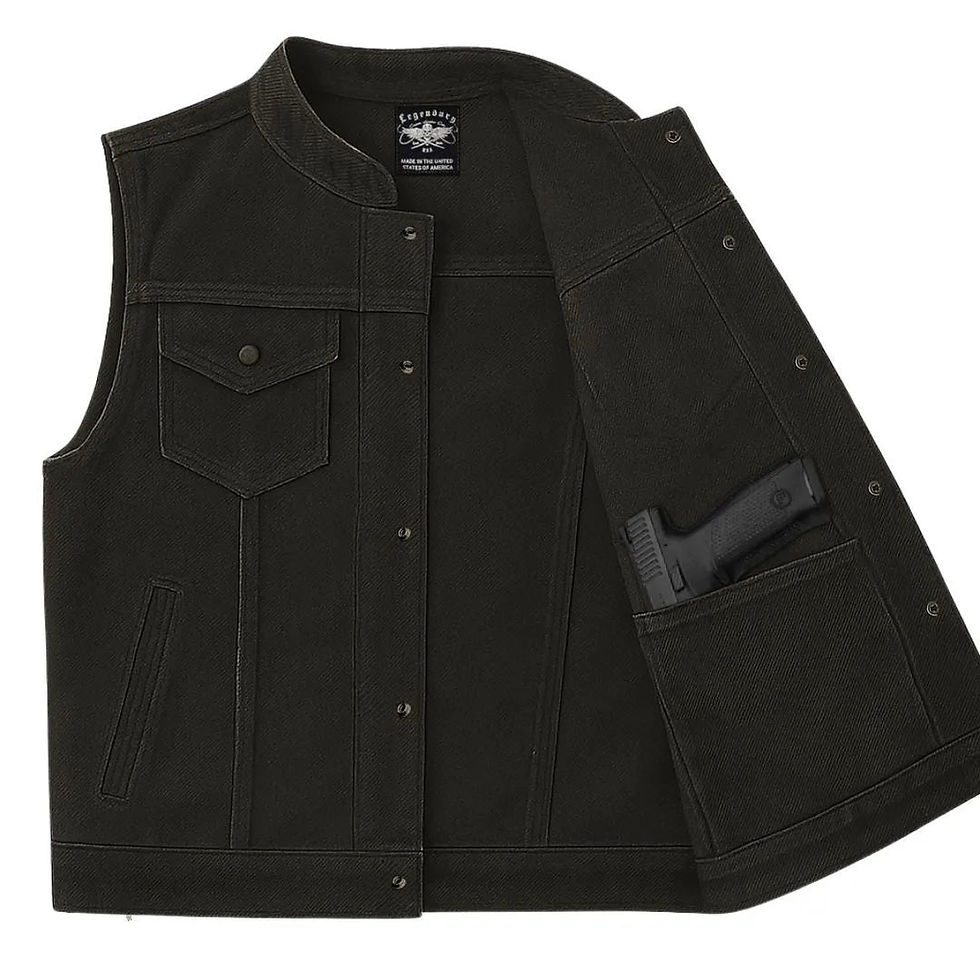
Legendary Revolution Men's Black Denim Vest, $65. The correct place to buy cheap. Washes, breathes in summer, and if your taste changes in a year you are out sixty-five dollars.
Where Alpinestars Is the Smarter Buy
If protection is your first priority rather than fit and feel, Alpinestars is the honest recommendation for a new rider. Their jackets and suits are built around CE-rated armor as a system, the sizing runs consistent across the whole line so a size in one jacket predicts the next, and their entry-level textile gear delivers more measured protection per dollar than any unarmored leather. What leather gives you instead is longevity, repairability, and something you will still want to wear in fifteen years. A new rider who commutes in traffic every day should look hard at Alpinestars first. Prices verified August 2026.
What I'd Actually Buy First
Gloves, measured properly, at around $120. It is the smallest purchase on the list and the one that changes your riding immediately, and a correctly sized pair of American deerskin will still be in service when you are on your third bike. Then save until you can buy the jacket once.
The thread running through all four mistakes is the same: gear bought against an imagined future costs more than gear bought for the riding you are doing this month. Measure yourself, buy for the bike in your garage, and put the money into fewer, better pieces. If you want a starting point on the two categories that matter most, the glove guide and the armored gear range are where I would look first.


