The Problem With Fast-Fashion Motorcycle Gear

Updated: Sep 28
Fast-fashion motorcycle gear fails riders on leather grade, stitching, and hardware well before it should — often within the first or second riding season. The problem isn't price alone; it's what brands sacrifice to hit a price point. Thin leather, loose stitching, lightweight hardware, and fashion-first cuts add up to gear that looks the part in a photo but doesn't hold up on the road.
Disclosure: MotoGearRater and Legendary USA have the same owner. Links to legendaryusa.com in this article go to our owner’s store, and are marked as sponsored. How we make money
Key Takeaways

Fast-fashion motorcycle gear optimizes for appearance and price at the expense of leather grade, construction quality, and rider-specific fit
Thin or corrected-grain leather cracks at flex points within one to two seasons of regular riding use
Single stitching at major seams is a primary failure point in lower-quality riding jackets and vests
Fashion-cut jackets prioritize a street silhouette over the riding-position fit that reduces fatigue and improves safety
Legendary USA focuses on materials and construction that perform under actual riding conditions rather than retail shelf appeal
What Specifically Fails in Fast-Fashion Motorcycle Gear?
Leather cracking is the most visible failure mode. Fast-fashion motorcycle gear typically uses thinner leather — often in the 0.6–0.8mm range — that has been heavily processed to appear smooth and uniform. Processing improves the visual consistency of lower-grade leather but reduces its flex life. Once a corrected-grain surface begins to crack at high-flex zones — elbows, collar fold, front zipper panel — the damage spreads rapidly. Riders who discover this problem usually discover it after a season of regular use, when replacement is the only option.
Seam failure is the second major issue. A single-stitched seam at the sleeve-body junction on a riding jacket takes significant stress every time the rider extends their arms to the handlebars. Under vibration and repeated flex, single stitching loosens and eventually separates. Heritage riding gear uses double or triple stitching at major seams specifically to prevent this. Mass-market motorcycle jackets often use single stitching because it's faster and cheaper to produce — the failure shows up in the rider's use cycle, not in the manufacturer's.
Is Fast-Fashion Gear Dangerous for Riders?
Leather grade directly affects abrasion resistance, and abrasion resistance is one of the primary protective functions of a riding jacket. Thin, heavily processed leather performs substantially worse in a slide than properly graded cowhide or horsehide at the same thickness spec. Research on motorcycle gear abrasion resistance consistently shows that leather grade, surface treatment, and thickness are the primary determinants of how the material performs in a fall — not brand name, country of origin, or retail price.
Riders who choose fast-fashion motorcycle gear because it looks like protection are taking a real risk. A jacket that passes visual inspection — leather exterior, moto styling, collar and cuffs — may provide much less slide resistance than a rider expects in an actual fall. Mass-market gear often lacks armor pockets entirely or includes inadequate foam inserts rather than CE-rated armor. Riders should verify armor pocket presence and CE compliance, not assume them based on visual styling.
What Should Riders Check Before Buying Any Motorcycle Jacket?
Leather weight and grain are the first things to evaluate. Genuine full-grain or top-grain leather at 1.0mm+ has a distinctive feel — dense, slightly firm, with visible natural grain variation. Corrected-grain leather with a polyurethane surface coat feels smoother and more plastic-like; pressed firmly, it may feel hollow rather than solid. Lightweight leather — anything below 0.8mm — will feel noticeably thinner at the fold. These tactile tests work in person; they don't translate to online shopping, which is one reason heritage brands with transparent material disclosure have an advantage.
Seam stitching is the second check. At major seams — sleeve attachment, front panel junction, collar attachment — count the stitch passes. Single stitching is one line of thread; double stitching runs two parallel passes. At a reputable retailer you can gently pull the seam apart slightly to count passes. Hardware test: snap and unsnap the closure snaps firmly and check for wobble or backing-off after repeated cycles. These checks take about ninety seconds and tell you more about a jacket's quality than any marketing claim.
How Can Riders Tell Heritage Gear From Fashion Gear Online?
Material disclosure is the clearest signal. Heritage riding gear brands — like Legendary USA — disclose specific leather grade (horsehide, front-quarter cowhide, bison, top-grain cowhide), leather source, and manufacturing location at the product level. Fashion-market brands typically list 'genuine leather' without further specification. 'Genuine leather' is a legitimate term but also the lowest tier in leather classification; it covers everything from full-grain down to bonded leather scrap. When a brand won't tell you what leather they're selling, that's a meaningful signal.
Manufacturing location is a secondary signal — not because imported gear is uniformly worse, but because manufacturers who are willing to state their production location are generally more transparent about their supply chain overall. Legendary USA's Made in USA collection — cut and sewn in New Jersey — represents the highest-transparency end of the market. Riders who can't evaluate in person should prioritize brands with complete material and manufacturing disclosure over those with polished marketing and vague specs.
What Does Quality Motorcycle Gear Actually Cost?
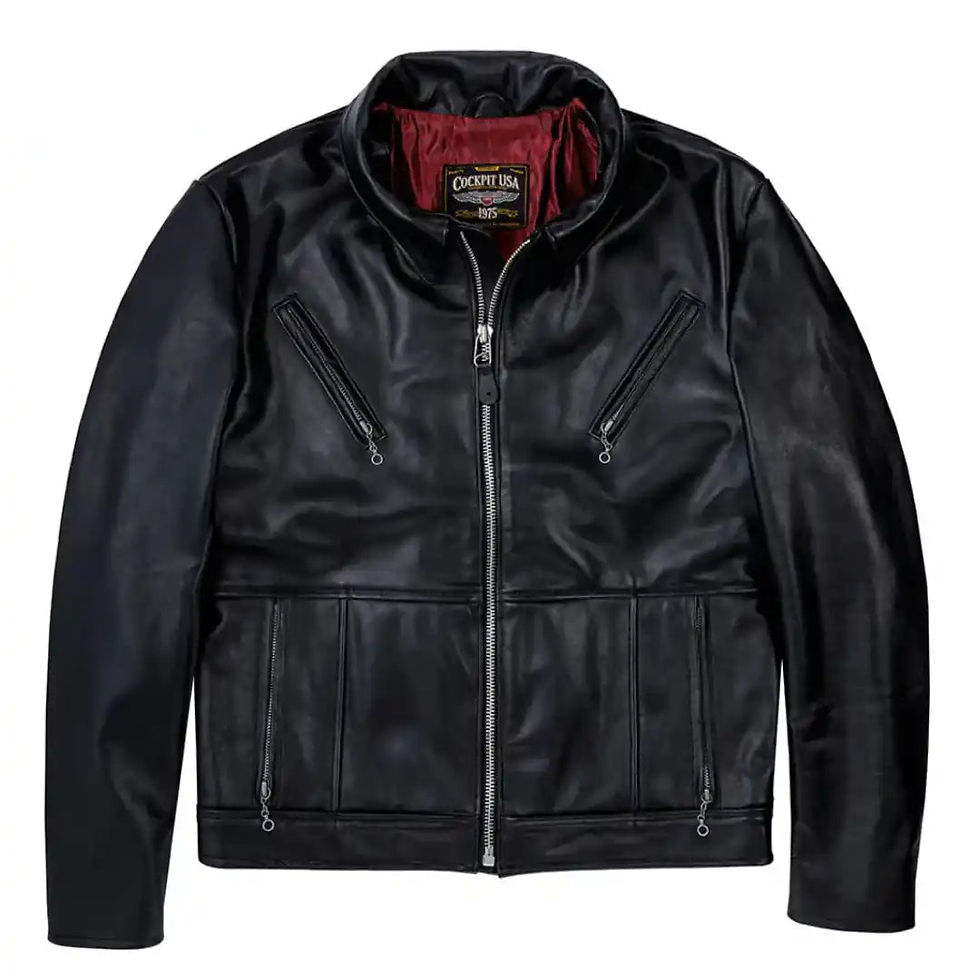
Quality riding jackets in full-grain cowhide start around $200–$300 and increase significantly for horsehide, bison, or American-made construction. These prices represent the floor of what genuine quality materials and construction cost at current production rates — not a premium tier. Fashion-market jackets in the $80–$150 range cannot be built from these materials at these prices without cutting corners that riders will discover on the road.
The motorcycle jackets under $500 collection at Legendary USA covers the accessible quality tier — full-grain cowhide, proper construction, rider-specific cut — at a price point that represents a genuine investment rather than a repeat purchase. Riders who do the cost-per-year math on heritage gear versus fashion alternatives consistently find that the heritage purchase is the lower-cost option over any multi-year riding timeline.
Quick Comparison: Fast-Fashion vs Heritage Motorcycle Gear
Factor | Fast-Fashion Motorcycle Gear | Heritage Motorcycle Gear |
Leather grade | Corrected-grain or 'genuine leather' | Full-grain, top-grain, or horsehide |
Leather weight | 0.6–0.8mm typical | 1.0–1.4mm typical |
Seam stitching | Single stitch at major seams | Double or triple stitch at major seams |
Hardware | Lightweight, appearance-focused | Heavy-gauge, functional spec |
Riding cut | Fashion/street silhouette | Riding-position optimized |
Typical lifespan | 1–2 seasons regular riding | 10–20+ years |
Related Reading from Legendary USA
See the full motorcycle jacket catalog at Legendary USA for heritage-grade alternatives. Riders on a defined budget can start with motorcycle jackets under $500. The Made in USA motorcycle gear collection covers the full range of American-made options. For the highest-grade materials, explore horsehide leather jackets and BECK front-quarter horsehide motorcycle jackets. Also see the best-selling motorcycle jackets for the options experienced riders keep returning to.
Frequently Asked Questions
How can I tell if motorcycle gear is fashion-grade or riding-grade?
Check leather weight and grain — riding-grade leather feels dense with visible natural grain variation. Check stitching at major seams — double stitching is a positive indicator. Check for CE-rated armor pockets rather than foam padding. Ask about leather grade and manufacturing specifics — brands that make quality gear can tell you exactly what they're selling.
Is 'genuine leather' on motorcycle gear a red flag?
'Genuine leather' is a legitimate material classification but also the lowest tier in leather grading. It covers everything from top-grain down to bonded leather scrap. When used without further specification on motorcycle gear, it typically indicates a lower-grade hide. Riders should ask for specifics: is it full-grain, top-grain, corrected-grain? What is the thickness? Brands that build quality gear can answer these questions.
Can fast-fashion motorcycle gear protect me in a fall?
Thin, corrected-grain leather provides substantially less abrasion resistance than proper riding-grade cowhide or horsehide. While any leather jacket offers some protection over no jacket, fast-fashion motorcycle gear may perform significantly below a rider's expectations in an actual fall. Riders who prioritize protection should verify leather grade, weight, and armor pocket specification before assuming protection.
What is the minimum I should spend on a riding jacket for real protection?
Quality full-grain cowhide riding jackets with proper construction and CE armor pockets start around $200–$300. Below this price range, material and construction compromises become increasingly significant for riding use. Legendary USA's motorcycle jacket collection includes options across this quality tier with transparent material and construction disclosure.
Where to Go From Here
The problem with fast-fashion motorcycle gear isn't just poor value — it's the gap between how it looks and what it actually does on the road. Legendary USA builds riding gear to a different standard: verified leather grades, rider-specific construction, and material transparency that lets riders make informed decisions. Browse the full Legendary USA motorcycle jacket catalog at legendaryusa.com and compare material disclosures directly. The quality is in the details the brand is willing to tell you about.