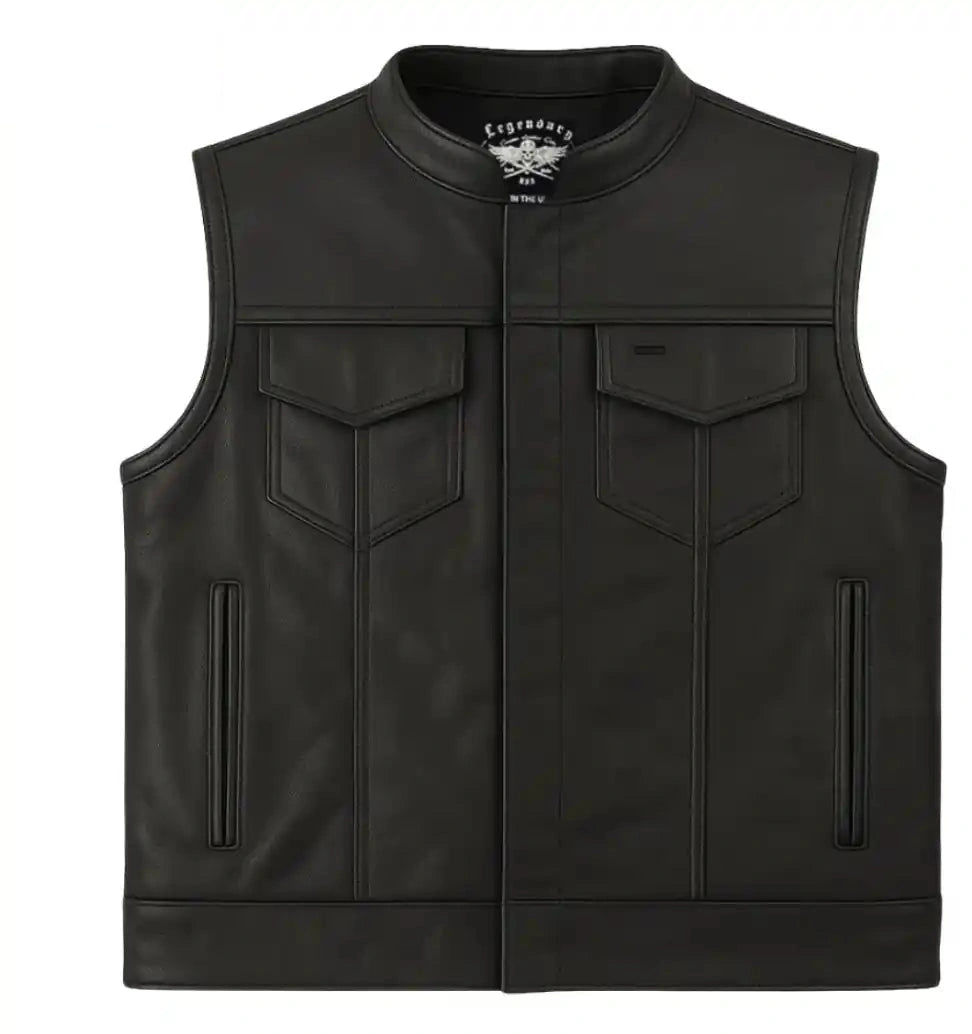
Vintage-Look vs New Leather Vests: Which One Ages Better

Two vests at a bike night last September. One was a distressed finish bought new about eight years ago, brown with the pale rubbed edges that come out of the factory that way. The other was plain black, bought raw in 2011, worn hard, never babied. From ten feet the old black one looked far more interesting, because the wear on it was in the places a body actually wears leather: the collar fold, the front edge where a hand pulls it closed, the small of the back where it meets a seat. The distressed one had its wear in the places a tumble drum put it, and those places are not the same.
That is the whole question in one paragraph, but it is not the whole answer, because a factory aged vest starts out looking good and a raw one takes about four seasons to get there. Which matters more depends on how long you plan to own it and whether you want to do the work.

What a Factory Actually Does to Age Leather
Distressed and vintaged finishes are produced a few ways, usually in combination. The hide gets tumbled in a large drum, sometimes for hours, which breaks the fiber structure and produces a soft hand and a wrinkled grain. Then it may get hand sanded at the edges and high points to pull pigment off, and finally a waxy pull up topcoat that lightens where it is stretched. Good versions of this look genuinely worn. Bad versions look sprayed on, and you can tell by whether the light and dark areas follow the panel shape or follow the seams.
The important part is that the aging is in the finish layer, not the hide. That has two consequences. First, the vest arrives soft, which is genuinely nice: no 500 mile break in, no stiff collar. Second, the contrast is baked in at its maximum on day one. It does not deepen. Over the next decade it will lighten slightly, get some real wear on top of the fake wear, and mostly stay where it started.
There is nothing dishonest about this. A properly done vintaged vest is a finish choice, the same way a matte tank is a finish choice. Just know you are buying the look rather than the process.
How Raw Leather Ages On Its Own
A new, undistressed vest ages through three mechanisms and they take time. Body oils migrate into the grain at contact points and darken them. Sunlight oxidizes the surface and lightens the panels that face up. And repeated flexing at fold lines burnishes the grain, which makes it glossier and slightly lighter along the crease. Those three effects land in different places on every rider, which is why an old vest looks like the specific person who wore it.
The timeline is slower than people expect. Real character starts showing at roughly 8,000 to 12,000 miles of wear, call it three to four seasons for someone riding weekends. Before that it just looks like a vest that has been worn. Between year four and year ten is where it gets good, and past year ten it keeps improving as long as the leather stays conditioned.
One caution: patina and neglect are not the same thing. A vest that has never been cleaned develops grey haze and salt bands, not patina. Twice yearly conditioning with a wax based product is what lets the surface darken evenly instead of blotching, and it is the difference between a ten year old vest that looks earned and one that looks abandoned.
Where the Two Diverge Over Time
Here is the pattern I have seen across a lot of vests, mine and other riders'.
Year 0 to 2: the aged finish wins clearly. It is soft, it has visual depth, and the raw vest still looks like a rectangle.
Year 3 to 5: they cross. The raw vest has contact darkening at the collar and front edge, and the aged vest has picked up its first real wear, which slightly muddles the factory pattern.
Year 6 to 10: the raw vest wins and keeps winning. Its wear map matches the body wearing it. The aged vest now has two overlapping wear stories that do not line up.
Past year 10: the aged vest can start looking thin at the sanded high points, because the finish there was already reduced when it left the factory. Raw leather has full finish everywhere and just keeps burnishing.
Repairability: raw leather is easier to touch up, because you are matching one uniform color rather than a gradient.
Who Should Buy Which
Buy the aged finish if you want the vest to look right immediately and you do not want to spend four years waiting. That is a legitimate reason and I would not argue with anyone about it. It is also the better pick if you are layering it with brown boots and a brown belt, because vintaged brown hides sit in a color range that new brown leather takes years to reach. And it is the better pick if you hate a stiff break in period, because the tumbling has already done that work.
Buy raw and new if this is a vest you intend to still be wearing in 2040, if you ride enough miles to actually put a wear map on it, and if you are willing to condition it twice a year. Also buy raw if you are running a big back patch, because a uniform panel gives the patch a cleaner field to sit on. A busy distressed back panel and a large patch fight each other visually. The full range of vests covers both approaches at similar prices, so this is a taste decision rather than a budget one.
Neither one is safety equipment. This leather is unarmored and not CE certified. It is abrasion and wind protection, and a distressed finish does not change that in either direction.
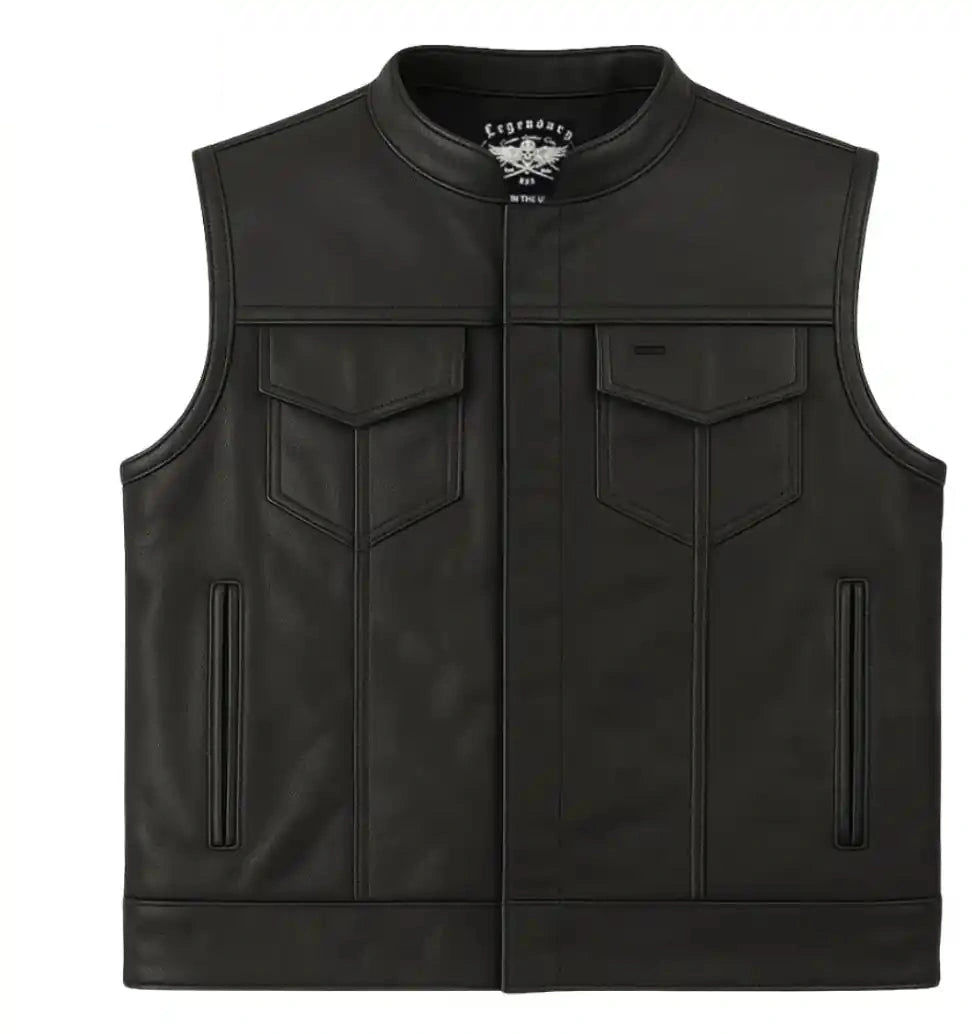
Editor's Picks
Two aged options and one raw counterpart at nearly the same price, so you can see exactly what the finish choice costs and what it buys.
Legendary Reckless Outlaw Aged Leather Vest, $239. The aged finish done well, with the lightening following the panels rather than the seams. Soft out of the box and no break in period. Best pick if you want it to look lived in on day one.
Legendary Peacekeeper Vintage Leather Gun-Pocket Vest, $184.99. The cheaper way into the vintaged look, with gun pockets. Slightly lighter hide than the Reckless Outlaw, which is why it costs less.
Legendary Outlaw Men's Leather Motorcycle Vest, $239. The raw counterpart at the identical price. Uniform finish, clean back panel, and it will look like your vest rather than a style in about four seasons.
Obenauf's Heavy Duty LP Conditioner, $15.99. Required if you go raw. This is the product that turns wear into patina instead of into haze.
Vanson does the raw leather argument better than almost anyone. Their competition weight hides are heavier than anything here and they develop a patina that is genuinely worth the wait, though you pay considerably more and you wait longer through the break in.
Prices verified August 2026.
How to Decide
Ask yourself one question: is this vest a ten year garment or a five year garment? If it is ten years, buy it raw. The crossover happens somewhere around year four and after that the raw vest pulls ahead and never gives it back. That is the whole calculus and it is not close if your time horizon is long.
If it is five years, or if it is a second vest for a specific look, buy the aged finish and enjoy it looking correct the day it arrives. Either way, put a tin of conditioner in the same order. The aged vest needs it to keep the pull up finish from going dry and chalky, and the raw vest needs it to age the way you are hoping it will.