Why American-Made Gloves Break In Differently Than Imported Ones

Riders who switch from imported motorcycle gloves to American-made deerskin often notice the difference immediately — and not always where they expect it. It's not just about comfort or patriotism. American-made gloves built from American-tanned deerskin follow a different production approach than mass-produced imported alternatives, and those differences show up in how the gloves break in, how long they last, and how they age over thousands of miles.

The Leather Itself: Tanning and Processing Differences
American whitetail deerskin — the primary material used in quality American-made motorcycle gloves — is tanned domestically, often using traditional brain-tanning or chrome-tanning methods that prioritize preserving the natural character of the skin. The result is leather that starts soft and supple and improves further with use. Many imported gloves use lower-grade leather processed with methods optimized for speed and consistency at scale — the leather is often uniform but thinner, with a surface coating that can flake or crack rather than patina.
Construction Quality and Stitch Count
American glove makers producing at smaller volumes tend to use heavier thread, more stitches per inch, and superior seam finishing than factories optimizing for volume production overseas. This directly affects durability — imported gloves often begin showing seam failures within one or two seasons. American-made gloves built with proper stitch density hold together through many more years of riding.
The Break-In Curve
Imported gloves — particularly those with surface coatings or synthetic-blend leathers — often feel acceptably comfortable right away but don't improve much over time. The surface coating softens on the outside while the underlying material stays relatively rigid. American deerskin gloves may feel slightly firmer than cheap imports on day one, but within 5 to 10 hours of riding they conform to your specific hand in a way that coated or synthetic-blend alternatives never do. The break-in curve is steeper and more rewarding.
Aging and Patina
This is where the long-term difference becomes obvious. Quality American deerskin develops a patina with age — a distinctive darkening, texture, and character that reflects the specific rides the gloves have been on. The more you ride in them, the better they look in the way that only real, properly tanned leather can. Imported gloves with surface coatings don't patina — they just look worn and eventually crack and peel.
Value Over Time
American-made motorcycle gloves cost more upfront. The Churchill Classic Deerskin Gloves (https://legendaryusa.com/products/churchill-mens-deerskin-leather-classic-motorcycle-gloves) and similar quality American-made options reflect real material and labor costs. But they typically last 5 to 10 times longer than budget imported alternatives, which means the cost-per-mile equation often favors the domestic glove when you run it out over a full ownership period.
What to Expect From Your First American Deerskin Pair
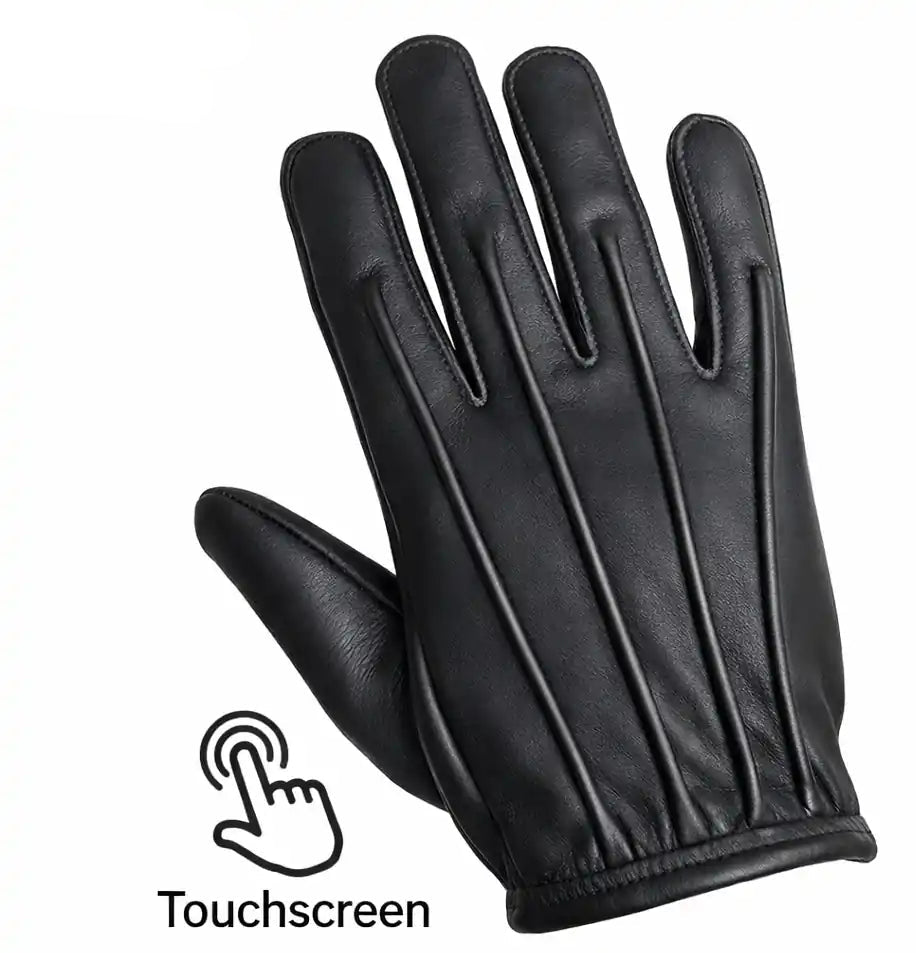
If you're used to imported gloves, expect the first few rides in American deerskin to feel different — perhaps slightly firmer or more structured. Resist the urge to judge them against the immediately soft feel of cheaper alternatives. Give them 5 to 10 rides with appropriate conditioning, and then compare. The Legendary USA motorcycle gloves collection (https://legendaryusa.com/collections/motorcycle-gloves) includes multiple deerskin options, including the Aramid Lined Touchscreen model (https://legendaryusa.com/products/legendary-mens-deerskin-aramid-lined-short-wrist-touchscreen-gloves), that demonstrate what well-crafted American leather does over time.
FAQ
Q: How can I tell if gloves are genuinely American-made? A: Look for the country of origin label and manufacturer details. True American-made gloves typically specify domestic production and use named American leather sources.
Q: Are all imported motorcycle gloves low quality? A: No. Some European makers produce excellent quality. The contrast is primarily between premium domestically crafted leather and budget mass-production regardless of country.
Q: Does American deerskin have different protection properties than other leathers? A: Deerskin has excellent natural abrasion resistance for its weight. It's lighter than cowhide while still offering meaningful crash protection, especially when combined with aramid fiber linings.
Q: Will American-made gloves feel noticeably different immediately? A: They may feel slightly firmer initially due to genuine untreated leather versus pre-softened coated alternatives. This resolves quickly during break-in.
Q: How do I care for American deerskin differently than imported leather? A: The care basics are the same — condition, protect, store properly. American tanned leather generally responds better to traditional leather conditioners than coated leathers, which can reject oil-based conditioners.