


Why Real Riders Prefer Heavy Leather Motorcycle Jackets
- jamesjordan

- Jun 26
- 6 min read
Updated: 16 hours ago
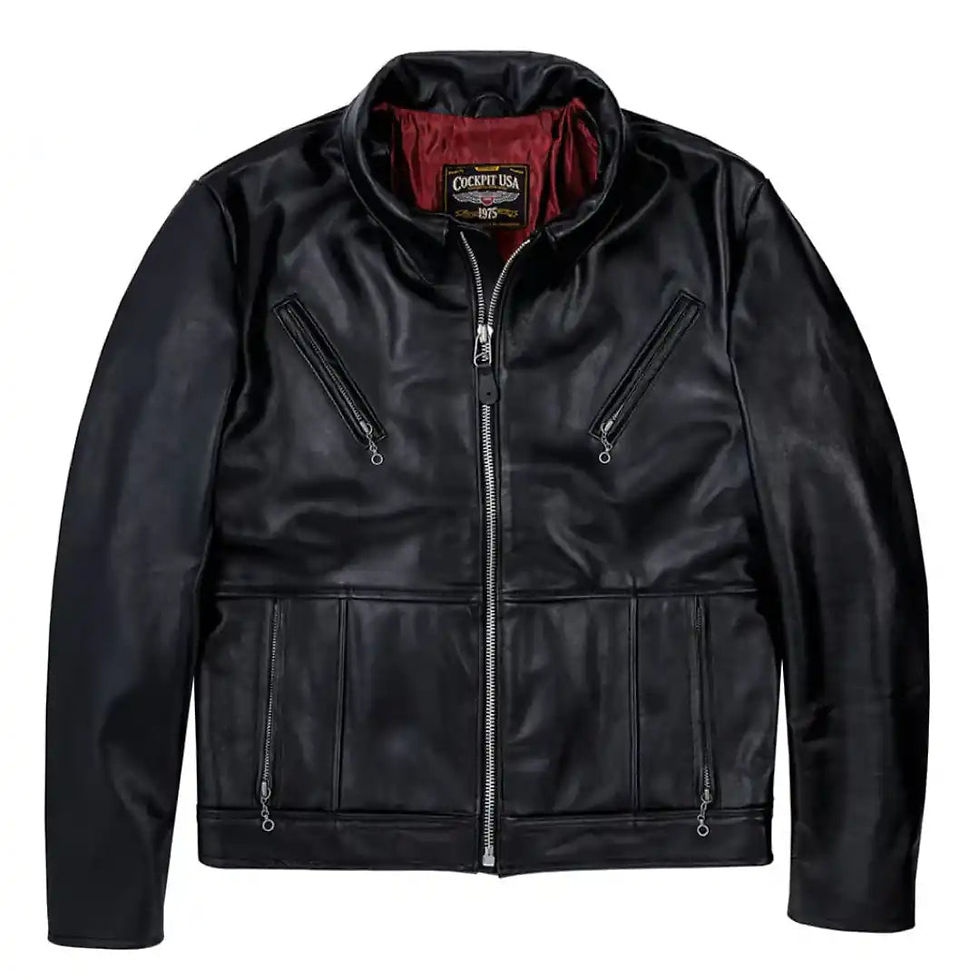
Heavy leather motorcycle jackets—3-4 oz cowhide and above, horsehide, or thick bison—offer a combination of wind resistance, abrasion protection, and structural integrity that lighter gear cannot replicate. Experienced riders gravitate toward weight for a reason that has nothing to do with style. Legendary USA builds heavyweight jackets to exactly this standard, and here is the case for why weight matters on the road.
Key Takeaways
Leather weight measured in ounces directly correlates with abrasion resistance—more material means more time before damage reaches the rider
Wind break at highway speed is noticeably better in a heavier hide that does not flex and flutter under aerodynamic load
A stiffer jacket holds its form under impact rather than crumpling and transferring energy to the rider
Break-in time on heavy leather results in a jacket that fits the rider's specific posture and movements over years
Lightweight jackets are more comfortable in heat, but they represent a genuine trade-off in protection and durability
What Leather Weight Actually Means
Leather weight is measured in ounces per square foot—a higher number means a thicker, denser hide with more material between the rider and the road. At 2-3 oz, corrected-grain cowhide is thin enough to drape like fabric. At 3-4 oz, standard top-grain cowhide has enough body to hold a structured shape. At 4-5 oz, steerhide and heavy cowhide become noticeably stiff and substantial. Horsehide typically runs 4-6 oz from the front quarter of the hide, with a fiber density that punches above its weight at any thickness.
Legendary USA's horsehide leather jackets use front-quarter horsehide that sits at the higher end of the weight range for premium riding jackets. The density of the hide is not just about weight—it is about fiber structure. Horsehide fibers are tighter and more interlocked than cowhide at equivalent weight, which is why it has historically been the preferred hide for demanding applications from military aviation gear to serious motorcycle jackets.
Wind Break at Speed
A heavy leather jacket does not move. At highway speed, a 2-oz fashion leather jacket deflects and flaps at the edges, allowing wind to work under the collar and cuffs and drop the effective temperature around the rider's torso by a significant margin. A 4-oz horsehide or heavy cowhide jacket is rigid enough that the aerodynamic load from riding at 70 miles per hour has essentially no effect on the jacket's position against the rider's body.
This is not a trivial comfort difference on a long touring day in variable weather. Wind fatigue is a real phenomenon, and a jacket that seals against the rider's body reduces the energy cost of riding across hours on the highway. The touring motorcycle jackets at Legendary USA are built with this in mind—substantial enough to stay in place against aerodynamic load without requiring constant adjustment at every fuel stop.
Abrasion Resistance and Why Weight Correlates
In a slide, the time it takes the leather to wear through before the road reaches the rider is determined by how much material is there to begin with. This is the most direct relationship between leather weight and protection. A thicker, denser hide gives the rider more buffer before the underlying garment or skin is exposed to the road surface. No leather weight is a substitute for proper CE-rated armor at impact zones, but leather thickness is the primary variable in abrasion resistance.
Horsehide at 4-6 oz outperforms standard cowhide at 3-4 oz in abrasion resistance not just because of weight but because of fiber structure. The tightly interlocked fibers in horsehide resist lateral shearing forces better than the looser fiber arrangement in cowhide at the same weight. This is why BECK front-quarter horsehide motorcycle jackets have been a serious rider choice for decades—the material performs where it matters, not just in a showroom.
Break-In and Long-Term Fit
A heavy leather jacket has a break-in period. The first few weeks or months of regular wear are stiffer than a fashion leather jacket will ever be at any point in its life. Riders who know this understand what is happening: the leather is conforming to their specific riding posture, shoulder width, arm length, and the position they hold on their particular bike. After break-in, the jacket moves with the rider as if it were cut specifically for them—because in a functional sense, it was.
Lightweight fashion leather never fully breaks in the same way because there is not enough material to conform meaningfully. It stays close to its original shape regardless of how it is worn. A heavy Legendary USA jacket, like those in the best-selling motorcycle jackets collection, develops a specific character over years of wear. Riders who have put 50,000 miles on a quality horsehide jacket often describe it as irreplaceable for exactly this reason.

Where Lightweight Jackets Make Sense
A lighter jacket has legitimate advantages in heat. Wearing a 5-oz horsehide jacket in midsummer at low speeds in urban traffic is genuinely uncomfortable in a way that a 2-oz perforated leather jacket is not. For summer commuting, slow urban riding, and days where temperature is the primary concern, lighter gear makes sense as a deliberate trade-off. The key word is deliberate—knowing what you are giving up rather than assuming lighter is equivalent.
Legendary USA carries lightweight motorcycle jackets specifically for riders who need a summer option without abandoning material quality entirely. These are not fashion jackets dressed up as riding gear—they are lighter-weight builds that still use quality leather and riding-specific construction, at a weight optimized for warm-weather miles. The trade-off in protection relative to a heavyweight jacket is real and worth knowing before you choose.
Quick Comparison: Leather Weight Ranges
Weight Range | Typical Material | Typical Use |
2-3 oz | Thin cowhide, corrected-grain | Fashion, light summer riding |
3-4 oz | Standard top-grain cowhide | Mid-range riding jackets |
4-5 oz | Heavy cowhide, steerhide | Serious riding and touring |
5+ oz | Horsehide, bison, front quarter | Heritage, maximum durability |
Related Reading from Legendary USA
Horsehide leather jackets — front-quarter horsehide builds at the top of the weight and durability range for serious riders
Motorcycle jackets for men and women — the full Legendary USA riding jacket catalog across leather types and weight ranges
Cold weather motorcycle jackets — heavyweight insulated builds for riders who need wind break and warmth across cold riding seasons
Touring motorcycle jackets — long-haul riding jackets built for sustained highway use where jacket stability under aerodynamic load matters
Best-selling motorcycle jackets — the top Legendary USA jackets across every leather type and weight class
BECK front-quarter horsehide motorcycle jackets — heritage BECK riding jackets in front-quarter horsehide built for riders who want the best material available
Frequently Asked Questions
How heavy should a motorcycle jacket be for real protection?
For serious riding with protection as the primary concern, 3-4 oz or above in top-grain or full-grain leather is a reasonable baseline. Horsehide at 4-6 oz is the traditional choice for maximum durability and abrasion resistance. For warm-weather or urban riding where comfort is the priority, lighter leather in the 2-3 oz range is a known trade-off rather than an equivalent alternative.
Does a heavier leather jacket actually protect better in a crash?
In a slide, a thicker and denser leather jacket provides more material between the rider and the road surface, which increases the time before the leather wears through. This is a meaningful protection difference. Leather weight is not a substitute for CE-rated armor at impact zones, but it is the primary variable in abrasion resistance—more material means more buffer.
Is horsehide heavier than cowhide?
Front-quarter horsehide typically runs 4-6 oz and is denser than standard cowhide at equivalent weight because of its tighter fiber structure. It is not simply heavier—it has a different fiber arrangement that makes it more abrasion-resistant per ounce than standard cowhide. This is why horsehide has historically been used in demanding applications from motorcycle jackets to aviation gear.
How long does it take to break in a heavy leather motorcycle jacket?
A quality horsehide or heavy cowhide jacket typically takes 30 to 60 days of regular riding before it begins to conform to the rider's posture and movements. Full break-in to a personalized fit takes several months of consistent wear. Riders who commit to the break-in period describe the result as a jacket that moves with them in a way that lighter, faster-wearing leather never achieves.
Where to Go from Here
Legendary USA builds heavyweight leather jackets across horsehide, bison, and heavy cowhide for riders who prioritize material quality and long-term protection over weight savings. Browse the motorcycle jackets for men and women collection to find the weight and leather type that matches your riding priorities—from summer-weight options to the full horsehide builds that Legendary USA is known for.


