Best Motorcycle Gloves for Riding in Rain and Cold at the Same Time

Updated: Sep 28
Disclosure: MotoGearRater and Legendary USA have the same owner. Links to legendaryusa.com in this article go to our owner’s store, and are marked as sponsored. How we make money
Short answer: For cold alone, the Legendary Fleece-Lined Deerskin gloves, from $85 with 104 reviews at the time of writing, are the pick, and adding Gators Skin glove liners at $25 underneath stretches them further down the thermometer. But cold plus sustained rain is the one condition an unlined leather glove does not solve, and we are not going to pretend otherwise: Legendary does not make a waterproof glove. If you ride hours in real rain at low temperatures, put a waterproof over-glove on top, or buy a dedicated membrane glove from a maker like Klim that builds them around a waterproof laminate.
That is the honest version. Below is why the two problems fight each other, and what a workable setup actually looks like.

Why wet and cold is harder than either one alone
Cold on its own is a straightforward insulation problem. Add a lining, block the wind at the cuff, done. Rain on its own at 70 degrees is a comfort problem, not a safety one. Your hands get wet and you carry on.
Put them together and the mechanism changes. Water moving through a glove pulls heat out of your hands far faster than still air does, and it keeps pulling as long as the glove stays wet. Wind at highway speed accelerates it. That is why a temperature you handle comfortably on a dry ride can leave your hands cold and clumsy on the same ride in rain. Insulation that is soaked is not doing much insulating.
So the requirement is not a warmer glove. It is a glove that keeps the water out, and then a warm one underneath it.
Where leather genuinely helps, and where it stops
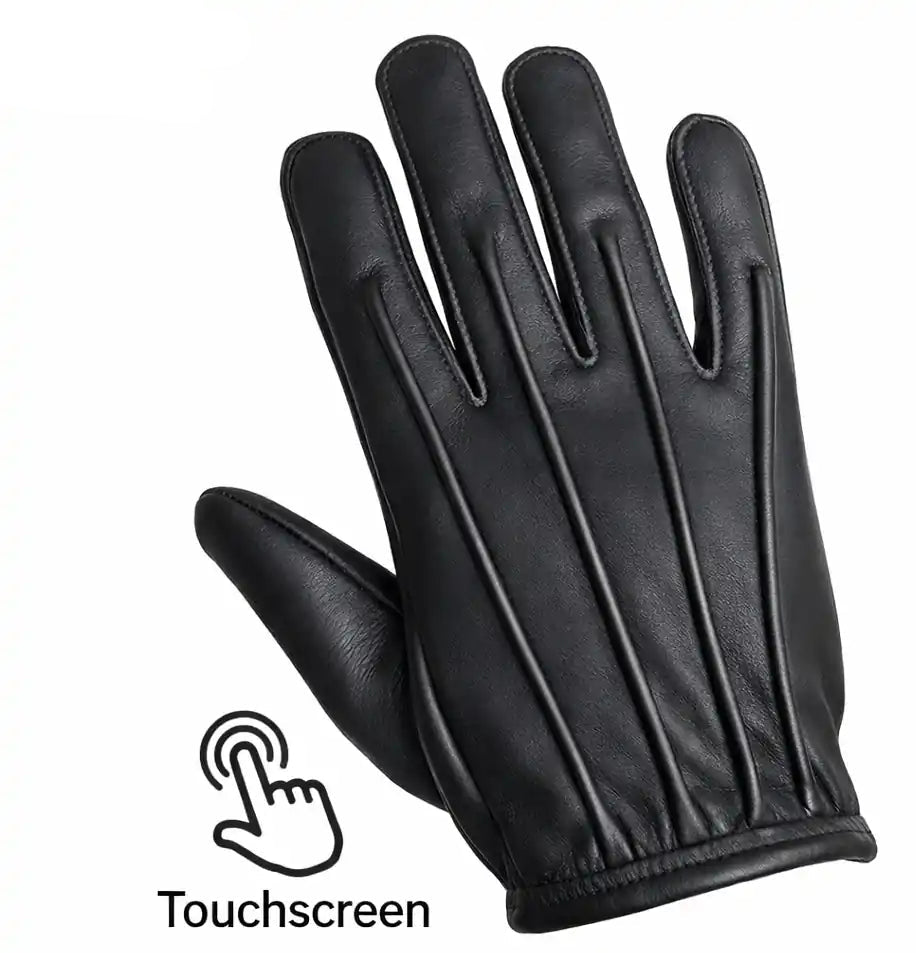
Deerskin is a good riding leather for real reasons. It stays supple, it moves with your hand, and unlike a lot of cowhide it dries soft rather than turning stiff after a soaking. That last point matters for anyone who occasionally gets caught out, because the glove survives the experience.
What deerskin does not do is stop water. It is water-resistant, not waterproof. In light rain or a short shower it will hold you for a while. In sustained rain it wets through, and once it is wet the fleece behind it is wet too. No amount of lining fixes that, because the lining is on the wrong side of the problem.
An adversarial reader will notice if a review site pretends otherwise, so here it is plainly: none of the gloves in the Legendary range is a waterproof glove, and none is sold as one.
The cold half, done well
If most of your riding is cold and dry with occasional wet, the Legendary side of this is straightforward.
Fleece-Lined Deerskin, from $85, 104 reviews. Insulation under deerskin with a short cuff that tucks under a jacket sleeve. This is the everyday cold-weather glove.
Classic Deerskin Gauntlets, from $75, 112 reviews. The long cuff is the point. It closes the wrist gap where cold air and running water both get in.
Deerskin Insulated Mittens, from $120, 80 reviews. Fingers share heat, so a mitten runs warmer than a glove of the same build. You give up dexterity for it.
Prices are the minimum variant, so larger sizes cost more than the starting figure.
Layering is the cheap fix
Before you replace anything, try adding a layer. Gators Skin glove liners at $25 sit under a glove you already own and buy you a meaningful amount of warmth for the money. They will not keep you dry, but they change the calculation on a cold morning.
Two cautions. A liner takes up room, so it only works if your glove has room to give, and a glove packed too tight cuts circulation and ends up colder. And a liner inside a wet glove is a wet liner. Layering solves the cold half and does nothing for the wet half.
The setup that actually works in cold rain
If you ride through winter in a wet climate, run two things rather than looking for one glove that does everything.
A warm leather glove for the vast majority of rides, when it is cold and dry or only briefly wet.
A waterproof over-glove or a dedicated membrane glove that lives in the saddlebag and goes on when the rain sets in.
The over-glove route is the cheaper one and keeps the glove you like. The dedicated waterproof glove is better if you are riding in rain constantly, and that is where a maker like Klim, or another brand building around a waterproof laminate, is the right purchase. We would rather send you there for that specific job than oversell a leather glove into a condition it was not built for.
For the broader picture, see our complete cold weather glove guide and the ultimate guide to motorcycle gloves. If you are layering, read how motorcycle gloves should fit first, because liner room changes your size.

Frequently asked questions
Are there waterproof leather motorcycle gloves?
Some manufacturers build leather gloves around a waterproof membrane, so yes, they exist. Legendary's gloves are not among them. Untreated leather on its own, including deerskin, is water-resistant rather than waterproof.
Will a fleece-lined glove keep my hands warm in the rain?
Only until it wets through. Insulation works by trapping air, and water displaces that air. A fleece-lined glove is a strong cold-weather choice and a poor wet-weather one, which is why the honest answer to wet plus cold is a waterproof outer layer over a warm glove.
Do glove liners help in cold rain?
They help with the cold, not the wet. Gators Skin liners at $25 add warmth under a glove you already own, but once water reaches them they are wet too. Use them with a waterproof outer layer, not instead of one.
What happens to deerskin gloves after they get soaked?
Deerskin dries soft rather than stiffening, which is one of the reasons riders like it. Let them dry away from direct heat. Getting caught in rain will not ruin them, but it is not the same as them keeping you dry.