


Buying Motorcycle Gloves as a Gift: How to Get the Size Right
- Kim Alberto

- Jul 26
- 5 min read
Updated: Aug 3
Gloves are the best gift in motorcycling and the easiest one to get wrong. Everything else on a bike has slop in it. A jacket that is an inch big still works. A glove that is a half size big bunches at the fingertips, rolls under the throttle, and gets left in a drawer forever. The person will say they love it and then never wear it, which is the worst outcome for everyone.
The good news is that glove sizing is one number, and there are at least five ways to get that number out of somebody without telling them why you are asking. Here is how I do it, plus the styles that are genuinely forgiving if you end up between sizes.
The One Measurement That Matters
Motorcycle gloves are sized by hand, not by anything else. The measurement is the circumference of the palm at the widest point, measured around the knuckles with the thumb left out. Take that number in inches and it is basically the glove size. A hand measuring 8 inches around is a size 8, which most charts call small. Nine inches is a 9, or medium. Ten is a large. It really is that direct.
The secondary number is middle finger length, measured from the base crease of the palm to the fingertip. This is what separates two people who both measure 9.5 inches around but have very different hands. Long-fingered hands generally want to size up and accept a slightly loose palm, because a tight fingertip on a deerskin glove will never stretch enough to be comfortable.
Read both numbers against the published glove size chart rather than guessing from a shirt size. The charts differ between makers by a half size, which sounds small and is the entire difference between a glove that gets worn and a glove that does not.
Five Ways to Get the Number Without Asking
In rough order of reliability. The first one is by far the best if it is available to you.
Read a glove they already own. Any glove. Ski gloves, work gloves, garden gloves. Check inside the cuff for a size stamp. If there is no stamp, lay the glove flat and measure across the palm just below the knuckle seam, then double it. That doubled number is the palm circumference.
Use a credit card as a scale in a photo. A standard card is 3.37 inches wide. Get a picture of their hand flat on a table next to anything of known size, then measure proportionally. Sounds fussy, works well, and people leave their hands on tables constantly.
Compare against your own hand. Measure yourself first so you know your number. Then find any excuse for a palm-to-palm comparison, which people do without thinking about it. Half an inch of difference is visible and you will know which way to adjust.
Ask a third party. A partner, a sibling, or a riding friend usually knows or can find out casually. This is the least clever option and the most reliable one.
Trace the hand under cover of something else. Anything that involves a hand flat on paper works. Trace it later from memory of the outline, measure the widest point across the knuckles, and multiply by roughly 2.1 to estimate circumference.
Why Deerskin Forgives a Half Size
If you are going to be off, be off on the tight side with deerskin. Deerskin has an unusual fiber structure that stretches noticeably in width and barely at all in length. A snug new pair loosens across the palm over roughly 200 to 300 miles and then stops moving. That is why experienced riders buy deerskin that feels almost too tight in the store.
Goatskin behaves differently. It is stronger and stiffer and stretches less, so a goatskin glove that is tight on day one will be tight in year three. Buy those true to size. Anything with a fleece or thermal lining should also be bought true to size, because the lining takes up the room that stretch would otherwise create.
Say this plainly, since gloves are safety gear: everything in this category is unlined or lightly lined, unarmored leather. It is not CE certified and it is not armor. It is abrasion protection, wind protection, and grip. That is a real and useful thing, and it is not the same thing as a certified sport glove.
Styles That Are Safer Bets
Some glove shapes tolerate a sizing miss far better than others. If your confidence in the number is low, bias toward these.
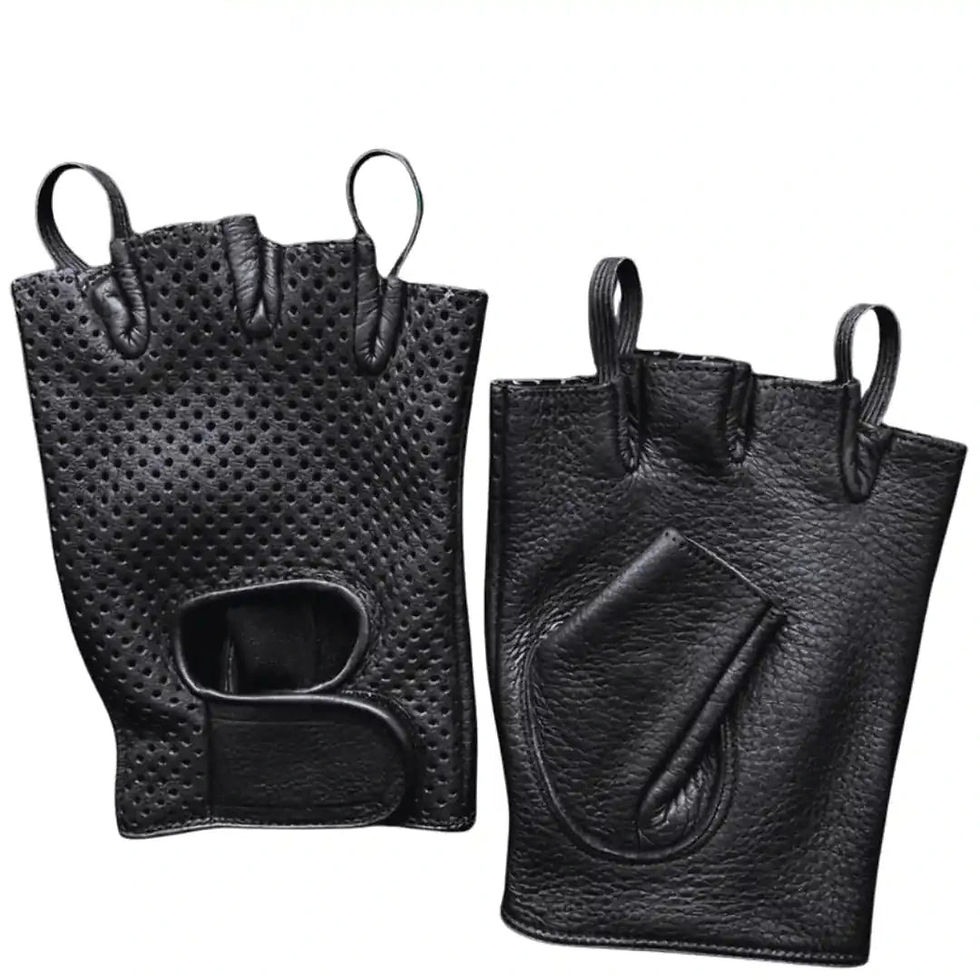
Fingerless gloves have no fingertip length to get wrong, which removes the single most common failure. Gauntlets are similarly forgiving because the length adjustment happens at the cuff over the jacket sleeve, not at the fingers. Anything with a hook-and-loop wrist strap gives you a half size of adjustment that a plain elastic cuff does not. What I would avoid as a gift is a tightly fitted insulated glove, because the lining leaves no margin at all.
Glove liners are the sleeper gift in this category. They cost under $30, they fit a broad range of hands, and they make an existing glove work 15 degrees colder. If you genuinely cannot get a size, a pair of liners plus a note is a better gift than a wrong-sized glove. There are more ideas along those lines on the gift guide page, which is organized by rider rather than by holiday.

Editor's Picks
Four gifts chosen for how much sizing risk they carry, starting with the most forgiving.
Gators Skin Glove Liners, $25. Almost impossible to get wrong, and they extend the season on whatever gloves the rider already owns. The safest gift on this page.
Fingerless Deerskin Gloves, $72.99. No fingertip length to miss, deerskin that stretches to the hand, and a price that does not sting if you have to exchange them.
Classic Deerskin Gauntlets, $145. The cuff does the adjusting, so a half size of error disappears. This is the gift for someone who already has summer gloves and rides into November.
Classic Short Wrist Touchscreen Deerskin Gloves, $120. The default answer if you are confident in the number. Touchscreen fingertips mean they stay on at the gas pump, which is the feature people notice in week one.
RevZilla is the honest competitor for gift buying specifically, and they beat everyone on the thing that matters most here: selection breadth and a return process built for exactly this situation. If you are shopping blind on size, buying where the exchange is painless is worth more than saving $15.
Prices verified August 2026.
How to Decide
Get the palm circumference if you possibly can, check it against the size chart, and buy a deerskin glove one notch snug. That combination gets it right most of the time, and deerskin will do the last quarter inch of the work for you over the first month of riding.
If you cannot get the number, do not guess at a fitted glove. Buy liners or fingerless deerskin, include the receipt, and say out loud that you expect them to exchange it if the fit is off. Riders are not offended by that. Every one of us has a drawer with a pair of gloves in it that almost fit, and nobody wants to add to it.

