


Horsehide vs Cowhide Motorcycle Vests: The Real Difference
- Kim Alberto

- Jul 22
- 5 min read
Updated: Aug 3
A rider handed me two vests last spring and asked which one was the horsehide. Both were black, both were around the same thickness, and both had clean stitching. It took about four seconds, because horsehide does something cowhide never does: it feels like it is holding its own shape rather than draping over your hand. That is not mysticism. It is fiber density, and it is the whole story.
The price gap makes this worth understanding before you spend. A good cowhide club vest sits around $180 to $240. Horsehide starts closer to $365 and climbs from there. That is a real difference and nobody should pay it because a forum told them horsehide is better. It is better at some things and worse at others, and which side of that you land on depends entirely on how you plan to use the vest.

Why Horsehide Behaves Differently
Cowhide and horsehide are both split and finished the same general way, but the raw material is not the same. Horse fiber bundles are packed tighter and run in a more consistent direction, particularly across the front quarter, which is the panel tanneries reserve for the good stuff. That tighter packing is why a 1.3mm horsehide panel feels stiffer and more solid than a 1.3mm cowhide panel. Same measurement, different hand.
The practical effect is that horsehide resists wind penetration and surface abrasion better at any given thickness, and it holds a crease. Cowhide has more give, so it molds to you faster and stays softer. Neither of those is a virtue on its own. A vest that molds to you fast is comfortable in week two. A vest that holds its shape carries a patch set dead flat for a decade.
Horsehide is also harder to work. It is less forgiving under a needle, it does not stretch to hide a slightly off pattern, and hides run smaller so a maker gets fewer panels out of each one. That is most of the price difference right there, before anyone talks about heritage.
The Thickness Numbers Nobody Prints
Most cowhide motorcycle vests in the $150 to $250 range run somewhere between 1.0mm and 1.3mm. Below 1.0mm you are into fashion leather that will stretch under a patch set. Around 1.2mm and up is where a cowhide vest starts behaving like real gear. BECK works its horsehide at 1.3mm front quarter, and because of the density difference that panel behaves roughly like a heavier cowhide would.
Here is the useful part: you cannot judge this from a product photo, and most listings do not publish a thickness at all. So check it in person if you can, and if you cannot, use price as a rough proxy within a single maker's line. Within the same brand, the more expensive vest is almost always the heavier hide.
The thing to stop doing is comparing thickness across leather types. A 1.2mm horsehide and a 1.2mm cowhide are not the same vest and the number will mislead you.
How Each One Ages
This is where the two genuinely part ways, and it is the part worth deciding on.
Cowhide softens steadily and evenly. By season two it drapes. By season five it is comfortable and slightly slack through the body, and the color has gone matte where your arms rub the sides.
Horsehide softens slowly and unevenly, which is the point. It breaks at the fold lines first, so you get sharp creases at the shoulders and across the lower back while the flat panels stay firm. Roughly 3,000 to 5,000 miles of wear before it stops feeling like new gear.
Cowhide scuffs. The scuff shows as a lighter patch and mostly stays that way. Horsehide burnishes, meaning the scuffed area darkens and gains shine instead of going pale.
Cowhide is the more forgiving of the two if you neglect it. Horsehide punishes a dry season harder because the tight fiber structure cracks rather than sagging when it loses oil. Condition it twice a year.
At the fifteen year mark, a well kept horsehide vest looks better than it did new. A cowhide vest at fifteen years looks like a comfortable old vest, which is not an insult, just a different outcome.
The Patch Question and the Snap Question
If you run a full patch set, the back panel is doing structural work. A stiffer hide holds the panel square under the weight of heavy embroidery, so the patch sits flush instead of bowing outward at the bottom edge. Horsehide is genuinely better at this. So is any cowhide at the heavier end of the range, which is why a well built cowhide club vest is not a compromise if you buy the right one.
Snaps tell you more about a vest than the leather does. Push behind every snap on the front placket. If you feel a backing washer or a doubled layer of hide, the snap will stay put. If you feel one thin layer, that snap will start spinning inside two seasons regardless of what animal the leather came from. I have seen $400 vests fail this test and $180 vests pass it. Check before you buy, and read the vest size chart while you are at it, because horsehide will not stretch to rescue a size you guessed wrong.
What Neither One Does
Both of these are unarmored, unlined or lightly lined leather with no CE certification. They are wind and abrasion protection and nothing more. A vest leaves your arms bare by definition, so no vest of any hide type is impact gear. If crash protection is what you are shopping for, look at the armored options instead and wear a vest over the top of them.
Editor's Picks
Four vests that show the whole spread, two horsehide and two cowhide. None are armored or CE-certified. BECK is Northeaster Flying Togs, a separate American maker Legendary USA carries as an authorized dealer.
BECK 588 Horsehide Motorcycle Vest, from $365. The cheapest honest way into horsehide. Buy this if you want the hide to outlive you and you are not chasing a specific cut.
BECK 566 Horsehide Motorcycle Vest, Black, from $440. Heavier and better finished than the 588, with hardware set the way it should be. This is the one I point riders at when they say they are buying one vest and never buying another.
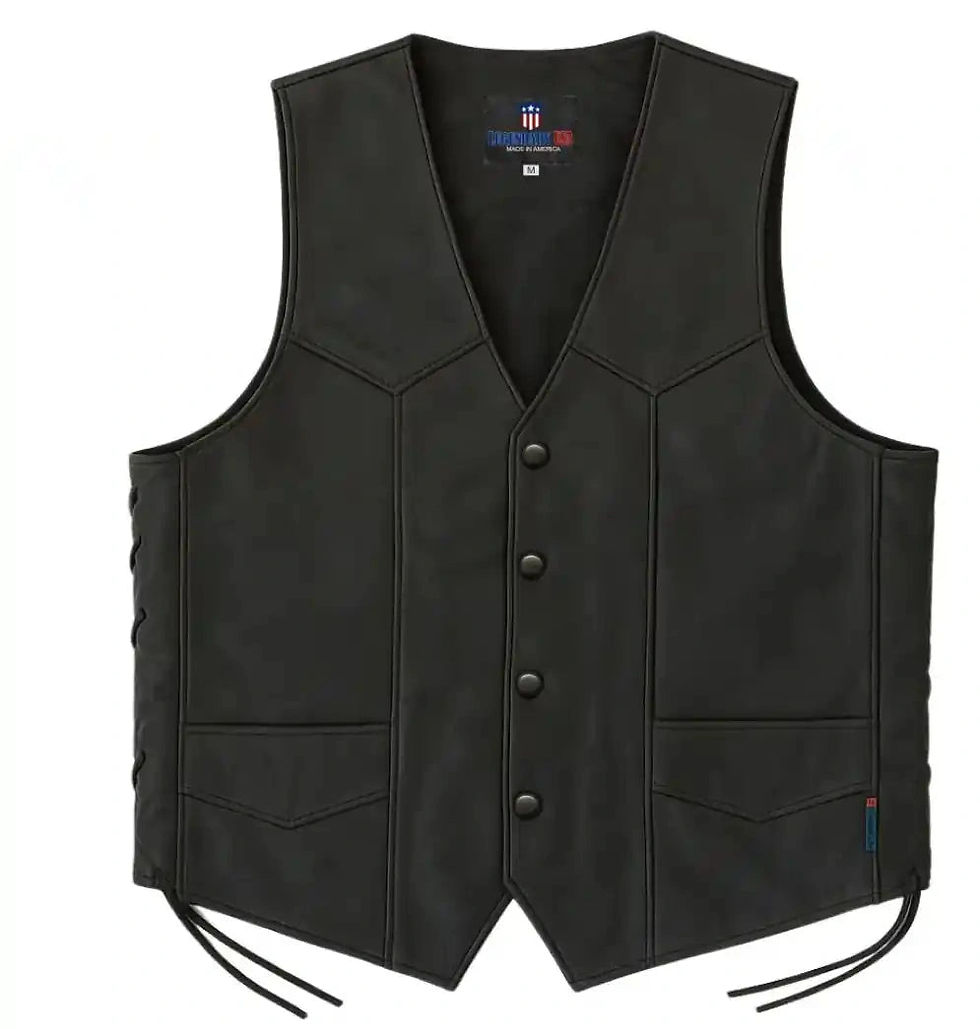
Legendary Men's Leather Club Motorcycle Vest, $179.99. The cowhide default. Side lacing, a flat back panel that takes patches properly, and a price that leaves money for the patches themselves.
Legendary Outlaw Men's Leather Motorcycle Vest, $239. Cowhide at the heavy end, with interior gun pockets and a fuller cut. Buy it if you want cowhide comfort without the thin-hide compromise.
Fox Creek Leather is the honest competitor here and they beat everyone on one specific thing: they publish actual hide weights on the product page, so you can compare apples to apples instead of guessing from price. If specification transparency is your priority, start there. Prices verified August 2026.
What I'd Actually Buy
If this is your first leather vest, buy heavy cowhide. The Club vest at $179.99 or the Outlaw at $239 will do everything you need, they break in fast enough that you will actually enjoy wearing them by the second month, and if your taste in cut changes in three years you have not lost much. Most riders who buy horsehide first end up with an expensive vest they are slightly precious about.
Buy horsehide when you already know exactly what cut you want, when you plan to carry a patch set for a decade or more, and when you have accepted that the first season will feel stiff. The 588 at $365 is the honest entry point and the 566 at $440 is the one that will still look right in 2045. The rest of the made in USA vest range sits between those two poles, and any of it beats a $70 import that stretches out by August.


