


What Is Chrome Tanning? A Complete Guide for Motorcycle Leather Buyers

Updated: Sep 2
Chrome tanning is the most widely used leather processing method in modern manufacturing. It accounts for approximately 80–90% of all leather produced globally. Understanding chrome tanning helps riders evaluate the leather in motorcycle jackets, gloves, and vests — and understand what they are buying.
What Is Chrome Tanning?

Chrome tanning is a leather tanning process that uses chromium(III) sulfate salts to convert raw animal hides into stable, durable leather. The process was developed in the 1890s and rapidly replaced vegetable tanning in industrial leather production because of its dramatically shorter processing time — hours versus weeks — and the consistent, predictable leather it produces.
The chromium salts crosslink with the collagen proteins in the hide, creating a stable, water-resistant leather. The resulting material is typically soft, supple, and consistent in character across a batch — qualities that make it ideal for high-volume manufacturing.
How Chrome Tanning Works
Chrome tanning begins with prepared hides that have been cleaned and limed. The hides are placed in rotating drums with chromium sulfate solution. Over 8–24 hours, the chromium penetrates and crosslinks with the collagen throughout the hide. The resulting leather — called "wet blue" at this stage because of its characteristic blue-grey color — is then neutralized, retanned, and finished.
Chrome tanning produces "wet blue" leather that can be further processed into virtually any color, texture, and surface finish. This processability is a key reason for its industrial dominance — the same base leather can be finished as automotive upholstery, fashion garments, or protective motorcycle gear.
Properties of Chrome-Tanned Leather
Chrome-tanned leather is soft and supple from initial production. It is more resistant to water than vegetable-tanned leather, particularly when new. It has a consistent, uniform character that makes it easy to cut and work at scale. It is available in any color and surface finish. It is less prone to developing water stains when wet.
The primary difference from vegetable-tanned leather is in aging behavior. Chrome-tanned leather does not develop the same rich patina over time. Surface treatments applied during finishing largely determine the leather's appearance and are less affected by use and light than the natural tannins in vegetable-tanned leather.
Chrome Tanning in Motorcycle Gear
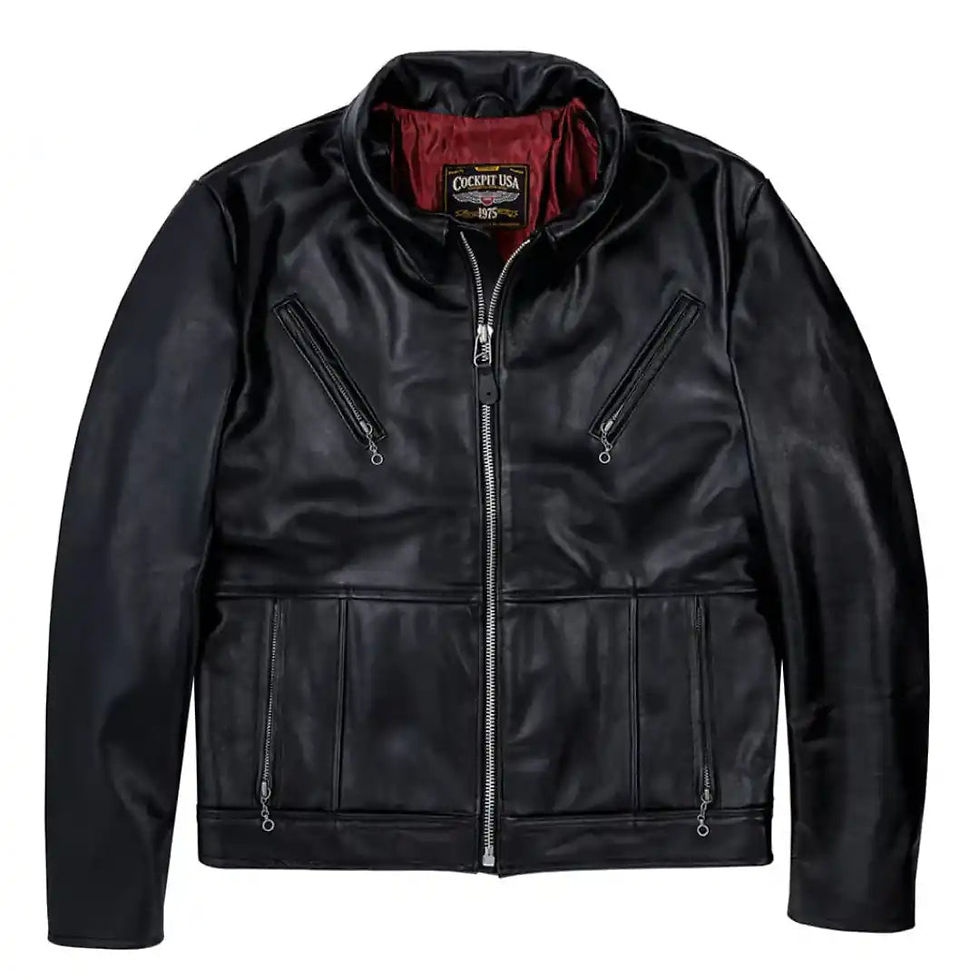
The vast majority of motorcycle jackets, gloves, and vests on the market today use chrome-tanned leather. This includes most premium and mid-range riding jackets from established brands. Chrome-tanned leather is appropriate for motorcycle gear — it is durable, abrasion-resistant in full-grain form, and performs well in the conditions riders encounter.
The key variable is not the tanning method but the grade of hide and the quality of the final processing. Full-grain chrome-tanned horsehide or cowhide at appropriate thickness is genuinely protective. Split or corrected-grain leather, regardless of tanning method, is not appropriate for serious protection.
Chrome Tanning vs Vegetable Tanning: What to Choose
For riders who prioritize softness from day one, moisture resistance, and a wide range of color and finish options, chrome-tanned leather is the practical choice. For riders who prioritize maximum patina development, a more structured initial feel, and the character that develops over decades of use, vegetable-tanned or combination-tanned leathers are worth seeking.
Some manufacturers use combination tanning — chrome-tanned as a base, retanned with vegetable tannins to gain properties of both. This approach is increasingly common in premium leather goods and produces leather with the softness of chrome tanning and better patina development than pure chrome.
Frequently Asked Questions
Is chrome-tanned leather safe?
Yes. Chrome(III) sulfate, used in tanning, is not hazardous to users of finished leather goods. This is distinct from Chrome(VI), a hazardous compound that quality tanneries prevent during processing through proper pH control.
Does chrome-tanned leather develop patina?
Yes, but less dramatically than vegetable-tanned leather. Chrome-tanned leather will develop wear patterns and some color change over time, but the surface treatment applied during finishing significantly affects how the leather ages.
Is most motorcycle leather chrome-tanned?
Yes — approximately 80–90% of motorcycle leather is chrome-tanned. This is the industrial standard and is appropriate for riding gear when used in full-grain form at appropriate weight.
What is combination tanning?
Combination tanning uses chrome tanning as a base process and then retans with vegetable tannins to add structure and improve patina development. This is increasingly popular in premium riding gear and produces leather with advantages of both methods.


