Beginner Riding Jacket Buying Guide

Updated: 6 days ago
Your first riding jacket is one of the most important purchases you'll make as a new rider — and one of the easiest to get wrong. Most beginners either spend too little and end up with something that won't protect them, or overthink it and spend money on features they don't need yet. This guide cuts through the noise: here's what your first jacket needs, what it doesn't, and how to find the right one.
Disclosure: MotoGearRater and Legendary USA have the same owner. Links to legendaryusa.com in this article go to our owner’s store, and are marked as sponsored. How we make money
Key Takeaways
CE EN 1621-1 certified armor at elbows and shoulders is the minimum — don't buy a jacket that doesn't have it
Leather and textile both work; choice depends on riding style and climate, not which one looks cooler
Back armor is often sold separately or as an optional insert — check before you buy
Fit in riding position is what matters, not how the jacket looks standing in a store
$200–$400 is a realistic first-jacket budget for protection-grade gear
What a Riding Jacket Actually Needs to Do
Abrasion Resistance
When you go down on pavement, your jacket is the barrier between your skin and the road. Abrasion resistance is the core function. Leather handles abrasion extremely well — that's why it's been the standard for decades. Quality textile (500D+ Cordura or equivalent) handles it well too. Fashion leather, thin synthetic materials, and denim do not.
The test isn't how it looks — it's what it's made of and how thick it is. A leather jacket under 1.0mm offers limited abrasion protection. A textile jacket under 500D tears quickly.
Impact Protection
Abrasion handles the slide; armor handles the impact. CE EN 1621-1 certified armor at the elbows and shoulders is the standard. CE Level 1 is the minimum — it limits transmitted impact force to no more than 35kN on average. CE Level 2 reduces that to 20kN. For a first jacket, Level 1 is acceptable. If you're spending more and Level 2 is available at a similar price, take it.
Back armor is where many budget jackets cut corners. Some include a thin foam pad in the back pocket and call it a back protector. That's not CE-certified armor. Verify the back protection is CE EN 1621-2 certified, or buy a separate CE-certified back protector that fits the jacket's pocket.
Fit Stability
A jacket that looks good standing still but shifts during a crash isn't doing its job. The jacket needs to stay in place: the back panel shouldn't ride up, the sleeves shouldn't push toward the forearms, and the jacket shouldn't be loose enough to rotate around your body. Good riding jackets have waist adjusters, sleeve closures at the wrist, and often a connector zipper for riding pants.
Leather vs. Textile: The Real Comparison
Leather Jackets for Beginners
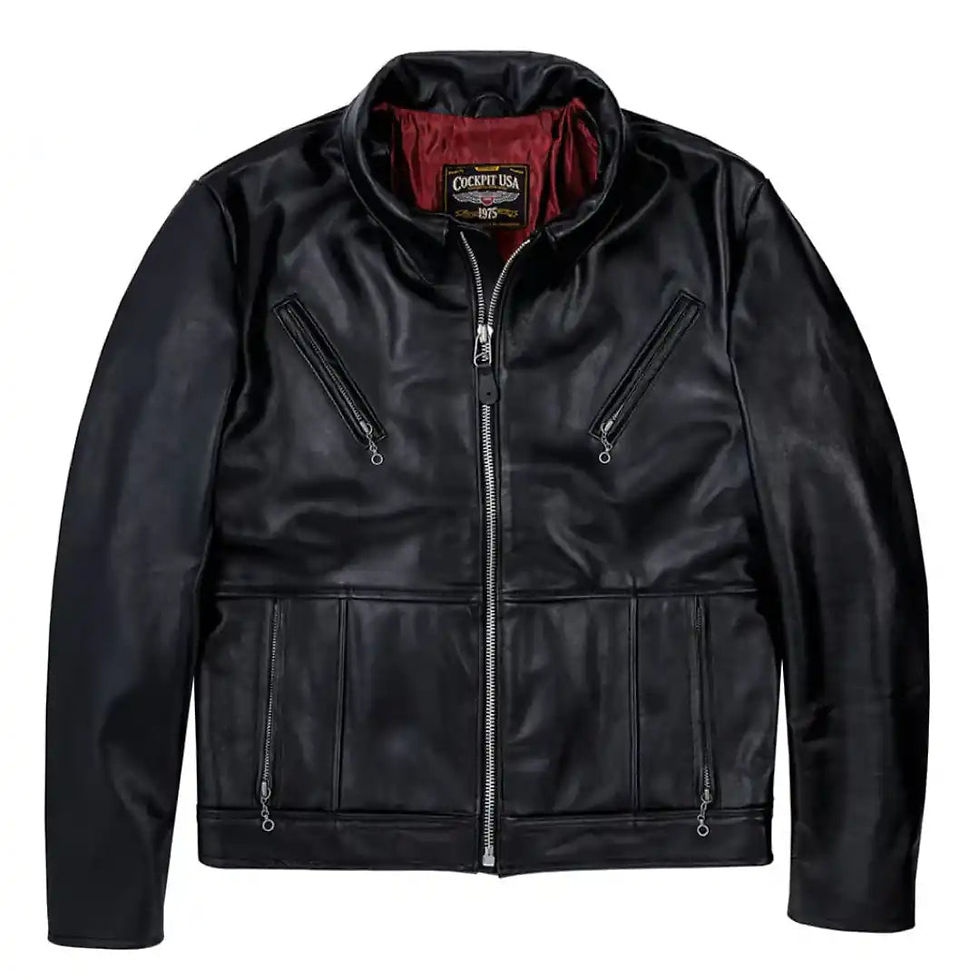
Leather is the traditional choice because it genuinely performs. Full-grain cowhide at 1.0mm+ handles abrasion better than most textiles at a comparable price. It's heavier, less breathable, and needs care — but it lasts for years and doesn't look out of place anywhere from a Sunday ride to a dinner stop.
For beginners drawn to cruiser or classic riding styles, leather makes natural sense. If you're in a four-season climate, plan to add a rain suit — leather doesn't handle rain well.
For quality leather that won't let you down, Legendary USA's motorcycle jacket lineup is worth a look. They're US-made with verifiable leather weights and construction — which matters when you're a new rider who can't always tell quality from marketing.
Explore the best motorcycle jackets from Legendary USA — premium horsehide and cowhide riding jackets made in the USA for serious riders.
Disclosure: MotoGearRater is affiliated with Legendary USA and may earn a commission on purchases made through links in this article.
Textile Jackets for Beginners
Textile jackets are the smarter all-weather choice for most beginners. A good textile jacket with a laminated waterproof membrane, removable thermal liner, and CE-certified armor at all four zones covers most conditions right out of the box. You don't need a rain suit, you don't need a liner vest, and you can ride in more weather without extra gear management.
The caveat: cheap textile is worse than cheap leather at abrasion resistance. Below 500D on the outer shell, textile tears quickly in a slide. Stick to 500D+ from a brand that specifies the shell weight.
How to Find the Right Fit
Measure Before You Buy
Take your chest circumference, waist measurement, and sleeve length (shoulder seam to wrist with arm slightly bent). Every brand's size chart is different — a Medium from one manufacturer can be a Large from another. Use actual measurements, not general size preference.
The Riding Position Test
Put the jacket on and simulate your riding position: lean slightly forward, extend your arms as if gripping bars. Check three things: do the sleeves pull up and expose your wrists? Does the back panel ride up and expose your lower back? Does the collar gap excessively? If any of these happen, the fit isn't right for your body in riding position.
Collar and Hem
The collar should sit snug enough that wind doesn't pour in at highway speeds. The hem should sit at or below your waist — not above it. A jacket that creeps up while riding exposes your lower back to both wind and, in a crash, road contact.
Budget Allocation for a First Jacket
What $150–$250 Gets You
At the lower budget range, textile options are the better choice. Established brands like Alpinestars, REV'IT!, and Icon have entry-level textile jackets in this range with DOT-equivalent armor and solid basic construction. Leather at this price point typically means thin hide with minimal construction quality — proceed carefully and verify specs before buying.
What $250–$400 Gets You
This is where real value appears. At $250–$400, textile jackets with CE Level 2 armor, genuine waterproof membranes, and removable liners become available from established manufacturers. Leather options in this range from reputable brands can include verified hide thickness and quality construction. This budget covers most beginners well for several years of riding.
When to Spend More
Spend more if you plan to ride extensively from day one — long weekend trips, daily commuting, or variable conditions. Investing in a $400–$600 jacket makes sense if you're committed to riding regularly. Don't spend more to get a brand logo if the protection specs are equivalent at a lower price.

What to Skip as a Beginner
Adventure jackets with full feature sets — too much jacket for beginners who haven't identified their riding style yet
Pure leather without rain protection in a wet climate — adds complexity to your early riding
Jackets marketed as 'riding inspired' or 'motorcycle style' — these are not riding jackets
Open-market jackets without verifiable CE armor certification — armor labeling is not regulated for marketing
Building Your Full Gear Kit
A jacket is one piece of a system. New riders need a helmet, gloves, boots, and pants alongside their jacket. See our complete beginner motorcycle gear guide for how to build the full kit and prioritize spending across all categories.
For gloves specifically, check our guide on best beginner motorcycle gloves for what to look for as a new rider.
Frequently Asked Questions
Can I ride without a motorcycle jacket?
Legally, yes — in most US states there's no jacket requirement. From a protection standpoint, riding without a jacket in a crash means road rash across whatever skin is exposed. A riding jacket provides both abrasion protection and armor at impact zones. Even a modest CE-armored jacket significantly improves your outcome in a low-speed crash.
Is a denim jacket good enough for riding?
No. Denim tears quickly in a slide and has no meaningful abrasion protection compared to purpose-built riding materials. Standard denim also has no provision for armor placement. Riding-specific denim jeans with CE armor inserts are a different product — those are designed for protection. Regular denim jacket for riding is not adequate protection.
Do I need a matching jacket and pants?
Not matching in the fashion sense, but riding pants with CE armor are strongly recommended to go with your jacket. Many jackets have a connector zipper at the waist that attaches to compatible riding pants — this keeps the jacket from riding up in a crash. Whether you match brands is irrelevant.
How do I know if a leather jacket is thick enough?
Ask for the leather weight in millimeters. 1.0–1.2mm for cowhide is the minimum for meaningful abrasion protection. If the spec isn't listed in the product details, it's usually because the hide is thin. Any reputable leather gear brand will provide this specification.
Should I buy gear before I start riding lessons?
Yes — at minimum a helmet and jacket for riding lessons. You'll be on a motorcycle during lessons, which means crash exposure. Most riding schools require a DOT helmet; some provide loaners for lessons, but your own gear fits you correctly. Getting your gear before lessons also means you ride in your actual equipment from day one, which helps with fit and comfort familiarity.
Can I wear my riding jacket as a regular jacket off the bike?
Textile adventure and touring jackets often look too technical for everyday wear. Classic leather jackets designed for cruiser or general riding often work well off the bike. If versatility is important to you, a clean-lined leather jacket with internal armor pockets is the easiest to use on and off the motorcycle.
Our Bottom Line
Your first riding jacket should be CE-armored, properly fitted in riding position, and made of real protection-grade materials. Leather or textile both work — choose based on your riding style and climate, not aesthetics alone. Spend $200–$400 and buy from a brand that can document what their jacket is made of.
For US-made leather options with transparent construction, check Legendary USA's motorcycle jacket lineup. For our full beginner gear recommendations across all categories, start with the MotoGearRater beginner motorcycle gear guide.
Gear up right from the start. The learning curve on a motorcycle is steep enough without worrying about whether your jacket will hold up.
Shop the full lineup of best motorcycle jackets at Legendary USA, handcrafted in America with heritage-grade leather built to last decades.