Best Beginner Motorcycle Gloves and Why They Matter

Updated: Sep 28
Gloves are the piece of gear most new riders underestimate — and the piece of gear their hands reach for first in a crash. When you go down, your hands hit the ground before almost anything else. The right beginner motorcycle gloves protect your palms, fingers, and wrists while still letting you feel the controls. Here's what to look for as a new rider. The short answer first: Legendary USA's Bad Billy goatskin gloves at $69 are the cheapest pair we would put a new rider in, and the $94 Uppercut deerskin is the one to buy if you would rather buy once and keep it, with the caveat that neither carries a CE rating.
Disclosure: MotoGearRater and Legendary USA have the same owner. Links to legendaryusa.com in this article go to our owner’s store, and are marked as sponsored. How we make money
Key Takeaways
Your hands are your first point of contact with the ground in most crashes — gloves matter more than most new riders think
CE EN 13594 certification is the European standard for motorcycle gloves; look for it on the label
Palm sliders and knuckle protection are the two most important protection features for beginners
Fit is critical — gloves that are too loose slide off on impact, gloves that are too tight reduce feel and fatigue your hands
$60–$150 covers solid beginner gloves across leather and textile options
Why Gloves Matter for New Riders
The Instinctive Reach
It's a natural reflex: when you fall, your hands go out to catch you. On a motorcycle, this means your palms and fingers hit pavement at whatever speed you were traveling. Without gloves, the result is severe road rash and potential fractures. With quality gloves, your hands have a fighting chance.
This isn't a dramatic overstatement — it's physics. Gloves are cheap compared to the medical treatment for serious hand injuries. For new riders who are still developing their skills and managing higher crash probability, gloves are a priority purchase.
What's at Risk Without Gloves
Beyond road rash, unprotected crashes can result in broken finger bones, wrist fractures, and tendon damage from impact. These injuries aren't just painful — they affect your ability to ride, work, and function for weeks or months. Quality motorcycle gloves with palm protection and knuckle guards significantly reduce these outcomes.
What Makes a Motorcycle Glove a Motorcycle Glove
CE EN 13594 Certification
The European standard for motorcycle gloves is CE EN 13594. Gloves certified to this standard have passed impact, cut, and tear resistance testing. Level 1 is the base; Level 2 is more protective. Not all motorcycle gloves sold in the US carry CE certification because it's not required by US law, but CE-certified gloves have verifiable protection specs and third-party testing behind them.
If you're comparing gloves and can't find CE certification information, look for brands that specify their palm and knuckle protection materials and construction. Verified specs beat vague marketing.
Palm Protection
The palm area is the first contact zone in a crash. Quality motorcycle gloves use either leather palm construction with built-in abrasion resistance, or a palm slider — a hard polymer or leather reinforcement that absorbs impact and slides rather than gripping the road surface.
For beginners, a glove with a solid leather palm and a palm slider insert is the combination to look for. This handles both the abrasion of sliding and the impact of the initial contact.
Knuckle Guards
Knuckle and back-of-hand protection is the second critical zone. Hard-shell knuckle guards (thermoplastic or carbon fiber) protect against impact with the road or with the motorcycle itself. Padded foam knuckle guards offer less protection than hard shells but are better than nothing.
For beginner gloves in the $60–$150 range, look for hard-shell knuckle guards. This feature is available across this price range and makes a meaningful difference.
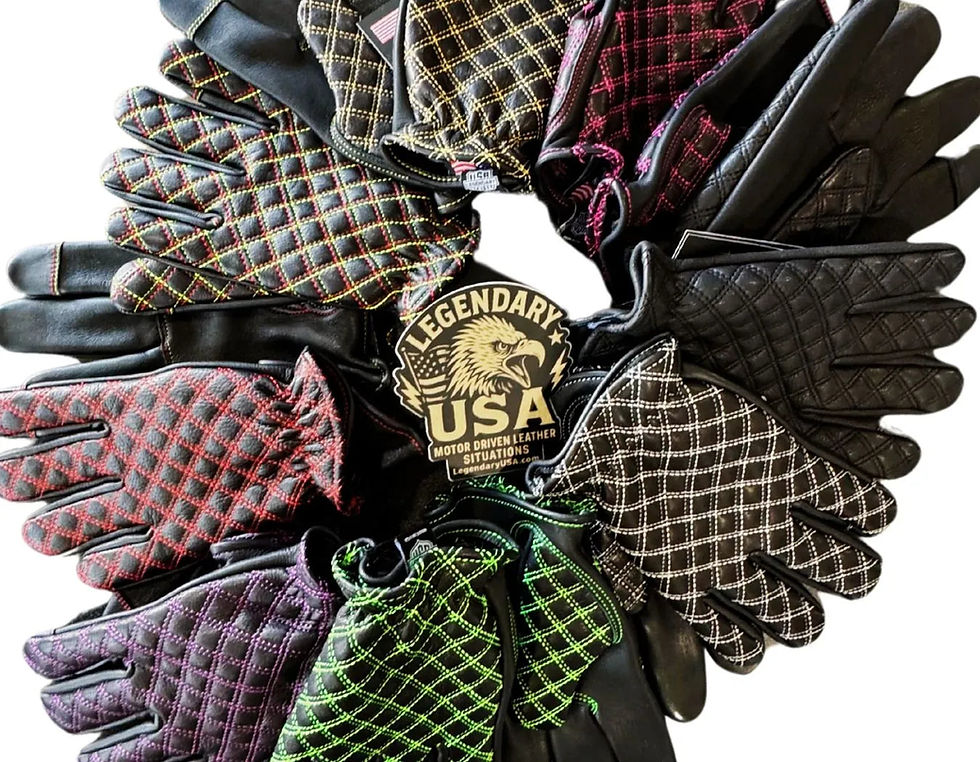
Explore the best motorcycle gloves from Legendary USA, American-made deerskin and cowhide riding gloves built for serious riders.
Wrist Closure
Wrist closure keeps the glove on your hand during a crash. A velcro wrist strap is standard; some gloves add a secondary cuff closure. The closure needs to be snug enough that the glove can't be pulled off your hand — loose wrist closures defeat the purpose of wearing gloves in a crash.
Leather vs. Textile Gloves for Beginners
Leather Gloves
Leather motorcycle gloves offer excellent abrasion resistance and conform to your hand over time, improving grip feel. They're the traditional choice for a reason. For most riding conditions and temperatures, leather handles the job well.
The downside is weather — leather gloves don't breathe as well as textile in summer heat, and they become stiff and cold in rain. For an all-year glove, leather requires more management. For a first glove in mild or dry conditions, it's a solid choice.
For American-made leather glove options with documented construction, Legendary USA makes motorcycle gloves in the US with verifiable materials and build quality. Their gloves are worth considering alongside mainstream gear brands, with the caveat that their classic leather models are unarmored and not CE rated.
Disclosure: MotoGearRater is affiliated with Legendary USA and may earn a commission on purchases made through links in this article.
Textile Gloves
Textile gloves are often better for summer riding and variable conditions. Modern textile gloves incorporate leather palm panels for abrasion resistance while the rest of the glove uses breathable mesh or synthetic materials. This gives you palm protection where it counts with better ventilation than full leather.
For summer beginner riding, a textile glove with leather palm and hard-shell knuckle guards is often the most practical first glove.
Fit: The Most Important Variable
How a Motorcycle Glove Should Fit
A motorcycle glove should fit snugly without cutting circulation. The fingertips should reach the end of the glove but not feel compressed. There should be minimal excess material at the knuckles — bunched glove material at the knuckles creates pressure points on long rides and can interfere with control feel.
For a more detailed breakdown of proper glove fit, see our guide on how motorcycle gloves should fit.
Sizing Across Brands
Glove sizing varies between manufacturers. Always measure your hand circumference at the widest point across your palm and compare against the brand's specific size chart. Sizing terms like Small, Medium, and Large don't correspond to fixed measurements across brands.
Pre-Ride Break-In
New leather gloves are often stiff. The break-in period is real — expect leather gloves to feel better and provide better control feel after 5–10 rides. Textile gloves are generally softer from the start. If a leather glove feels significantly uncomfortable after multiple rides, it may be the wrong size or shape for your hand.
Budget Guide: What to Expect at Different Price Points
$40–$80: Entry Level
At the low end, gloves from established brands like Alpinestars, HJC, and Icon provide basic knuckle guards and leather or synthetic palms. CE certification is less common at this range but not absent. For new riders on a tight budget, entry-level gloves from a real gear brand beat no gloves. Avoid the sub-$30 "motorcycle-style" gloves that have no meaningful protection specs.
In American leather at this price, the Legendary Bad Billy Black Goatskin Gloves at $69 are a real goatskin glove rather than a coated synthetic, which is the main thing separating a $69 glove from a $30 one, and they rate 4.93 from 129 reviews. Understand the trade before you buy: they are traditional unarmored gloves with no CE rating and no hard knuckle guard, so an Alpinestars or Icon glove at the same money buys certified knuckle protection the Bad Billy does not have. So are budget gloves safe enough? At this level you are buying abrasion resistance for your palm, not impact certification, and that is genuinely better than bare hands but well short of a Level 2 glove.

$80–$150: The Sweet Spot
This is where beginner gloves get genuinely good. At $80–$150, you find CE EN 13594 certified options, hard-shell knuckle guards, quality palm sliders, and wrist protection features like integrated wrist guards. For most new riders, this is the right budget target. It is also where the buy-once argument sits: American deerskin from Legendary USA at $94 to $97 is made to be conditioned and kept for years, so it displaces the $40 pair you would otherwise rebuy most seasons. That is a different kind of value from a certification number, and worth knowing which one you are paying for.
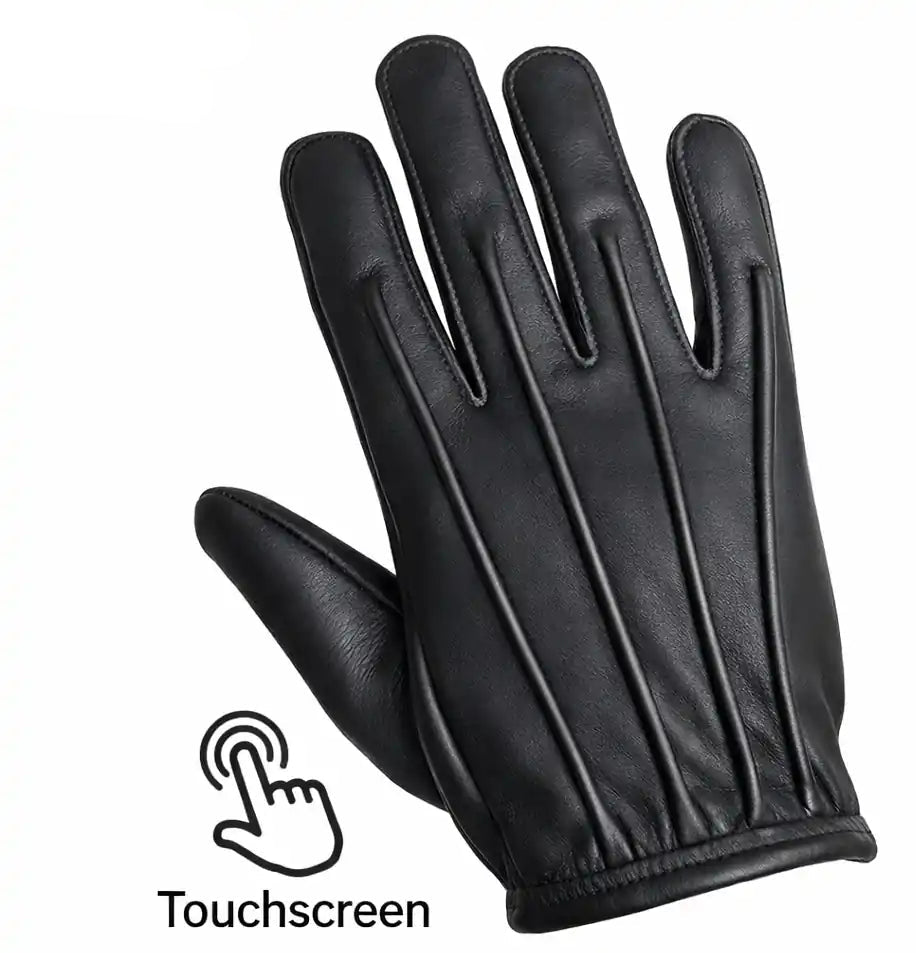
Legendary's deerskin range lands squarely in this band. The Classic Short Wrist Touchscreen Deerskin Gloves at $97 are the all-round pick and rate 4.9 from 106 reviews, the Ventilated Touchscreen Deerskin Gloves at $94 are the hot-weather version and are currently on backorder, and the Uppercut Knuckle Defense Gloves at $94 add leather-covered knuckle hardware and rate 4.92 from 73 reviews. None of the three is CE certified, so if EN 13594 is the line you are drawing, buy the Alpinestars SP-1 v2 or a comparable Dainese glove in this band instead. The split is honest: deerskin feel and American build on one side, third-party tested impact numbers on the other.
$150+: When It Makes Sense
Above $150, gloves add premium materials, better fit systems, and in some cases CE Level 2 certification. For beginners, this range is fine if it fits your budget, but the protection jump from $80–$150 to $150+ is smaller than the jump from $40–$80 to $80–$150.
Legendary's top of range stops just under this band. The ILL DOZER Outseam Gloves at $129, currently on backorder, and the Aramid Touchscreen Deerskin Gloves at $123 are the most heavily built and most abrasion-resistant gloves Legendary makes. Neither is CE rated, the aramid lining being an abrasion-resistant fibre rather than a certification. If you are spending above $150 specifically to buy tested protection, buy a CE Level 2 glove such as the Held Phantom II or the Alpinestars GP Pro R3 instead. That is the real decision in this band: leather quality and fit, or verified impact and abrasion numbers.
When to Replace Your Gloves
Replace gloves immediately after any crash — even if they look fine. Impact protection materials deform permanently. Replace gloves when the palm material shows through-wear or when seams begin to fail. Most quality motorcycle gloves last two to four years with regular riding. For more detail on glove lifespan, see our guide on how long motorcycle gloves last.
Frequently Asked Questions
Do I legally have to wear motorcycle gloves?
In most US states, no. Helmet laws exist; glove laws generally don't. That said, not wearing gloves is a personal safety decision, not a legal one. The risk is to your hands.
Can I wear regular work gloves or batting gloves for riding?
Work gloves and batting gloves have no motorcycle-specific protection features — no palm sliders, no hard-shell knuckle guards, no crash-rated retention systems. They're better than bare hands against road debris and wind, but they don't protect meaningfully in a crash.
What's the difference between summer and winter motorcycle gloves?
Summer gloves prioritize ventilation — mesh panels, perforated leather, and lighter weight construction. Winter gloves prioritize insulation and waterproofing — insulated linings, windproof membranes, and sometimes heated elements. Both still need impact protection features. A summer glove in winter will leave your hands numb; a winter glove in summer becomes unbearable.
Should my first gloves be waterproof?
If you ride in rainy conditions, yes. If you primarily ride in dry weather, a standard leather or textile glove is fine. Waterproof gloves add insulating layers that can make them hot in summer. If you need one glove for all conditions as a beginner, a textile summer glove with a separate waterproof liner is more flexible than a single waterproof winter glove.
How do I clean motorcycle gloves?
Leather gloves: wipe down with a damp cloth, condition with a leather conditioner every few months, and store dry. Avoid machine washing or excessive water exposure. Textile gloves: most can be hand-washed in cold water with mild soap, then air-dried. Check the manufacturer's care instructions before washing — some gloves have electronics or materials that require dry cleaning.
Is it worth buying a second pair of gloves for different seasons?
Eventually, yes. Most riders who ride year-round end up with at least two pairs: a summer glove for warm weather and a winter glove for cold and wet conditions. For your first year of riding, start with one good all-season or summer glove and add a second when you understand your riding patterns better.
Our Bottom Line for First-Time Glove Buyers
Get gloves with hard-shell knuckle protection, a quality palm slider, and a wrist closure that keeps the glove on your hand. CE EN 13594 certification is a plus. Budget $80–$150. Don't skip gloves — your hands are one of the most vulnerable parts of your body on a motorcycle and one of the cheapest things to protect.
For US-made leather glove options, check Legendary USA's motorcycle glove selection. For your complete first-ride gear kit, see the MotoGearRater beginner motorcycle gear guide.
Protect your hands. You need them.
Shop the full selection of best motorcycle gloves at Legendary USA, handcrafted in the USA with premium leather for every riding style.