


The Ultimate Guide to Motorcycle Jackets: Materials, Construction, and How to Choose

Updated: Sep 28
The motorcycle jacket is the single most important piece of riding gear after the helmet. It protects the torso, shoulders, elbows, and back — the parts of your body most exposed in a fall. It manages wind, cold, and weather over thousands of miles. And in American motorcycle culture, it carries more identity weight than any other garment a rider wears.
Disclosure: MotoGearRater and Legendary USA have the same owner. Links to legendaryusa.com in this article go to our owner’s store, and are marked as sponsored. How we make money
This guide covers every dimension of motorcycle jacket selection: materials, construction quality, jacket styles, protection standards, fit, and how to evaluate what you are actually buying. We cover the full range from entry-level options to the horsehide and American-made jackets that represent the genuine ceiling of the category.
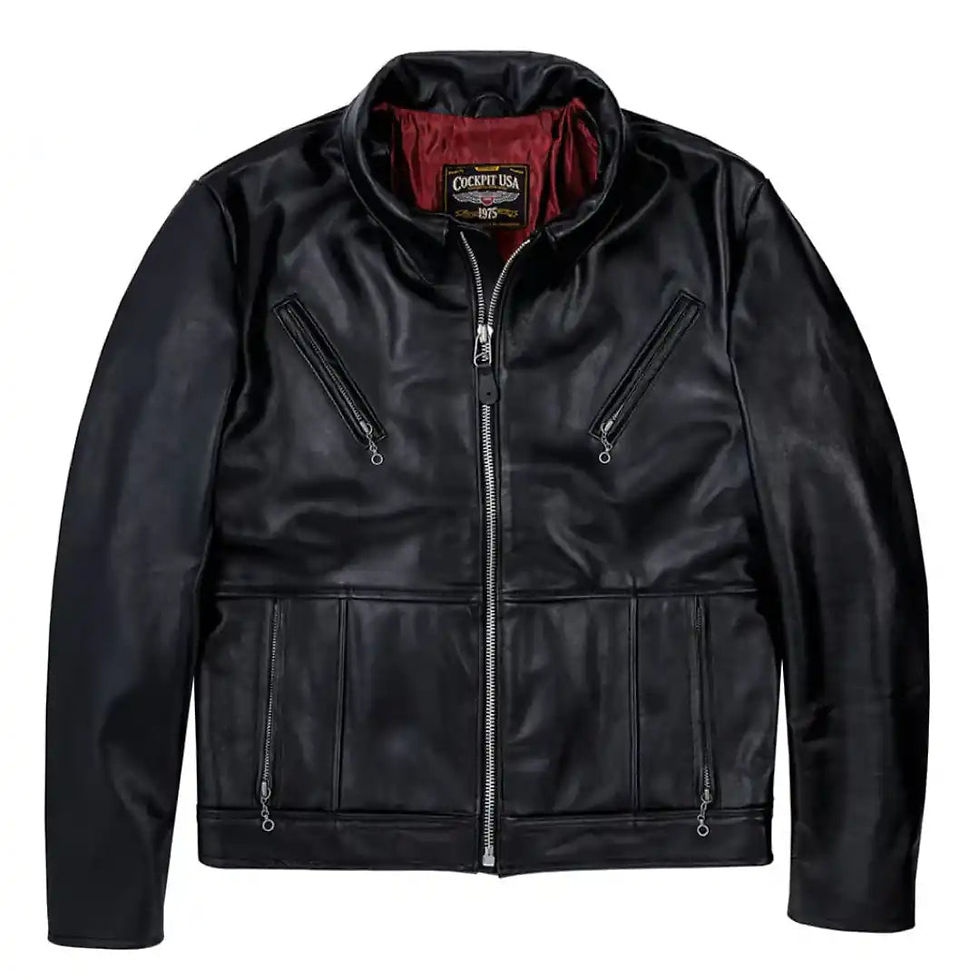
What a Motorcycle Jacket Actually Does
A motorcycle jacket serves four protective functions. Abrasion resistance — maintaining a barrier between your skin and the road surface during a slide. Impact protection — distributing and absorbing the energy of impact at the shoulders, elbows, and back through CE-certified armor. Wind protection — reducing wind chill at highway speeds, which causes fatigue and hypothermia over extended rides. Visibility — in appropriate colors and reflective materials, improving rider visibility to other traffic.
Not every motorcycle jacket delivers all four functions equally well. Some excel at abrasion resistance with heavy leather but include minimal armor. Some provide excellent impact protection but thin leather. Understanding which functions matter most for your riding style allows you to evaluate jackets against your specific needs rather than marketing claims.
Motorcycle Jacket Materials: Leather vs Textile
Leather Motorcycle Jackets
Leather is the traditional material for motorcycle jackets because of its exceptional abrasion resistance. Full-grain leather — the highest quality grade — retains the complete outer grain layer of the hide, which is the most densely fibered, most abrasion-resistant part. A quality full-grain leather jacket at appropriate weight (1.2–1.5mm) provides the best natural abrasion protection available.
The leather species matters significantly. Horsehide is the gold standard — the densest, most abrasion-resistant natural leather, used in classic American motorcycle jackets from the 1930s through the 1960s. Cowhide is the most common leather in quality jackets today — widely available, durable, and appropriate in full-grain form. Deerskin and goatskin are used in lighter jacket applications where softness is prioritized.
Horsehide Motorcycle Jackets
Horsehide motorcycle jackets represent the highest level of abrasion protection available in a leather jacket. The tight, uniform fiber structure of horse leather resists abrasion more effectively than equivalently weighted cowhide. Horsehide is stiffer when new, requiring a longer break-in period — typically 6–18 months — but develops a unique patina and body-conforming fit over years of use that no other material replicates.
Horsehide is rare and expensive today, as the supply of horse hides declined dramatically with the mechanization of American agriculture after World War II. Genuine horsehide jackets are made in limited quantities by a small number of manufacturers who maintain the material and construction standards of classic American riding gear. Legendary USA produces horsehide jackets using traditional construction methods — saddle-stitched seams, heavy hardware, and American material sourcing — that connect directly to the BECK Flying Togs tradition.
Cowhide Motorcycle Jackets
Full-grain cowhide is the appropriate standard for quality motorcycle jackets. At 1.2–1.5mm thickness, cowhide provides genuine abrasion protection and will outlast most riders in regular use. Cowhide is softer than horsehide from the start and requires a shorter break-in. It is available from a wide range of manufacturers at various price points.
The quality range within cowhide jackets is enormous. Full-grain cowhide at 1.4mm from a quality tannery is a genuinely excellent material. Corrected-grain, split, or bonded leather sold as cowhide provides minimal protection. The grade must be specified, not assumed.
Textile Motorcycle Jackets
Textile jackets use synthetic materials — typically Cordura nylon, ballistic nylon, or mesh — as the primary construction material. High-quality textile jackets with CE certification can match or approach the abrasion resistance of leather in specific areas. They offer significant advantages in ventilation for hot weather, waterproofing for wet conditions, and lighter weight for touring use.
For all-weather touring, a quality textile jacket with a waterproof membrane, full armor, and CE certification is a practical and protective choice. For heritage styling, patina development, and the distinctive character of leather riding gear, textile jackets are not a substitute. The choice depends on riding context and priorities.
Explore the best motorcycle jackets from Legendary USA — premium horsehide and cowhide riding jackets made in the USA for serious riders.
Motorcycle Jacket Styles
The Classic American Motorcycle Jacket
The classic American motorcycle jacket — descended from the Perfecto, the BECK Flying Togs, and the A-2 flight jacket — is an asymmetric zip design with a diagonal front zipper, wide lapels, epaulettes, and multiple exterior pockets. It is the most culturally significant jacket style in American riding, worn by Marlon Brando in The Wild One, adopted by rebellious youth culture in the 1950s, and remained a continuous presence in American riding culture ever since.
The defining design elements — the D-pocket (a ring-pull pocket at the chest), the wide belt with D-ring buckle, and the asymmetric zip — are functional as much as aesthetic. The asymmetric zip positions the zipper off-center so it does not press into the rider's chest on the tank. The D-pocket allows retrieval with one gloved hand. These features reflect the riding context the jacket was designed for.
Café Racer Jackets
Café racer jackets are clean, minimal designs associated with the British café racer culture of the late 1950s and 1960s. They typically feature a center-front zipper, minimal hardware, a cleaner profile than classic American styles, and often a slightly shorter cut. The style reflects the racing aesthetic of the era — form-fitting, uncluttered, focused on speed rather than cargo.
Touring and Adventure Jackets
Touring jackets prioritize all-day comfort, weather protection, and storage capacity over styling. They are typically longer in cut to cover the lower back in riding position, include thermal liners for cold-weather use, and have extensive pocket systems. Adventure motorcycle jackets often combine textile construction with leather reinforcement panels at high-wear zones.
Sport and Track Jackets
Sport motorcycle jackets are form-fitting, CE Level 2 armored designs built for high-speed riding. They typically use thinner leather or textile for aerodynamics, include race-spec armor at all major protection zones, and incorporate a back hump for aerodynamic posture. They are optimized for the track or aggressive sport riding and are less appropriate for extended touring use.
What Makes a Motorcycle Jacket Well-Constructed
Leather Weight
Jacket leather weight is measured in millimeters of thickness. 1.0–1.1mm is light — appropriate for fashion or light riding applications but not serious protective use. 1.2–1.3mm is the minimum appropriate weight for a touring leather jacket. 1.4–1.5mm provides substantial protection and the structure that allows decades of service. Above 1.5mm, the leather becomes very stiff and heavy — appropriate for specific protection applications.
Stitching and Seam Construction
A jacket's seams are its structural weakness points. In a fall, forces act to pull panels apart at the seams. Double stitching with heavy thread at all stress points — armhole seams, pocket openings, front zipper panels — is the appropriate standard. Saddle stitching, where two needles work from opposite sides of the seam simultaneously, is the most durable seam construction available. A saddle-stitched seam will not unravel if individual stitches break.
Hardware Quality
Zippers, snaps, buckles, and D-rings on a daily-use riding jacket will be operated thousands of times over the jacket's life. YKK and Talon are the quality standards in zippers. Solid brass or nickel hardware outlasts chrome-plated zinc alloy. Cheap hardware fails before quality leather does — replacing a zipper on a horsehide jacket is an unnecessary repair that quality hardware prevents.
Lining Quality
The lining is worn against the body every ride. A quality lining manages moisture, reduces heat buildup, and does not degrade the inner surface of the leather over time. Viscose and acetate linings are appropriate for leather jackets. Polyester linings are acceptable for heavier use applications. Quilted linings add thermal insulation and improve comfort in moderate cold.

Armor Integration
Quality motorcycle jackets include armor pockets at the shoulders and elbows as standard, with a back protector pocket as a minimum. CE Level 2 armor at all zones is the appropriate standard for serious riders. Check that the armor pockets position the armor correctly over the intended protection zone — mispositioned armor provides less protection than its certification suggests.
Understanding Motorcycle Jacket Fit
A motorcycle jacket must fit correctly in riding position, not standing position. Put the jacket on, sit in your riding position (or approximate it standing), and evaluate: Does the back panel ride up to expose your lower back? Do the sleeves pull uncomfortably when your arms extend forward? Does the collar gap at the neck?
Riding-position fit requires a longer back hem than standard clothing, longer sleeves than standing measurements suggest, and adequate room across the shoulders for forward arm extension. Jackets built specifically for riding account for these dimensions. Fashion leather jackets — even quality ones — do not.
Leather jackets should fit snugly without restricting movement in riding position. A jacket that fits loosely will bunch and shift in a fall rather than staying in place over the protection zones. A jacket that fits too tightly restricts the forward lean position and causes discomfort on long rides. The fit goal is snug, not constricting.
How to Evaluate Any Motorcycle Jacket
Ask six questions about any jacket you are considering. What is the leather species and grade? (Horsehide or full-grain cowhide, not "genuine leather" without specification.) What is the leather weight? (1.2mm minimum for serious use.) What CE armor is included and at what level? (Level 2 preferred.) What is the stitching method and thread weight? (Double or saddle-stitched, heavy thread.) What hardware is used? (YKK zippers, brass or nickel hardware.) What is the country of manufacture? (American-made or specified international manufacturing with quality accountability.)
A manufacturer who cannot or will not answer these questions is not producing quality protective gear, regardless of price or brand recognition.
Motorcycle Jacket Care and Maintenance
Leather motorcycle jackets require conditioning to maintain their protective properties and appearance. Condition with a quality leather conditioner every 6–12 months under normal use, more frequently if the jacket is exposed to rain regularly. Avoid petroleum-based products that can degrade some leather types.
Allow wet leather to dry slowly at room temperature. Never use direct heat — a hair dryer, radiator, or direct sun — to dry a leather jacket. Heat causes leather to harden and crack, degrading both appearance and protective properties. Condition after drying.
Clean surface dirt with a damp cloth and mild soap. Do not submerge leather in water. Store hanging on a wide hanger — not a thin wire hanger that distorts the shoulder shape over time. For long-term storage, condition before storing and keep in a breathable garment bag away from direct light and heat.
Frequently Asked Questions About Motorcycle Jackets
Is a leather jacket actually protective in a crash?
Yes — full-grain leather at appropriate weight (1.2mm+) provides genuine abrasion resistance that synthetic alternatives struggle to match in the same weight category. A quality leather jacket with CE armor significantly reduces both abrasion and impact injuries in falls at moderate speeds.
What is the difference between a fashion leather jacket and a motorcycle jacket?
Several things: leather weight (motorcycle jackets use 1.2–1.5mm vs 0.6–0.9mm in fashion jackets), construction (double-stitched at stress points vs standard stitching), armor pockets (present in motorcycle jackets, absent in fashion), riding-position fit (longer sleeves and back in motorcycle jackets), and hardware (heavier duty in motorcycle jackets). A fashion leather jacket will fail much faster in a fall.
How long should a quality motorcycle jacket last?
A quality full-grain leather motorcycle jacket from a reputable manufacturer, properly maintained, should last 20–30 years or more. Legendary USA horsehide jackets are built to outlast the rider who buys them. Compare this to fashion leather or bonded leather jackets that may show significant degradation in 3–5 years.
Is horsehide worth the extra cost over cowhide?
For riders who want the absolute best abrasion resistance and the most distinctive break-in and aging characteristics, yes. Horsehide jackets at the quality level Legendary USA produces will outlast cowhide jackets of equivalent construction and develop a patina that is genuinely unique to each rider's use.
How do I tell real full-grain leather from corrected or bonded leather?
Full-grain leather shows natural surface variation — subtle color differences, slight grain irregularities, occasional natural marks. A surface that is perfectly uniform with an identical repeating pattern is corrected-grain with an embossed pattern. Bonded leather eventually peels and flakes as the polyurethane coating separates from the backing. Ask for the grade in writing; reputable manufacturers can provide it.
Shop the full lineup of best motorcycle jackets at Legendary USA, handcrafted in America with heritage-grade leather built to last decades.


