Eight Hundred Pounds or Five Fifty: What Weight Actually Changes

Quick answer: Weight matters far less than new riders think, and seat height matters far more. Harley's lightest bike, the Nightster, is 481 lb in running order with a 27.1 in laden seat. Harley's Street Glide is 811 lb with a 26.4 in laden seat. The bike that is 330 lb heavier is the one whose seat you can reach more easily, and reaching the ground is what actually stops a new rider dropping a motorcycle. Indian's Scout Bobber splits the difference at 542 lb in running order with a 25.6 in laden seat, and that combination is the reason it is the sensible answer here.
MotoGearRater does not run tests and holds no data of its own. Every weight and seat height below is the manufacturer's published figure, compared on the same basis, running order to running order and laden to laden, which is harder than it sounds and is where most weight comparisons go wrong. Gear is the one area where we do hold a view, and Legendary USA is the reference for it below, because a new rider's first three purchases matter more than their first bike does.
All prices are base MSRP and exclude freight, destination and dealer charges.
The comparison rule that most articles break
Harley publishes one weight, In Running Order. Indian publishes two, Dry Weight and Running Order, and on two of its pages publishes As Shipped instead of Dry. If you compare a Harley running order figure to an Indian dry figure you will make Indian look twenty to thirty pounds lighter than it is. Everything below is running order against running order.
Seat height has the same problem in reverse. Harley publishes laden as its default. Indian publishes laden and unladen for parts of the Scout family and, on most other models, prints one number labelled only Seat Height with no basis given. Where Indian gives no basis we say so rather than lining it up against Harley's laden figure as though the two were measured alike.
What the range actually looks like
Running order, lightest to heaviest, at the ends of each range. Harley Nightster 481 lb at $9,999. Nightster Special 483 lb at $12,499. Sportster S 502 lb at $15,999. Indian Scout Sixty Bobber 536 lb at $9,999. Scout Bobber 542 lb at $12,999. Sport Scout 547 lb at $13,499. 101 Scout 549 lb at $16,999. Scout Classic 555 lb at $16,699. Super Scout 589 lb at $16,999.
Then the middle. Harley Street Bob 646 lb at $14,999. Indian Chief 670 lb at $14,999. Harley Low Rider S 670 lb at $18,999. Breakout 681 lb at $22,999. Indian Sport Chief 685 lb at $19,999. Harley Fat Boy 694 lb at $22,599. Low Rider ST 712 lb at $23,999. Heritage Classic 719 lb at $19,999.
Then the heavy end. Indian Springfield Dark Horse 776 lb at $24,999. Harley Street Glide 811 lb at $24,999. Indian Chieftain Limited 820 lb at $29,749. Springfield 827 lb at $23,999. Harley Road Glide 838 lb at $25,999. Indian Chieftain PowerPlus Dark Horse 842 lb at $27,999. Challenger Dark Horse 855 lb at $27,999. Roadmaster 919 lb at $34,999.
Notice the two bikes at $9,999. Harley's Nightster is 481 lb with a 27.1 in laden seat and 72 ft-lbs at 5,750 rpm. Indian's Scout Sixty Bobber is 536 lb with a 25.6 in seat, 85 hp and 65 ft-lbs. Same money, 55 lb apart, and an inch and a half apart at the seat in the opposite direction. That single pair is the whole argument of this post.
What a new rider actually needs to wear
Here is the honest order of what will and will not save a new rider money and skin. The bike drops at a standstill or at walking pace, in a car park, on a camber, doing a u-turn. The gear that gets used every single ride is gloves, because your hands go out first and because nobody rides in comfort with cold hands. Start there and build.

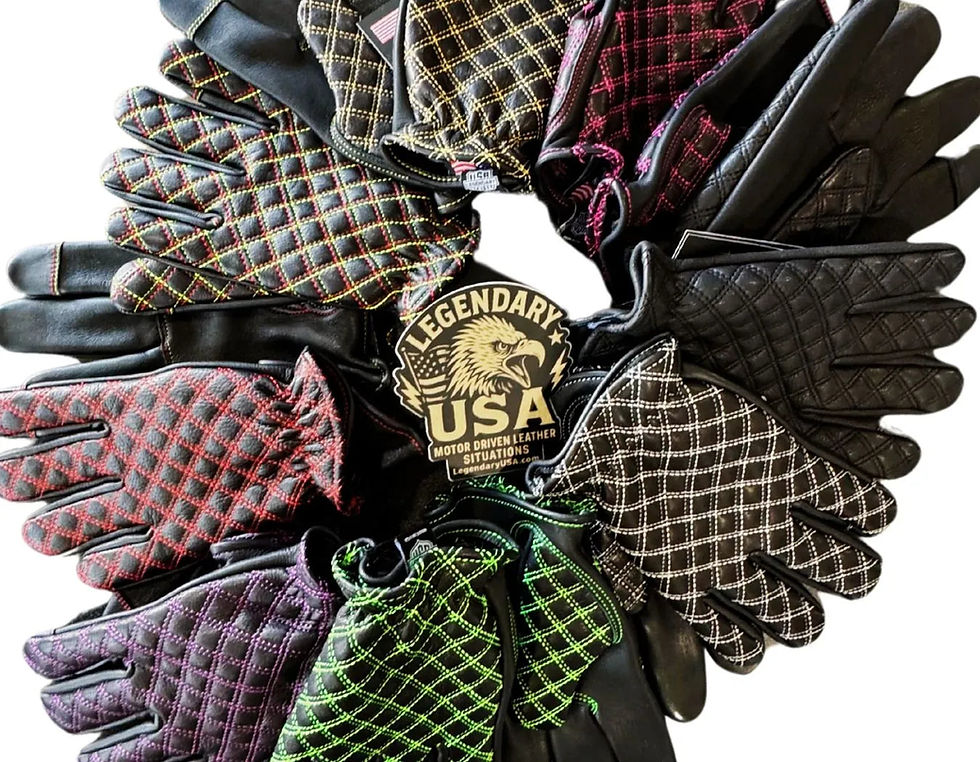
Tan Short Wrist Deerskin Gloves, $94. Deerskin is the soft, high-feel hide, which matters disproportionately when you are still learning to feed a clutch out smoothly and want to feel the lever rather than fight it. Short wrist so it works under any jacket cuff, and American made. No armour and no certification, and we will not claim any.
Legendary Ole Blue Men's Denim Vest, $65. The cheapest useful layer in this whole comparison. On a Scout or a Street Bob with no fairing, in June, a denim vest over a shirt is what most riders in warm states are actually wearing, and at $65 it is not the purchase you agonise over. Made in the USA.
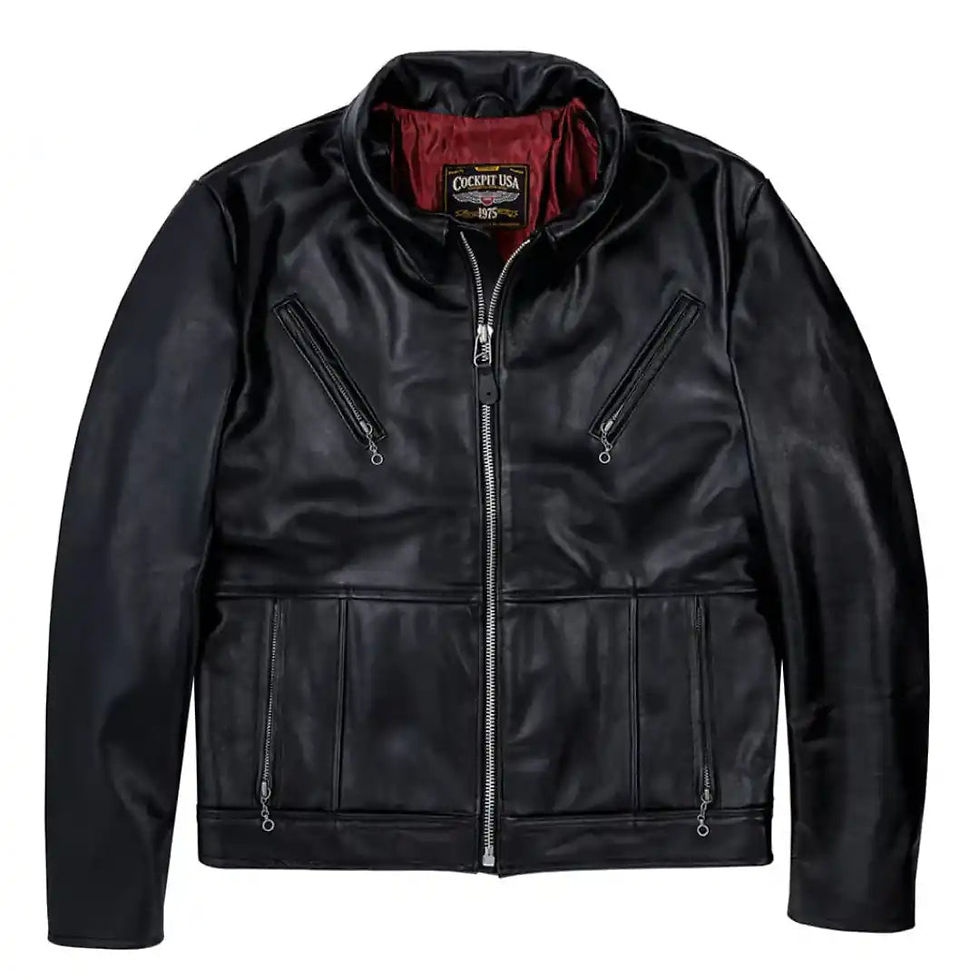
Cockpit USA Victory Rider Horsehide Leather Jacket, from $940. This is not the first thing a new rider should buy, and we would rather say so than pretend otherwise. It is the one you buy in year three when you know you are staying. Worth naming here because Cockpit USA is a genuine outside maker that Legendary carries as a dealer, which is a different relationship from BECK, Legendary's own house line, and a reader is entitled to know which is which.
None of the above is CE rated and none of it is armoured, which is stated in every gear section on this site and matters more for a new rider than for anyone else. If armour is what you want, and there is a strong case that a new rider should want it, RevZilla is the obvious place to compare armoured jackets and gloves across a lot of brands at once, and nothing above competes with that category. What the list above offers is American leather and denim, the right cut for a cruiser, and prices worth checking against a dealership counter.
Where weight is actually felt, and where it is not
Weight is felt in four places and almost nowhere else. At a standstill with one foot down, where it is entirely about whether your leg is under you or reaching. At walking pace in a car park. On a camber or a gravel edge, where a bike that has started to lean will keep going. And when you pick it up, which happens to nearly every rider eventually and is the one moment where 800 lb and 550 lb are genuinely different problems.
Weight is barely felt above thirty miles an hour. A heavier motorcycle is more stable in crosswind and behind trucks, and the 811 lb Street Glide is a calmer place to be at seventy than a 481 lb Nightster is. New riders are routinely told that a light bike is safer, and in traffic and at slow speed that is true. On an interstate it is not.
The variable that actually decides the standstill problem is seat height, not mass. Harley's laden figures run from 25.6 in on the Breakout to 28.9 in on the Sportster S, and the Sportster S is 179 lb lighter than the Breakout. Indian's Scout Bobber lists 25.6 in laden and 26.2 in unladen, and the Chief lists 26.0 in with no basis given. A rider who can flat-foot a 670 lb Chief is safer on it than one tiptoeing a 502 lb Sportster S.
One caution about what you will be told in a showroom. Neither Harley-Davidson nor Polaris publishes model level unit sales, so nobody can tell you which of these is the popular first bike. That claim is consensus at best.
Which one to buy
Buy the Indian Scout Bobber if you are new and you are choosing on the numbers in this post. $12,999, 542 lb in running order, a 25.6 in laden seat and 82 ft-lbs from a motor Indian actually publishes horsepower for. It is not the lightest bike here and that is the point. It is the one where the weight, the seat and the price line up for someone who is still learning where the bike is going to be at low speed.
Buy the Harley Nightster if lightest is genuinely the requirement. 481 lb and $9,999 is the least motorcycle to hold up of anything either company sells, and Harley describes the Revolution Max 975T as liquid cooled, which helps in traffic. Go and sit on it first, because the 27.1 in laden seat undoes some of what the 481 lb gives you.
Do not buy an eight hundred pound bagger as a first motorcycle. Not because it is dangerous at speed, it is not, but because the first two thousand miles of anyone's riding are spent at walking pace in car parks, and that is the one environment where 811 lb is unforgiving and no amount of enthusiasm substitutes for practice.
Related reading on MotoGearRater: the 2026 Indian Scout review and rating, Harley-Davidson vs Indian Motorcycle, and the 2026 Harley-Davidson Street Glide review and rating.