2026 Indian Super Chief vs Harley Heritage Classic

Updated: Sep 28
Quick answer: The Harley-Davidson Heritage Classic lists at $19,999 and the Indian Super Chief at $21,999, and on the published figures the Harley takes every column that exists. Heritage Classic: Milwaukee-Eight 117 Classic, 98 HP, 120 ft-lbs at 2,500 rpm, 719 lb in running order, 5 gallons. Super Chief: air cooled Thunderstroke 111, 1,811cc, 108 ft-lbs at 3,200 rpm, 739 lb in running order, 4 gallons. Harley publishes a horsepower figure for the Heritage Classic and Indian publishes none for the Super Chief, or for any other Thunderstroke model. Buy the Heritage Classic if the numbers decide it, because it is $2,000 cheaper, 20 lb lighter, makes 12 more ft-lbs and makes them 700 rpm earlier. Buy the Super Chief if what you want is an Indian.
Disclosure: MotoGearRater and Legendary USA have the same owner. Links to legendaryusa.com in this article go to our owner’s store, and are marked as sponsored. How we make money
MotoGearRater runs no dynos and holds no test data. Where we do hold a view worth having is on what a rider wears on a big naked twin with no fairing, and our reference point there is the American made deerskin from Legendary USA. Everything else here comes from what the two companies publish, compared on matching bases wherever matching bases exist, and flagged where they do not.
All prices in this post are base MSRP and exclude freight, destination and dealer charges.
The numbers, side by side
Engine. Heritage Classic: Milwaukee-Eight 117 Classic, 117 cubic inches. Harley prints no cooling description on the Heritage Classic page, so we are not going to invent one. Super Chief: Thunderstroke 111, 111 cubic inches, 1,811cc, and Indian does describe that engine, as air cooled. Two big pushrod V-twins, and only one of the two makers tells you how it keeps them cool.
Power. Only one figure exists. Harley lists 98 HP for the Heritage Classic. Indian publishes horsepower for its Scout and PowerPlus families and none for any Thunderstroke, and the Super Chief is a Thunderstroke, so there is no Indian number to set beside it. The disclosure gap here runs one way, and any horsepower figure you see attached to the Super Chief came from a third party dyno rather than from Indian.
Torque. Heritage Classic 120 ft-lbs at 2,500 rpm, measured by Harley’s own J1349 method. Super Chief 108 ft-lbs at 3,200 rpm. Indian does not state its testing method the same way, so read the 12 ft-lb gap as directional. The 700 rpm gap underneath it is the more interesting number.
Weight. Heritage Classic 719 lb in running order. Super Chief 739 lb in running order, or 714 lb as shipped. Running order against running order the Harley is 20 lb lighter, which is close to nothing on bikes this size.
Seat height. Harley lists 26.3 in laden. Indian prints a single unlabelled Seat Height of 26.2 in with no laden or unladen figure at all. We have used Indian’s number as printed, and we are telling you it may not be measured the same way. Do not treat that tenth of an inch as a result.
Fuel. Heritage Classic 5 gallons. Super Chief 4 gallons. That is the largest proportional gap here, 25 percent more fuel on the Harley.
Lean angle. Harley lists 27.4 degrees on the right for the Heritage Classic. Indian lists 28.5 degrees for the Super Chief without saying which side.
Price. Heritage Classic $19,999. Super Chief $21,999.
A note on where Indian’s Super Chief numbers come from
This is worth saying plainly rather than glossing over, because it changes how much weight the figures above deserve. Indian’s own Super Chief specifications page is dated 2024. The page text reads that it lists specifications for the 2024 Super Chief Motorcycle, and no 2026 dated specifications page for the model exists on Indian’s site. Meanwhile the bike is sold and priced on the current model listing at $21,999.
So the Super Chief numbers in this post are Indian’s own published numbers, taken from Indian’s own site, from a page Indian itself labels as a 2024 page. We have not adjusted them or gone looking for a friendlier source. Indian dates other pages the same way, with the Chieftain page labelled 2025 and the Chieftain Limited page labelled 2026. A buyer walking into a dealership should know that the manufacturer’s published specification for this model is two model years old, and should ask about it.
What you actually wear on a big naked twin
These two ask the same gear question, which is unusual in this series. Both are big pushrod V-twins with the cylinders sitting right beside your knees, both are classic cruisers with an upright seating position and your hands out wide, and neither gives you the weather protection of a full bagger fairing. On cooling the two companies do not document themselves the same way at all. Indian calls the Thunderstroke 111 air cooled. Harley prints no cooling description on the Heritage Classic page, so nobody can honestly rank these two on the heat that reaches a rider. What is not in dispute is the riding position and the exposure, and the answer to both is layers you can take off, and hands you can keep cool.
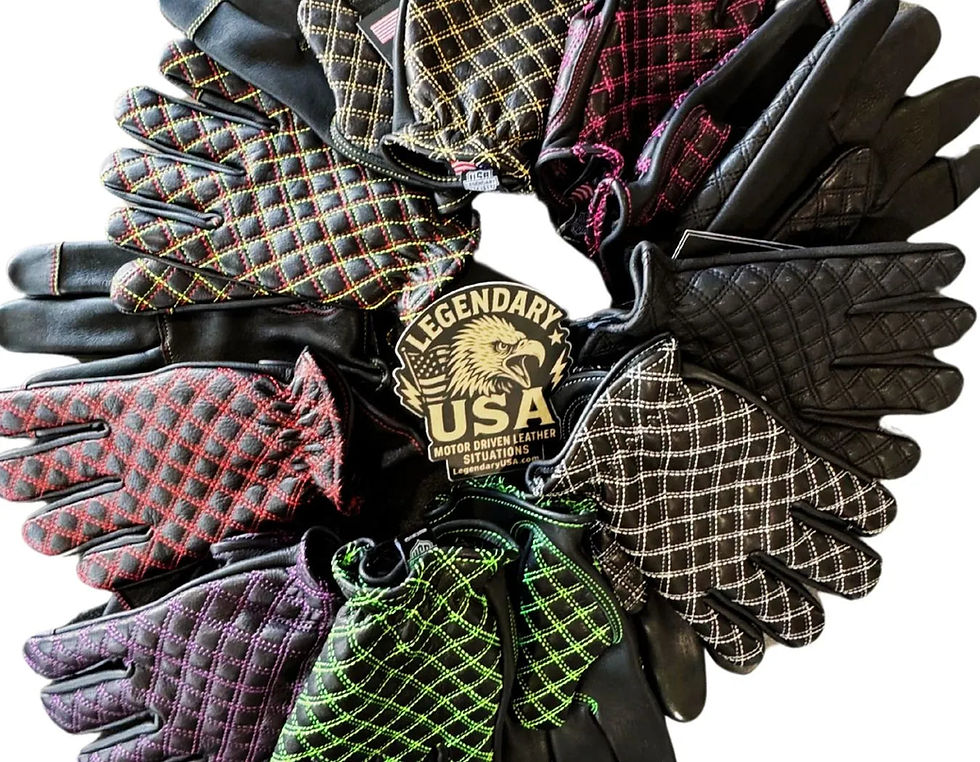
Fingerless Deerskin Gloves, $91. A fingerless deerskin is the summer glove for exactly this kind of bike. A big twin in stopped traffic in August is a genuine consideration and no published figure from either company captures it. Fingerless keeps the palm covered on wide bars while leaving your fingers in moving air. Made in the USA. No armour and no certification claim, which is true of everything in this section.

Legendary Men’s Leather Club Motorcycle Vest, $180. A laced leather vest suits the lines of both these bikes and is the one layer you can add or shed at a fuel stop without repacking. On a 4 gallon Super Chief you will be making more of those stops than on the 5 gallon Harley. Made in the USA.

BECK 777 Northeaster Flying Togs Black Horsehide Jacket, from $815. Horsehide is the dense, wind stopping hide, and this is the shoulder season and evening answer for a rider sitting upright. BECK is Legendary’s own house line rather than a brand bought in from somewhere else. No rating and no armour.
The competitor worth naming here is Vanson Leathers, which builds American made riding leather with a long competition history and is the closest direct comparison to the horsehide above on hide weight and construction. Price the two against each other properly. Nothing named on this page is armoured or carries any certification, and a rider whose priority is impact protection is shopping a different category entirely.
Torque at 2,500 rpm is most of the argument
The Heritage Classic makes its 120 ft-lbs at 2,500 rpm. The Super Chief makes 108 ft-lbs at 3,200 rpm. On paper that is a 12 ft-lb difference. In use it is bigger than that, because on a cruiser you spend most of your time between idle and about 3,000 rpm, and the Harley has finished delivering its peak before the Indian has arrived at its own.
That is not a criticism of the Thunderstroke, which is a 1,811cc engine doing what it was built to do. It is an observation about where the two companies chose to put the peak, and it is the clearest published difference between these motorcycles. Add the fuel figures, 5 gallons against 4, and the Harley is the easier bike to cover distance on without thinking about it.
One caution on anything you read about which of these sells better. Harley-Davidson publishes no model level unit sales and neither does Polaris for Indian, so nobody outside those two companies knows, and anybody who tells you otherwise is filling in a blank.
Which one to buy
Buy the Heritage Classic if you are deciding on the published numbers, because on the published numbers it is not close. It is $2,000 cheaper, 20 lb lighter in running order, makes 12 more ft-lbs, makes them 700 rpm sooner, and carries a full extra gallon of fuel.
Buy the Super Chief if the Indian is what you actually want to own and look at, and go in with your eyes open on two things. The first is the $2,000. The second is that the manufacturer’s published specification page for this model is dated 2024, so ask your dealer to confirm the current figures in writing before you sign anything.
Ride both, and pay attention to the seat. The 26.3 in and 26.2 in figures are almost certainly not measured on the same basis, so the only reliable comparison is your own legs on a showroom floor.
Related reading on MotoGearRater: PowerPlus vs Thunderstroke, the Milwaukee-Eight engine guide, and the Indian Chieftain review and rating.