Living With the Honda Rebel 500: What Owners Report

Updated: 3 days ago
This is not a road test. Nobody at MotoGearRater rode a Honda Rebel 500 for this piece. What follows is a synthesis of what actual owners report after living with the bike: recurring themes pulled from Honda Rebel owner forums, long term owner reviews and owner review aggregations, with hard numbers taken only from published specifications.
Disclosure: MotoGearRater and Legendary USA have the same owner. Links to legendaryusa.com in this article go to our owner’s store, and are marked as sponsored. How we make money
What the Rebel 500 is

The Rebel 500 is Honda's midsize entry cruiser, built on a 471cc liquid cooled DOHC parallel twin. Seat height is 27.2 inches and curb weight is 408 lb for the base bike, 414 lb with ABS. For 2025 the range ran $6,499 base, $6,799 with ABS and $6,999 for the SE.
Torque deserves a footnote, because Honda US publishes no figure for this engine in any model year. Honda Europe lists 31.9 lb-ft at 6,000 rpm, verified for the 2022 through 2025 model years. The engine is unchanged going further back, but the earlier figure was never published, so treat any number quoted for a 2020 or 2021 bike with suspicion.
The important dividing line for used buyers is 2020, when Honda gave the Rebel a new fork, LED lighting and an assist and slipper clutch that cut lever effort by about 30 percent by Honda's own accounting. For 2025 Honda revised the seat and handlebar position, ergonomics only. For 2026 Honda drops the non-ABS bike entirely, making ABS standard at $6,799, and Honda's own release language calls the Rebel 500 the industry's best selling cruiser.
What owners consistently praise
Reach to the ground is the most repeated positive, and it is not a vague one. Owners with short inseams describe the 27.2 inch seat and 408 lb curb weight as the specific reason they bought the bike and the specific reason they still have it. In beginner bike threads on the Rebel owner forums, riders who could not flat foot anything else routinely say this is the one that worked.
Low workload is the second theme. The assist and slipper clutch draws consistent praise from riders with small hands or wrist trouble, and owners describe the 471cc twin as tractable enough that it does not need to be revved to move cleanly in traffic.
Running costs come up constantly in long term owner reports. Owners describe fuel, tires, chains and insurance as cheap enough that the bike effectively disappears from a monthly budget, and reliability reports across owner review aggregations cluster hard around nothing having gone wrong. That is not a dramatic claim, but it is the most consistent one in the whole body of Rebel owner reporting.
Styling gets more credit than is usual at this price. Owners repeatedly say the blacked out bobber treatment is why they picked it over other entry bikes, and that it does not read as a learner machine in a car park.
What owners consistently complain about
The seat is the loudest and most consistent complaint by a wide margin. The Rebel owner forums carry standing threads on seat comfort, on thigh and lower back pain, and on passenger seats that owners rate as worse still. The pattern in the reports is specific: fine for an hour, unpleasant after that, and an aftermarket seat is the most common first purchase on the bike. Honda revised the seat for 2025, and reports on whether that changed anything are still thin and mixed. Treat that revision as unproven rather than as a fix.
Rear suspension is second. Owner forums run a continuous conversation about shock replacement, about preload settings, and about aftermarket shocks that turn out stiffer than the originals rather than better damped. The recurring description is short travel that copes with smooth roads and then delivers a sharp jolt over expansion joints and square edged holes. This one is contested along rider weight lines. Lighter owners often report the stock setup is perfectly acceptable, while heavier owners are the ones filling the replacement threads.
Wind is third, and it shapes what the bike is actually good for. There is no bodywork, and owners are blunt that the machine will hold interstate speed all day while the rider is the part that runs out. Long highway stints come up again and again as the thing the Rebel does least well, and owners whose commute is mostly freeway are the ones who report the shortest ownership.
Fuel range and the tank generate their own cluster of threads: owners asking about a bigger tank, owners trying to work out the real usable capacity as opposed to the claimed one, and owners comparing notes on where the fuel gauge starts lying. The practical complaint is not that the range is unusable, it is that owners plan fuel stops more often than they expected to on a bike this economical.
Passenger use is a recurring disappointment. The bike ships as a solo machine and the pillion seat and pegs are accessories, and owners who carry someone regularly describe the result as a compromise rather than a solution. Equipment is sparse too. There are no ride modes and no traction control, and while most owners accept that at the price, it surfaces whenever someone compares the Rebel with newer rivals.
On whether owners outgrow it, the honest answer from the research is that reports are genuinely mixed, and they split along use case rather than along experience level. Owners who ride mostly in town, mostly alone and mostly for under an hour at a time report keeping the bike for years and not wanting anything else, and short riders in particular describe it as hard to replace. Owners whose riding drifted toward interstate miles, two up trips or long weekends report moving on inside a year or two, and they tend to name wind, seat and suspension rather than engine performance as the reason. The engine is rarely what people say they outgrew.
Who it suits and who it does not
It suits new riders, returning riders and anyone with a short inseam who has been told to buy something they cannot flat foot. It suits urban and suburban commuting, rides measured in tens of miles rather than hundreds, and riders who want the cruiser shape without cruiser weight or cruiser running costs. It also works as a second bike for experienced riders who want something simple.
It does not suit riders whose regular route is mostly freeway, riders who carry a passenger more than occasionally, or riders who want electronics. It is a harder recommendation for heavier riders on rough roads unless they plan to spend on the rear shocks, and it is the wrong bike for anyone whose weekend ambitions are measured in states crossed.
For where the Rebel 500 sits against the other category leaders, see our comparison of Harley, Indian, Honda and BMW for 2025.

What to check on a used one
Start with drop damage, because this is a first bike and a lot of them have been down at walking pace. Look at bar ends, lever ends, the exhaust heat shield, the footpeg feelers and the mirror stems. None of that is necessarily disqualifying at this price, but it should be reflected in what you pay.
Establish the model year. Pre 2020 bikes lack the revised fork, the LED lighting and the assist and slipper clutch, and the difference in lever effort is one owners notice. From 2025 you get the revised seat and handlebar position. Confirm the trim as well, because base, ABS and SE were separate SKUs at separate prices, and from 2026 ABS is standard, which affects what an older non-ABS bike is worth.
Ask whether the seat and rear shocks have already been changed, and whether the original parts come with the bike. Given how common both swaps are, a bike that has had them done well is worth more than the mileage suggests, and one fitted with cheap stiff shocks is worth less.
Look harder at maintenance than at mileage. These are often owned by people new to motorcycle servicing, so check chain and sprocket condition, ask for valve clearance documentation at the correct interval, and check tire date codes rather than tread depth on a low mileage example. A high mileage commuter with records is usually a better bike than a garage queen with old rubber and stale fuel.
If an aftermarket exhaust is fitted, ask what was done about fuelling.
The Rebel 500 has led its category for six straight years, and owner reporting explains why without much romance: it is cheap, it is easy, and it does not intimidate anyone. The complaints are equally consistent, and what stands out is that almost all of them are comfort complaints rather than reliability complaints, and most are answered with a seat and a pair of shocks. Buyers who understand that this bike's limits are measured in hours in the saddle rather than in horsepower tend to be the ones who keep it.
Where the Gear Budget Goes First
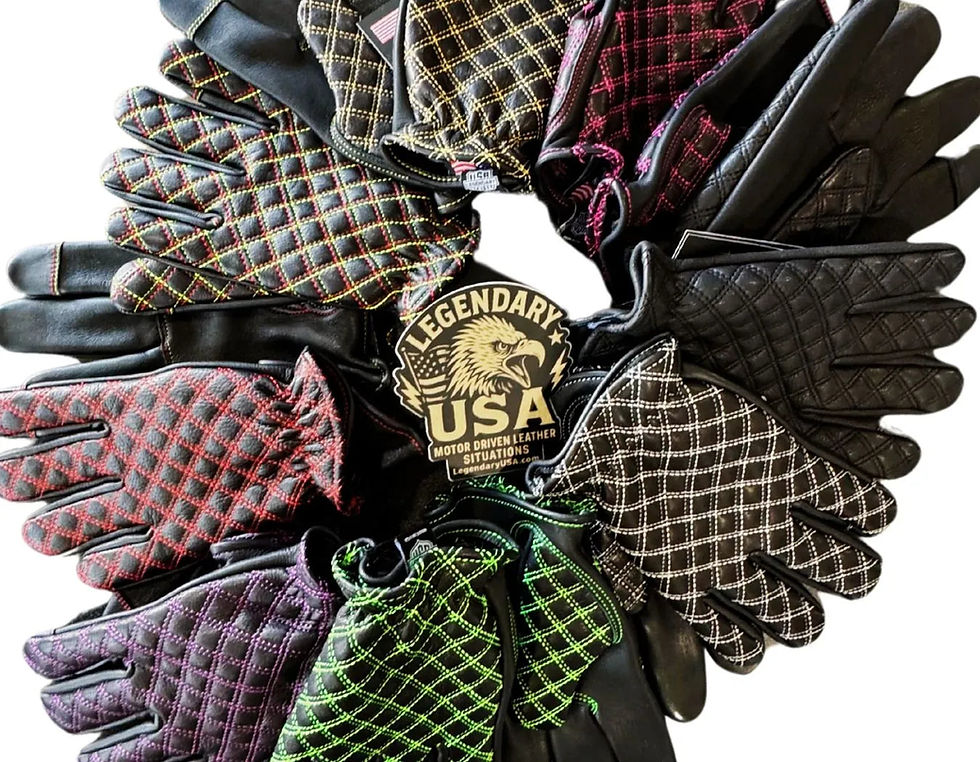
The Rebel is most people's first bike, which means the gear question arrives at the same time as the bike question and usually with money already spent. The order most experienced riders recommend is gloves, then helmet, then jacket, on the basis that hands make contact first and gloves cost the least. Legendary USA's guide to buying a first leather jacket makes the same argument and is worth reading before the jacket money is committed.
Cover photo: "Honda CMX500 Rebel parked at Hogs for Hospice, Leamington, Ontario, 2025-08-02" by Chris Woodrich, CC BY-SA 4.0, via Wikimedia Commons.