Living With the Indian Challenger: What Owners Report

Updated: 3 days ago
Nobody at MotoGearRater rode a Challenger for this article. What follows is a synthesis of owner reporting: themes that recur across Indian owner communities, model-specific rider forums, and ownership threads on general motorcycle boards. Where the record is thin, or where owners disagree with each other, we say so rather than smoothing it over.
Disclosure: MotoGearRater and Legendary USA have the same owner. Links to legendaryusa.com in this article go to our owner’s store, and are marked as sponsored. How we make money
What the Challenger is

The Challenger is Indian's frame-mounted-fairing bagger, and the bike that broke the segment's air-cooled convention. It arrived for 2020 as the flagship with the liquid-cooled PowerPlus 108: 1770cc, 122 hp, 128 lb-ft, a 26.5-inch seat, 796 lb wet, and a $21,999 launch price. Indian ran an explicit Challenger Challenge campaign against the Harley Road Glide Special, which tells you who it was aimed at.
Liquid cooling is the structural difference. Most of what owners say about this bike, positive and negative, traces back to that one decision, and to the fact that Indian is a much smaller retail network than the brand it was aimed at.
Polaris publishes no model-level unit numbers for Indian, so nothing here should be read as a sales figure. At brand level, Indian's global volume passed 30,000 for the first and only time in 2021 and was 25,792 in 2024, with the US down roughly 15 percent. Polaris has since agreed to sell a majority stake in Indian to Carolwood LP, spinning it into a standalone company, which bears on one of the complaints below. For the brand's position around the Challenger's launch, see our look at Indian's best seller of 2020.
What owners consistently praise
The engine draws the most consistent praise, and specifically its willingness to rev. Owners who have run air-cooled big twins describe those engines as wanting to be short-shifted and the PowerPlus as encouraging the opposite. Riders who moved across from air-cooled Indians and from Harley touring bikes name the performance difference as the reason they switched, and a recurring line in owner threads is that they see no reason to modify the exhaust or intake at all, which is unusual in this class.
Heat is the second theme and it is a comparative one. Owners who came from air-cooled Thunderstroke bikes describe the difference as large rather than marginal. Adjustable lower fairing vents get repeated credit for directing hot air past the feet, and owners report that footwear and trouser choice matter more than they expected.
Chassis behaviour comes up often. Owners describe the suspension as more communicative than the fork-faired Thunderstroke models, and the frame-mounted fairing gives the same lighter steering that Road Glide owners report. Owners moving up from lighter bikes repeatedly say the weight disappears once the bike is moving.
Two practical points recur. Owners cite the short maintenance list, and the single-fluid setup in particular, as a reason for choosing it. And there are owner reports of bikes at 20,000, 40,000 and 60,000 miles with nothing beyond scheduled service, which is the kind of report that carries weight because it is boring.
What owners consistently complain about
The dealer network is the loudest and most consistent complaint, and it has been getting worse rather than better. Owners report dealerships dropping the Indian franchise with little notice, in one case leaving a buyer more than four hours from the nearest remaining dealer weeks after purchase, and Indian corporate apparently unaware the dealer had gone. Owners in several regions report closures over the same period. The practical pinch point is warranty work, because an independent shop can service the bike but cannot process a warranty claim. Reports on direction are genuinely mixed: some owners say their dealer leaned in after the Carolwood announcement and is expanding. But the underlying complaint, that support after the sale is thin, recurs across years rather than months.
Heat is reduced, not solved, and owners are clear about this. The bike still gets hot at stops and in slow traffic, the right side more than the left, and owners treat the fairing vents and their choice of boots as part of the solution rather than an afterthought. There are also outlier reports of severe right-side heat on PowerPlus baggers, bad enough to mark a rider's leg, which other owners in the same threads treat as a fault to be diagnosed rather than normal behaviour. Owners also note that the cylinder deactivation at idle produces sounds new owners routinely mistake for a problem.
First-year bikes are a named weak spot. Owners, including at least one former dealer employee, report the 2020 Challenger as electrically finicky, 2021 as noticeably better, and the platform as settled from 2022. Anyone shopping used should treat model year as material rather than cosmetic. Owners who bought 2020 bikes and had no trouble also post, so this is a risk profile rather than a verdict.
Ride Command draws steady complaints. The recurring one is Apple CarPlay dropping and reconnecting, reported both before and after software updates, with some owners reporting an update made it worse. Navigation is described as poor by multiple owners even where they find the map useful, and pairing a headset and a phone at the same time is described as fiddly. Separately, more than one owner has traced a display that cuts out and back on to a phone plugged into the bike's USB port, which is a useful thing to know before paying for a diagnosis.
A few components come up often enough to name: power windshield motors, starters, and weak batteries on bikes that have sat. Owners are notably fond of the power windshield as a feature and still describe the motor as a wear item.
Low-speed handling divides new owners. The frame-mounted fairing produces light steering, and riders coming from fork-faired or lighter bikes report the bars feeling sensitive and wanting to wander at parking speed. Most report it passing within a few hundred miles. The weight itself is less forgiving: owners report low-speed drops in parking lots and on gravel, and describe the margin for technique errors at a standstill as small.
Finally, breadth of support. Aftermarket parts and accessories are thinner than for the equivalent Harley and generally cost more, with owners comparing performance kits reporting Indian's are pricier and less friendly to home installation. Owners also describe the handlebar controls on the big Indians as button-heavy and not always intuitive. And the fairing's styling is divisive inside the owner community itself, which is worth knowing before you assume everyone likes the look.

Who it suits and who it does not
It suits a rider who wants the performance end of this segment, who does not want an air-cooled engine between their legs in traffic, and who either lives near a dealer or does their own work. It suits riders touring two-up, and riders who would rather not see their own bike in every parking lot.
It suits less well a rider who is far from a dealer, will not wrench, and wants warranty coverage close to home. It suits less well anyone expecting liquid cooling to eliminate heat, anyone who wants a deep and cheap aftermarket, and a newer rider who has not practised slow-speed work on an 800-pound machine.
What to check on a used one
Start with model year: 2020 first year, 2021 improved, 2022 onward settled by owner account. Then check the dealer situation before you check the bike, because the nearest Indian dealer may not be the one on the map any more. Confirm the master PIN is recorded in the owner's manual, since owners have been left chasing it after a dealer dropped the franchise.
On the bike itself, cycle the power windshield through its full range several times, update Ride Command and test phone integration with a phone plugged into the USB port to confirm the display holds, check battery age and how the starter behaves hot, and look for service records. Ask whether an extended warranty exists and whether it transfers, because owners report the extended cover doing real work once the two-year factory warranty lapses.
A gear note on the vents
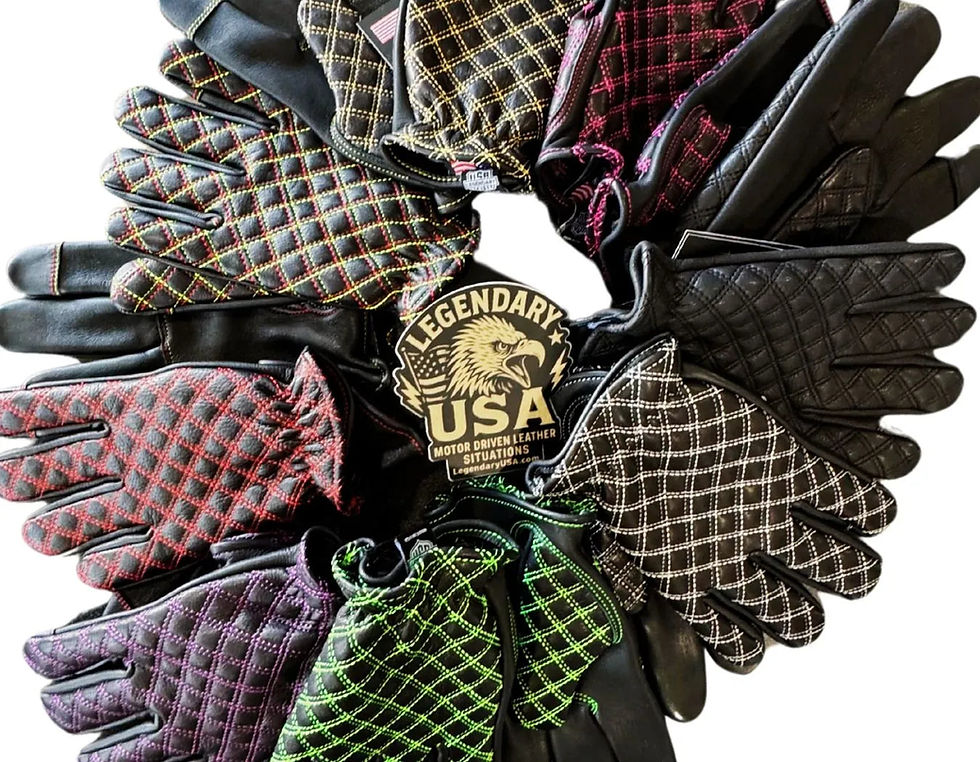
One practical observation. The heat management owners describe on this bike is mostly lower-body: vents aimed at the feet and shins, boot choice, trouser choice. None of that reaches the hands, which sit outside the fairing's shadow on a frame-mounted design and take whatever the weather is doing. That is why long-distance owners tend to run two pairs rather than one compromise pair, ventilated for summer and lined for cold starts. Legendary USA still cuts gloves in the States if that is the direction you go.
The short version
The owner record is unusually clear on this one. The Challenger is bought for the engine and kept for the way it covers ground, and the complaints are mostly about everything around the motorcycle rather than the motorcycle itself: the dealer network, the software, and the aftermarket. Owners who are near a dealer, or who wrench, report very few regrets. Owners who are not tend to write the frustrated threads.
Cover photo: "Indian Roadmaster - June 2024 - Sarah Stierch" by Missvain, CC BY 4.0, via Wikimedia Commons.