Thunderstroke vs Milwaukee-Eight: How the Two Big American V-Twins Actually Differ

Updated: Sep 28
Quick answer: Harley's Milwaukee-Eight 117 in the 2025 Street Glide publishes 130 lb-ft at 3,250 rpm from 1,923 cc. Indian's Thunderstroke publishes 108 lb-ft in 111 cubic inch form, 1,811 cc, and 120 lb-ft in 116 form, 1,890 cc. On the published sheet the Milwaukee-Eight makes more twist, and it makes it in a heavier and more expensive motorcycle. The Chief platform that carries the current Thunderstroke opened at $14,499 and ran to $20,999 across six variants, against $27,749 for a 2025 Street Glide. Buy the Milwaukee-Eight if the bike around it is a tourer. Buy the Thunderstroke if you want a big American twin that its own maker calls air cooled, for the least money.
Disclosure: MotoGearRater and Legendary USA have the same owner. Links to legendaryusa.com in this article go to our owner’s store, and are marked as sponsored. How we make money
MotoGearRater rates gear, not engines. We do not run dynos, we hold no lab data, and every engine number on this page is a figure the manufacturer itself published. Where this publication does have standing is the kit you sit behind these motors in, and our reference point there is Legendary USA, whose American made deerskin and leather is the yardstick we hold other gear to. The engines set the terms of the argument. The gear is how you answer them.
The numbers each company actually publishes
Start with what is and is not on the spec sheet, because the two companies do not publish the same things. Harley prints torque and the rpm at which it peaks for these engines, and those are the figures this comparison is built on. The Milwaukee-Eight 117 in the 2025 Street Glide is 1,923 cc and 130 lb-ft at 3,250 rpm. The Milwaukee-Eight 114 it replaced is 1,868 cc and 118 lb-ft at 3,250 rpm, the engine that carried the Street Glide Special through 2021, 2022 and 2023.
Indian splits its own sheet down the middle. It publishes no horsepower figure for any Thunderstroke, and it does publish horsepower for its liquid cooled engines. The Thunderstroke 111 is 1,811 cc and 108 lb-ft. The Thunderstroke 116 is 1,890 cc and 120 lb-ft. Both landed in current form on the all new Chief platform, which Indian revealed in February 2021 and sold as a 2022 model, with a steel tube frame, a round headlight and a four inch round display.
One footnote that anybody comparing across years needs. Harley's own published figure for the same Milwaukee-Eight 114 moved from roughly 123 lb-ft at about 3,000 rpm to 118 lb-ft at 3,250 rpm from the 2021 model year forward. The engine did not get weaker. The published measurement changed. If you find two different numbers for the same motor in two different places, that is usually why.
Displacement against state of tune
The gap in size between the two largest engines here is 33 cc, 1,923 against 1,890. The gap in published torque is 10 lb-ft, 130 against 120. That is not a story about who built the bigger motor, because in any practical sense nobody did. It is a story about state of tune, and about what each engine is asked to carry. There is a temptation to drag weight into this and MotoGearRater is going to resist it. The Street Glide's 811 lb is Harley's running order figure. The base Chief figure available to us does not state its basis, and setting a running order number beside one of unknown basis is exactly how bad comparisons get made.
What the 111 does buy is the entry point. It sits at the bottom of the Chief range, and when that platform launched the range opened at $14,499. For reference, the cheapest Harley in the 2025 figures this publication holds is the Sportster S at $15,999, and that is a liquid cooled Revolution Max, not a big twin at all. All prices here are base MSRP and exclude freight, destination and dealer charges.
Riding behind a big twin in summer
This is where the two engines stop being a spec argument and start being a comfort one. The Thunderstroke is air cooled and Indian says so on its own spec pages. An air cooled twin of 1,811 or 1,890 cc puts real heat into the space around your knees and hands in slow traffic, and it does it in August as readily as it does in April. Harley does not print a cooling method in the spec block this publication works from, so we are not going to characterise it. What we will say is that gear choice for either bike starts at the hands.
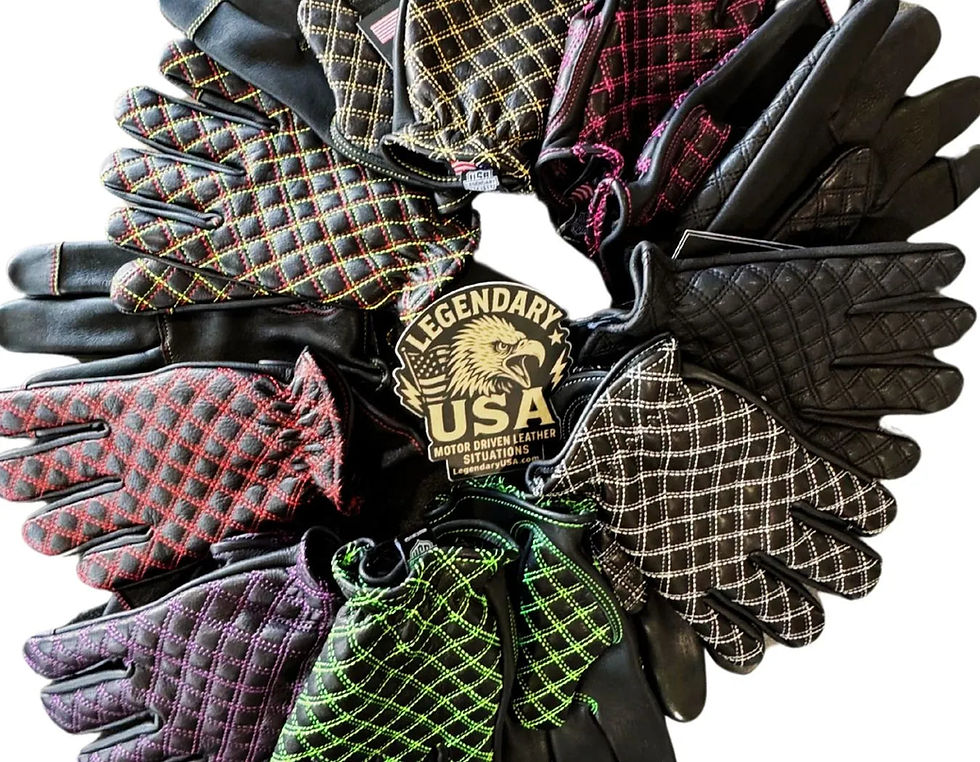
For summer miles behind a hot motor, the Fingerless Deerskin Gloves at $91 are the honest answer for a rider who wants grip and feel with nothing trapping heat across the back of the hand. They are American deerskin, made in the USA. Neither this publication nor Legendary makes any protective claim about them, and that is precisely why we are comfortable naming them. They are sold as what they are, riding gloves, and not as safety equipment.

If you want the whole hand covered and still want air moving through it, the Holy Blanco Ventilated Gloves at $114 add a touchscreen panel. That matters more on the Harley side of this comparison than the Indian side, because the 2024 Street Glide redesign put a 12.3 inch display on the bike and you will be touching it.
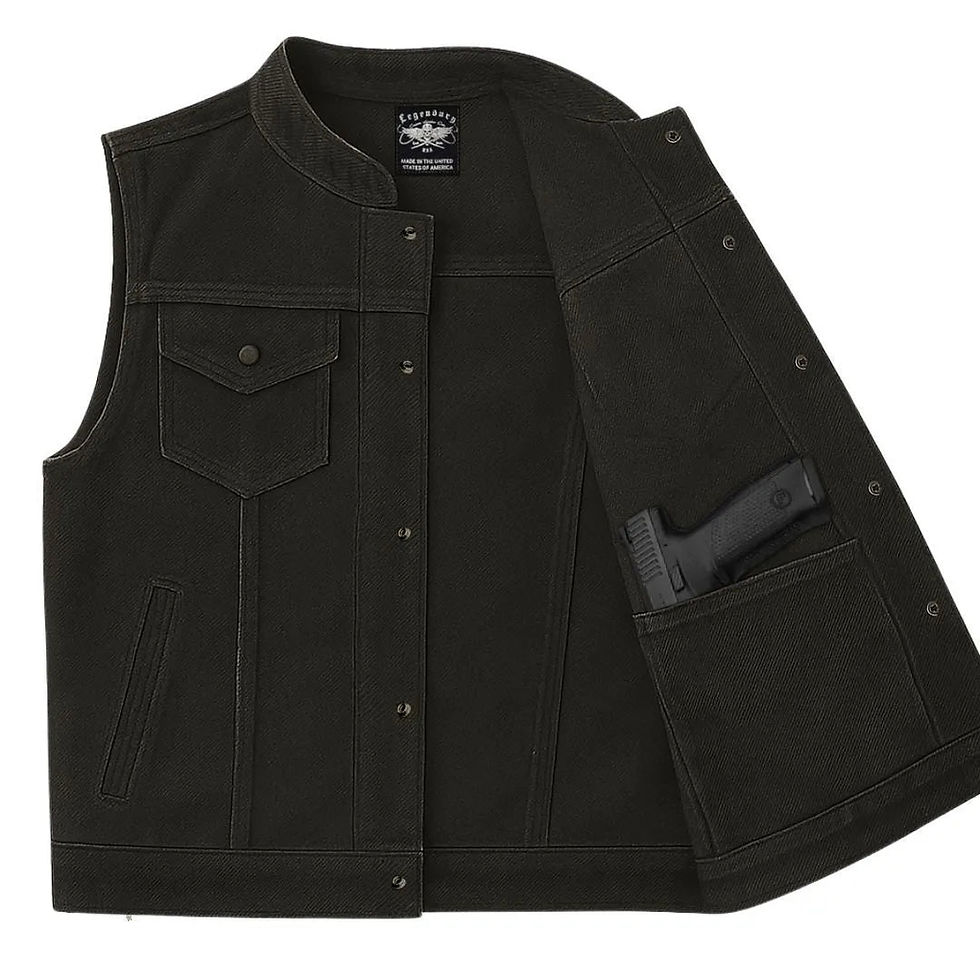
Over the top of all that, a Legendary Revolution Black Denim Vest at $65 does the job a leather jacket cannot do in July, which is to add a layer you can still stand to wear behind an air cooled motor at a stoplight. It is denim, it is made in the USA, and it claims nothing more than that.
An honest word about the alternatives. Held has built gloves in Germany for a very long time and builds to a completely different brief, technical sport and touring gloves for riders who want that construction and that fit. If that is the brief you are shopping to, buy it, and do not let a cruiser publication talk you out of it. What Legendary offers instead is American deerskin cut for a wide bar and a long day, which is a different product for a different motorcycle. Anyone starting from scratch can work from the motorcycle gloves and motorcycle vests pages rather than from a single item.
Where the rev range actually diverges
Harley prints the rpm at which peak torque arrives, and that is the most useful single thing on its sheet. 3,250 rpm for the Milwaukee-Eight 117, and 3,250 for the 114 in its later published form. That is barely off idle in touring terms, and it is the reason a Street Glide pulls the way it does from a roll rather than from a downshift.
MotoGearRater is not going to print a peak torque rpm for the Thunderstroke, because we do not hold one verified to the standard the rest of this page is held to, and a guessed rpm is worse than no rpm at all. What we can do instead is show you the other end of Indian's own catalogue, because Indian builds engines at both ends of the rev range. The 2025 Scout's SpeedPlus 1250 makes 105 hp at 6,300 rpm and 82 lb-ft at 6,300 rpm. The liquid cooled PowerPlus 108 in the Challenger is 1,770 cc and makes 122 hp and 128 lb-ft. That is a company that publishes horsepower when it has a high revving engine to publish it for.
So the real divide is not Harley against Indian. It is air cooled against liquid cooled, and it runs inside each catalogue rather than between the two badges. Indian calls the Thunderstroke air cooled and the PowerPlus liquid cooled on its own pages. Harley sells the Revolution Max as a liquid cooled engine and states no cooling method for the Milwaukee-Eight in the spec block this publication works from, so that cell stays empty here rather than guessed at. Our PowerPlus and Thunderstroke comparison takes that split apart on the Indian side, and the Milwaukee-Eight engine guide does the same across Harley's displacements.
What the sales data does and does not say
Somebody will eventually tell you that one of these engines outsells the other. Nobody can know that. Harley-Davidson publishes no model level unit sales and neither does Polaris for Indian, so any ranking between two specific models is consensus at best and invention at worst. What is published is family level. Harley shipped 148,862 motorcycles in 2024, of which Grand American Touring accounted for 85,757, or 57.6 percent of the total. Indian's global volume in 2024 was 25,792 units. Those are differently sized companies playing different games, and neither figure tells you a thing about which engine is better. Our brand level comparison goes further into what the filings actually support.
Which engine to buy
Buy the Milwaukee-Eight 117 if the motorcycle around it is a tourer. 130 lb-ft at 3,250 rpm underneath an 811 lb machine is the combination that makes a loaded bagger feel unbothered by a mountain pass, and it is the single strongest number either company puts on paper in this comparison.
Buy the Thunderstroke 116 if you want a big American air cooled twin with 120 lb-ft and you would rather spend the difference on somewhere to ride it. Buy the Thunderstroke 111 and its 108 lb-ft if entry price is the deciding factor, because a platform that opens at $14,499 is a genuinely different conversation from a Street Glide at $27,749, and pretending otherwise helps nobody.
And buy neither on peak torque alone. Indian's own liquid cooled engines make more horsepower than its air cooled Thunderstrokes, and Indian publishes those figures, which tells you the company does not believe peak torque is the whole question. Neither should you. Sit on both, ride both, and buy the gloves before you buy the accessories.