Wheelies Explained: How Stunt Riders Actually Learn Them

Updated: Sep 2
A wheelie lifts the front wheel off the ground under power while the bike keeps moving. Professional stunt riders learn wheelies gradually on closed courses, often at dedicated schools with specially equipped training bikes. On public roads, wheelies are illegal in most places and can bring tickets, impound, and license consequences.
This is the first post in Wheelies and Burnouts, our new section covering stunt riding as a sport. MotoGearRater covers stunts as journalism, not instruction. We have not performed or tested these stunts, and nothing here is a how to guide. What we can do is explain what the trick is, how the professional side of the sport actually trains, and what it all does to bikes and gear.

What Is a Wheelie, Exactly?
A wheelie is any move where the front wheel leaves the ground and the motorcycle continues on the rear wheel. In stunt competition, that one word covers a whole family of tricks. Riders talk about power wheelies, clutch wheelies, slow rolling wheelies, and the signature 12 o'clock, where the bike is brought so vertical that a steel bar bolted behind the tail section drags on the pavement.
The physics are simple to describe and brutally hard to manage. Acceleration shifts weight rearward, the front lifts, and the rider then has to hold the bike near its balance point using throttle and the rear brake. Too little lift and the front slams down. Too much and the bike goes over backward. That narrow margin is exactly why the sport's professionals treat wheelies as a skill built over years, not an afternoon.
Why Are Wheelies the Foundation of Stunt Riding?
Watch any modern stunt competition and almost every scored combination is built on wheelie control. Circle wheelies, seat stander wheelies, no handed variations, and slow balance point work all start from the same base skill: keeping a motorcycle stable on one wheel. Judges at events like The Brawl, a V twin stunt contest that has run since 2017, score overall impression, and riders with the deepest wheelie control tend to dominate because they can link tricks without putting the front wheel down.
How Do Professional Stunt Riders Actually Learn Wheelies?
Not on the street. The riders who make a living at this learn in controlled environments, and a small industry of schools now exists to make that possible for ordinary riders too. A few verified examples in the United States:
Wheelie University runs one day, one on one closed course classes on Triumph Speed Triples fitted with a wheelie height control device, in partnership with Triumph San Diego. Classes regularly sell out months ahead.
Superbike-Coach in Northern California offers a dedicated wheelie course using a specially prepared training bike so students cannot loop out.
Live100MOTO in Los Angeles runs wheelie training and supermoto school days on closed courses.
WheelsUp Training in Orlando teaches motorcycle control skills, including stunt oriented instruction, off the public road.
The common thread is progression. Schools and pro riders use outrigger or height limiter equipped bikes, closed pavement, full gear, and hundreds of small repetitions at low speed before anything ever gets vertical. Serious stunt riders also keep a dedicated practice bike, usually a cheap used sportbike wearing a crash cage, because the learning process guarantees drops. We cover that machine side in our stunt bike setup post later in this series.
What Gear Do Stunt Riders Wear, and What Do They Destroy?
Stunt practice is uniquely hard on gear. Riders drag their boots, catch falling bikes with their hands, and slide on lot pavement far more often than street riders do. Gloves take the worst of it. For actual stunt practice, the smart picks are armored gloves from protection focused brands like Alpinestars, Icon, and Fox, with hard knuckles and reinforced palms, because gloves at a stunt lot are consumables.
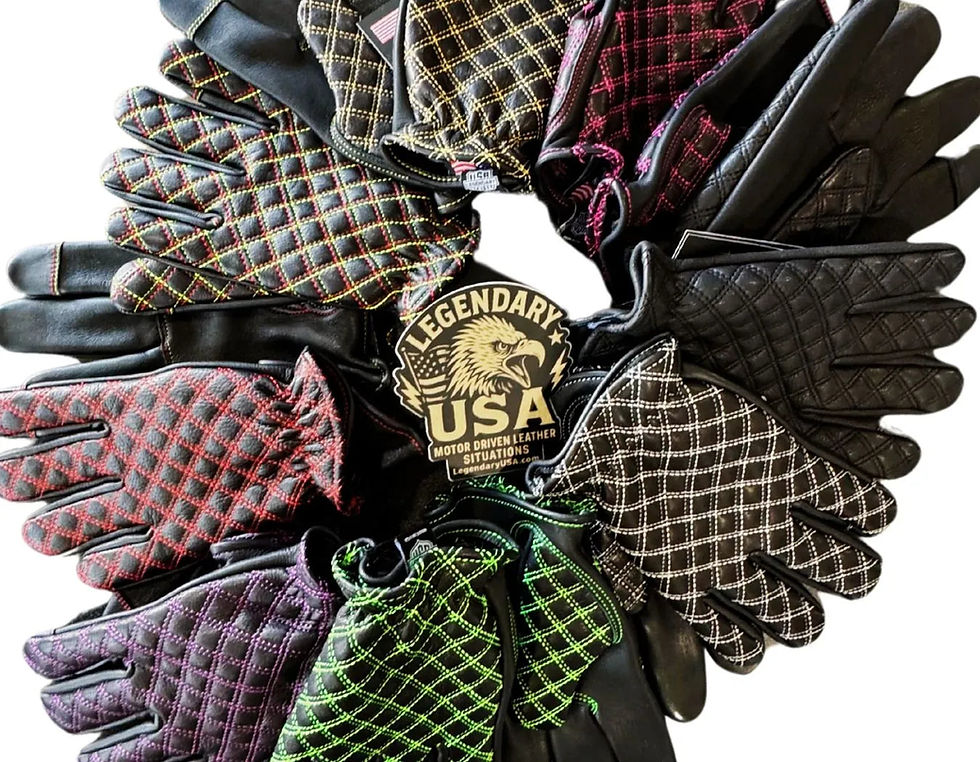
For the riding around the sport rather than the stunts themselves, leather durability still matters. Legendary USA sells unarmored American style gloves like the Bad Billy goatskin at 99.99 dollars and the Classic touchscreen deerskin at 120 dollars. To be clear and honest: those are unarmored gloves. Deerskin and goatskin wear extremely well for everyday riding, but they are not stunt protection, and we would not put them on anyone practicing tricks.
Are Wheelies Legal on Public Roads?
In most places, no. Lifting a wheel on a public road is generally treated as reckless or careless driving, stunting, or exhibition driving depending on the jurisdiction, and consequences commonly include fines, vehicle impound, license points or suspension, and insurance fallout. Exact penalties vary by state and country, so we will not quote numbers, but the pattern is consistent: the road is not the venue. The sport exists on closed courses, private lots with permission, and sanctioned events, and that is where this series points.
FAQ
Is a wheelie a real competition skill or just showing off?
It is the core scored skill of stunt riding as a sport. Competitions in the United States and Europe judge riders heavily on wheelie variety, control, and how cleanly tricks link together.

How long does it take to learn a competent wheelie?
Schools can teach the basics of a controlled lift in a day on purpose built training bikes, but riders and instructors consistently describe competition level control as a multi year project with regular closed course practice.
What is a 12 o'clock wheelie?
A wheelie taken near vertical, named for the clock position of the bike. Stunt bikes carry a bolt on 12 bar behind the tail so the bar, not the bodywork, touches down at full height.
Do stunt schools require your own bike?
Usually not for wheelie specific classes. Wheelie University and Superbike-Coach put students on school owned, height limited training bikes, which is a large part of what you are paying for.
Can you get in trouble for a wheelie even at low speed?
On a public road, generally yes. Most reckless and careless driving statutes do not care about speed, and officers have wide discretion. Private property with the owner's permission and sanctioned events are the legal routes.
Keep Reading on MotoGearRater
Coming up in this series: burnouts, stoppies, stunt bike setup, and how to get into the sport legally. For the bikes stunt riders love as donors, see our Yamaha MT-07 rating and Kawasaki Ninja ZX-6R rating. For lot day hand protection on a budget, our budget motorcycle gear guide covers armored options.
Sources
Wheelie University, course details: https://www.wheelieuniversity.com/
Superbike-Coach wheelie course: https://www.superbike-coach.com/portfolio-item/wheelie-course/
Live100MOTO wheelie training school: https://live100moto.com/products/wheelie-training-school/
The Brawl, V twin stunt competition: https://rideanddestroy.com/thebrawl/
Last updated: August 6, 2026. MotoGearRater is independent. We cover stunt riding as sport journalism, we have not performed or tested these stunts, and we never recommend stunting on public roads.