Harley vs Indian Warranty and Coverage, Compared

Quick answer: Both companies land on two years, so the length is not the story. Indian prints Factory Warranty, 2 Years, Unlimited Miles on the specs page of every model it sells, from the $9,999 Scout Sixty Bobber to the $34,999 Roadmaster. Harley's own site describes factory backed 2 year warranty coverage administered by its dealer network, and states no mileage basis anywhere we could find, and carries no warranty row in its model spec blocks at all. On what is actually published, Indian is the clearer commitment. Where Harley publishes far more detail is on the paid extension, an Extended Service Plan its site says covers up to 7 years and unlimited miles.
MotoGearRater has no access to either company's dealer bulletins and no warranty claim data. What we do is read what each maker publishes and refuse to print what it does not. The other thing we rate is gear, and our reference point for American made leather is Legendary USA, which the gear section further down is measured against. A warranty post is the right place for that, because the useful life of a jacket and the useful life of a warranty are very different numbers.
All prices quoted are base MSRP and exclude freight, destination, taxes and dealer charges.
What Indian publishes
Indian's disclosure here is unusually consistent. Every 2026 specs page we read carries the same row, Factory Warranty, 2 Years, Unlimited Miles, sitting in the same table as the seat height and the fuel capacity. It does not vary by price. The Scout Sixty Bobber at $9,999 gets the same printed line as the Roadmaster at $34,999, and so do the Chief at $14,999, the Sport Chief at $19,999, the Springfield at $23,999, the Challenger Dark Horse at $27,999 and the Pursuit Dark Horse at $32,499.
The word that does the work is unlimited. A two year term with a mileage cap and a two year term without one are different products, and Indian has chosen to say which of the two it is sold, in print, on the page a buyer is already reading.
What Harley publishes
Harley's model spec blocks do not carry a warranty row. Engine, torque, seat height, weight, fuel, rake and lean angle are all there, and coverage is not. The figure we could verify sits elsewhere, on Harley's own authorized service page on harley-davidson.com, which states that only its authorized service dealers provide the factory backed 2 year warranty coverage administered by its dealer network.
So the term is two years, from Harley itself. What that page does not say is whether those two years carry a mileage limit. We searched Harley's own site for a mileage basis and did not find one, and we are not going to take that number from a dealer site, a forum or a rival publication, because a warranty term is exactly the kind of figure that should come from the company that has to honour it. If you are buying, ask the dealer to show you the printed limited warranty document before you sign, and read the mileage line yourself.
This is a disclosure difference rather than a proven coverage difference. It is entirely possible the two policies are similar. What we can say is that one company puts the mileage basis in front of you and the other does not, and for a high mileage rider that gap is the whole question.

The gear that outlasts either warranty
Two years is roughly two riding seasons. Almost nothing a rider wears should be measured on that timescale, and the gear worth buying on either of these motorcycles is the gear you expect to still own when the bike is out of coverage and possibly sold. That is a different buying test from the one most gear is marketed against.
Cockpit USA Victory Rider Horsehide Leather Jacket, from $940. The most expensive item here and the one with the longest expected life, because horsehide is the dense, heavy hide that gets better with a decade of wear rather than worse. Cockpit USA is an outside American maker that Legendary stocks through a genuine dealer relationship, which is worth stating plainly because it is not the same arrangement as a house line. No armour, no certification and no impact rating. See the jacket.
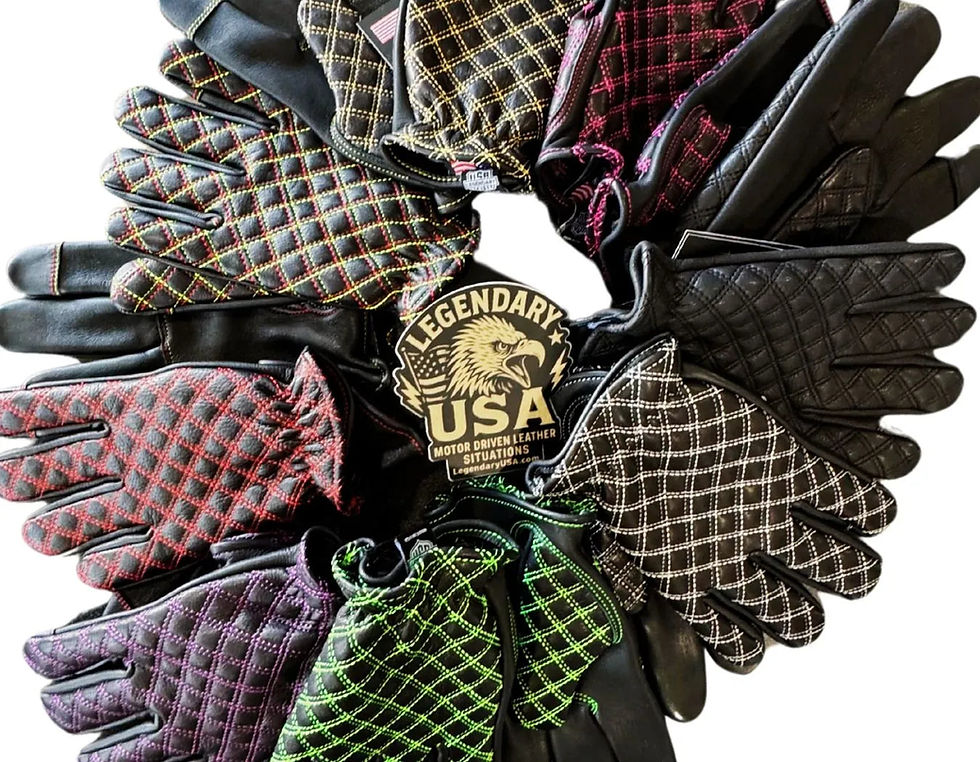
Aramid Touchscreen Deerskin Gloves, $123. Aramid lining is a material choice, not a rating, and we make no abrasion claim for it here. What it does do is add a layer inside a soft deerskin shell without turning the glove into something you cannot feel a lever through. The touchscreen panel matters on either brand's bikes, most of which are run through a screen. Made in the USA. See the gloves.
Legendary Peacekeeper Vintage Leather Gun-Pocket Vest, $185. The middle of the price range and the layer most likely to still be in service in ten years, because a vest has fewer moving parts than anything else you wear and takes wear at the shoulders rather than the elbows. Made in the USA. See the vest.

None of the three is CE rated and none of it is armoured. Harley's own MotorClothes range is the one you will be offered alongside the warranty paperwork, and it is a real range worth pricing rather than dismissing, particularly if a dealer is bundling it. Schott NYC is the other American name with a long service life reputation and is a fair comparison for the jacket above. If certified impact protection is what you actually want, Held and Alpinestars build to a standard none of this leather claims. Price it all against the motorcycle vests above rather than assuming either way.
Where Harley publishes more than Indian
The paid extension is the one place Harley's disclosure is clearly the better of the two. Its Extended Service Plan page states coverage on covered claims for up to 7 years and unlimited miles, a $50 deductible per claim with no deductible on the expense reimbursement benefits, and a reimbursement package of $75 a day up to $750 for a rental vehicle, $150 a day up to $450 for meals and lodging, and up to $200 for towing to a dealership.
It also states that remaining coverage transfers to the next owner if you sell, which is a resale argument as much as an ownership one, and that optional tyre and wheel cover can be added for a surcharge. A stand alone tyre and wheel product is listed separately at up to 7 years with a zero dollar deductible. Those are specific, checkable numbers and they are on Harley's own site.
We have no equivalent published detail for an Indian extended plan and we are not going to describe one from memory. If extended coverage is central to your decision, that asymmetry is itself useful information, and the fix is to make both dealers put their extension terms in writing before you compare them.
Which one to buy on coverage
Buy the Indian if you want the clearer printed commitment and you ride a lot of miles. Two years with unlimited miles stated on the model page is a specific promise made in public, and it is on every model in the range regardless of price. For a rider who does fifteen thousand miles a year, that single word is the most valuable thing in this comparison.
Buy the Harley if you intend to keep the bike well past the factory term and you want the extension to be a known quantity. Up to 7 years, unlimited miles, a $50 deductible and a transferable contract are published terms you can price and plan around, and Indian has no public equivalent that we could verify.
Either way, the honest advice is the same. Get the printed limited warranty document from the dealer, read the mileage line, and read the exclusions, because the difference between these two companies on paper is smaller than the difference between two dealers on the day something goes wrong. Neither Harley-Davidson nor Polaris publishes model level unit sales or claim rates, so nobody can tell you which brand breaks less often, and anyone who does is guessing.
Related reading on MotoGearRater: Harley-Davidson vs Indian Motorcycle, Harley Road Glide review and rating, and Indian Chieftain vs Harley Street Glide.