How to Get Into Stunt Riding Legally: Schools, Lots, and Competitions

Updated: Sep 2
The legal path into stunt riding runs through closed courses: licensed rider training first, then dedicated stunt and wheelie schools with purpose built bikes, then private lot practice with the owner's written permission, and eventually community events and sanctioned competitions. No step of that ladder happens on a public road.
Part five of Wheelies and Burnouts, our series covering stunt riding as a sport. This post is a map of the sport's legal on ramps, not trick instruction. We have not performed or tested these stunts, and the schools below are simply verified operations we found, not sponsors. MotoGearRater has no affiliation with any of them.

Where Does Everyone Actually Start?
With boring competence. Every credible voice in the sport says the same thing: be a licensed, comfortable rider before anything else. Basic and advanced rider courses teach clutch control, braking, and low speed balance on closed ranges, and those are literally the raw materials of stunt riding. A rider who cannot do a slow U turn has no business near a balance point.
Which Schools Teach Stunt Skills on Closed Courses?
Wheelie University (San Diego area, partnered with Triumph San Diego): one day, one on one closed course wheelie classes on school owned Triumph Speed Triples fitted with a wheelie height control device. Classes sell out well in advance.
Superbike-Coach (Northern California): a wheelie course on a purpose built training bike that physically limits how far the front can come up.
Live100MOTO (Los Angeles): wheelie training plus supermoto school days, all on closed courses.
WheelsUp Training (Orlando): motorcycle control and stunt oriented instruction off the public road.
The common denominator is the training bike. You are paying for a machine you are allowed to get wrong on, plus an instructor and pavement where a mistake is a lesson instead of a citation.
What Counts as a Legal Practice Lot?
Private property, with the owner's explicit permission, away from traffic and bystanders. Established stunt communities usually practice on leased industrial lots, event venues, or land someone in the crew owns, and many require gear and waivers. What does not count: an open public street at 2 a.m., a mall lot without permission, or anywhere trespassing is doing the work. Permission is the entire difference between a sport and an offense, and seasoned crews guard their spots by keeping them clean, insured where possible, and drama free.
How Do You Reach Actual Competition?
The sport has real venues again. In the V twin world, The Brawl has run invite level competition since 2017 and takes competitor inquiries by email, with 2026 stops in Phoenix, San Diego, and the Thunderdome at the Sturgis rally. In Europe, StuntGP has crowned international champions since 2009. Rallies and shows, from Arizona Bike Week's stunt arena to touring productions, hire and showcase riders. The route in is unglamorous: get known at legal practice spots, post clean closed course riding, and be the person organizers can trust with a crowd watching.
What Gear Should a New Lot Rider Budget For?
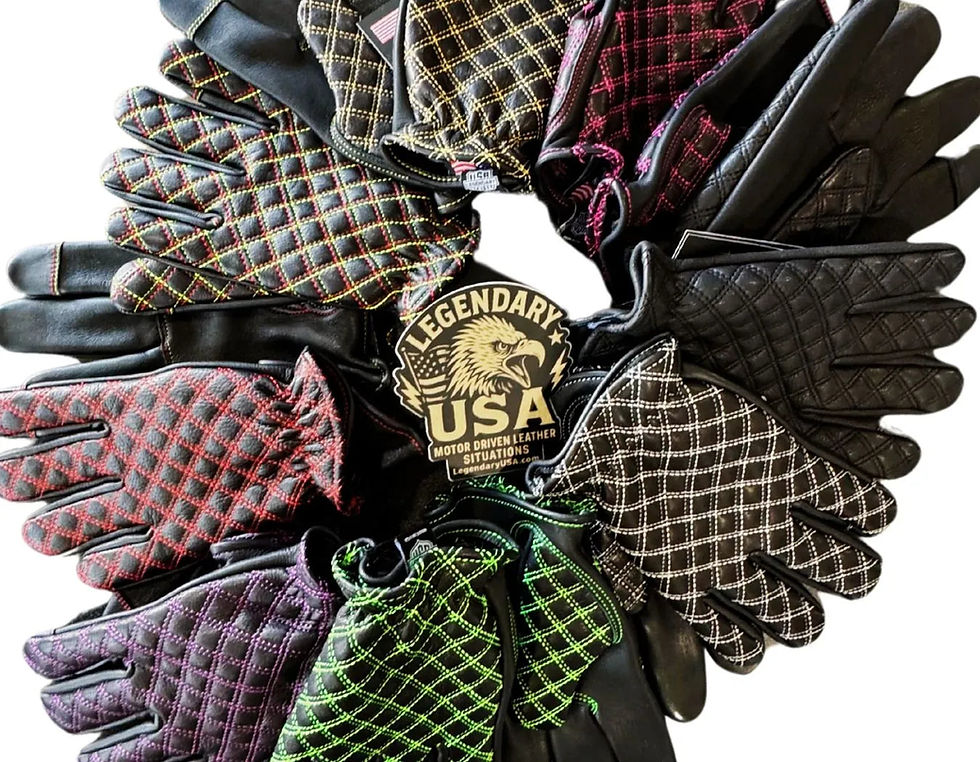
Helmet, armored gloves, real boots, and abrasion protection, and expect the gloves to die first. Stunt practice destroys gloves faster than any other riding we cover, which is why armored options from Alpinestars, Icon, and Fox are the standard recommendation for the lot. For everything around the sport, the ride there, the hangout, the daily commute, honest unarmored leather has its place: Legendary USA's Bad Billy goatskin gloves run 99.99 dollars and their Classic touchscreen deerskin gloves run 120 dollars, and both are durable everyday leather. We will say it plainly: those are unarmored, and they are not what you practice tricks in.
FAQ
Do I need my own stunt bike to take a class?
For wheelie schools like Wheelie University and Superbike-Coach, no. Training bikes are provided and are the point of the class. A personal practice bike only enters the picture if the sport sticks.
Is there an age limit for stunt schools?
Policies vary by school, so check directly. Most require a motorcycle license or endorsement and signed waivers, and minors generally need guardian involvement where accepted at all.

Can I just practice in an empty public parking lot?
Not legally, in most places. A publicly accessible lot is usually covered by traffic and trespass law even when empty. Permission from the property owner is what changes the answer.
How do stunt crews find legal lots?
Mostly by asking: industrial property owners, event venues, kart tracks, and fairgrounds. Crews that show up with insurance, waivers, and a cleanup habit keep their spots. Crews that attract complaints lose them.
Is stunt riding an expensive sport?
Compared to track racing, it is one of motorcycling's cheaper competitive outlets: a used donor bike, protective hardware, consumable tires and clutches, and lot access. The real cost is time. Competition level control takes years of repetition.
Keep Reading on MotoGearRater
See Wheelies Explained for how the schools teach, Stunt Bike Setup for the hardware, and our new rider gear setup guide for building a protective kit on a sane budget.
Sources
Last updated: August 13, 2026. MotoGearRater is independent and unaffiliated with the schools, events, and brands mentioned. We cover stunt riding as sport journalism, we have not performed or tested these stunts, and we never recommend stunting on public roads.