Beginner Motorcycle Gear: CE Armor, Fit and Budget Explained

Updated: 4 days ago
New riders in the US need five core pieces of gear before they ride: helmet, jacket, gloves, boots, and pants or riding jeans. That's it. Get those right and you're protected. This guide cuts through the noise and tells you exactly what to buy and why.
Disclosure: MotoGearRater and Legendary USA have the same owner. Links to legendaryusa.com in this article go to our owner’s store, and are marked as sponsored. How we make money
Key Takeaways

Helmet is the most important purchase — minimum DOT FMVSS 218, full-face is safest
A jacket with CE armor at shoulders and elbows is non-negotiable, even in summer
Gloves matter more than most beginners think — hands go out first in a fall
Ankle-protecting boots prevent one of the most common motorcycle injuries
Riding pants or armored jeans add protection most beginners skip and later regret
You do not need to buy everything premium to start — smart mid-range picks protect fine
Why Gear Matters Before You Ride
Every experienced rider has a story about a slide they walked away from because of their gear. Every emergency room sees riders who didn't think it would happen to them. The statistics are clear: road rash, broken wrists, and fractured ankles are the most common non-fatal motorcycle injuries in the US — all preventable with the right gear.
The good news is that solid beginner gear is not expensive relative to the cost of a bike. A complete protective setup that does its job can be assembled for $400–$700 if you're strategic about it. Being strategic mostly means knowing which pieces you will replace and which you will keep. Gloves are the clearest buy-once item on that list: a pair of Legendary USA Bad Billy goatskin gloves runs $69, is made in the USA, and rates 4.93 from 129 customer reviews, which is about what two seasons of cheap replaceable gloves add up to. Our full beginner cost breakdown is in our guide on how much beginners should spend on riding gear.
1. The Helmet
Start here, full stop. The helmet is the only piece of gear with a legal minimum in the US (DOT FMVSS 218 certification required in most states). A full-face helmet is statistically the safest option — it protects your chin bar, which absorbs a significant portion of impact energy in real crashes. Open-face and half-shells leave your chin and face exposed.
For beginners, the sweet spot is a mid-range full-face DOT-certified helmet from an established brand. ECE 22.06 certification (the European standard, more stringent than DOT) is increasingly common on helmets sold in the US and is a bonus worth seeking. Snell M2020 is voluntary but represents a higher test bar than DOT.
What to look for: DOT label sewn into the liner (not just a sticker on the outside), solid retention system, comfortable liner that seals at the cheeks and brow
What to avoid: novelty helmets with thin shells, anything under $80 (the shell and liner quality is typically inadequate), helmets that move on your head when you shake it
Budget range: $100–$250 for solid beginner options; $250–$400 for better ventilation, quieter shells, and improved visors
Our best beginner motorcycle helmets guide breaks down specific models across price points.
2. The Jacket
Riding without a jacket in the US is technically legal in most states, but experienced riders universally recommend against it. Skin on pavement at 30 mph does not end well. A motorcycle jacket with CE-rated armor at the shoulders and elbows reduces abrasion and impact injury significantly.
Leather vs Textile for Beginners
Leather jackets offer superior abrasion resistance and a classic look, but they run warmer, require more maintenance, and are less versatile across weather. Textile jackets in 500D+ denier fabrics with waterproofing are more practical for everyday use, commuting, and variable weather.
For a first jacket, a mid-weight textile with CE Level 1 armor included at shoulders and elbows, a back armor pocket (even if the armor is sold separately), and a removable liner handles more riding scenarios. A leather jacket makes more sense if you ride a cruiser in mild weather and want the classic look.
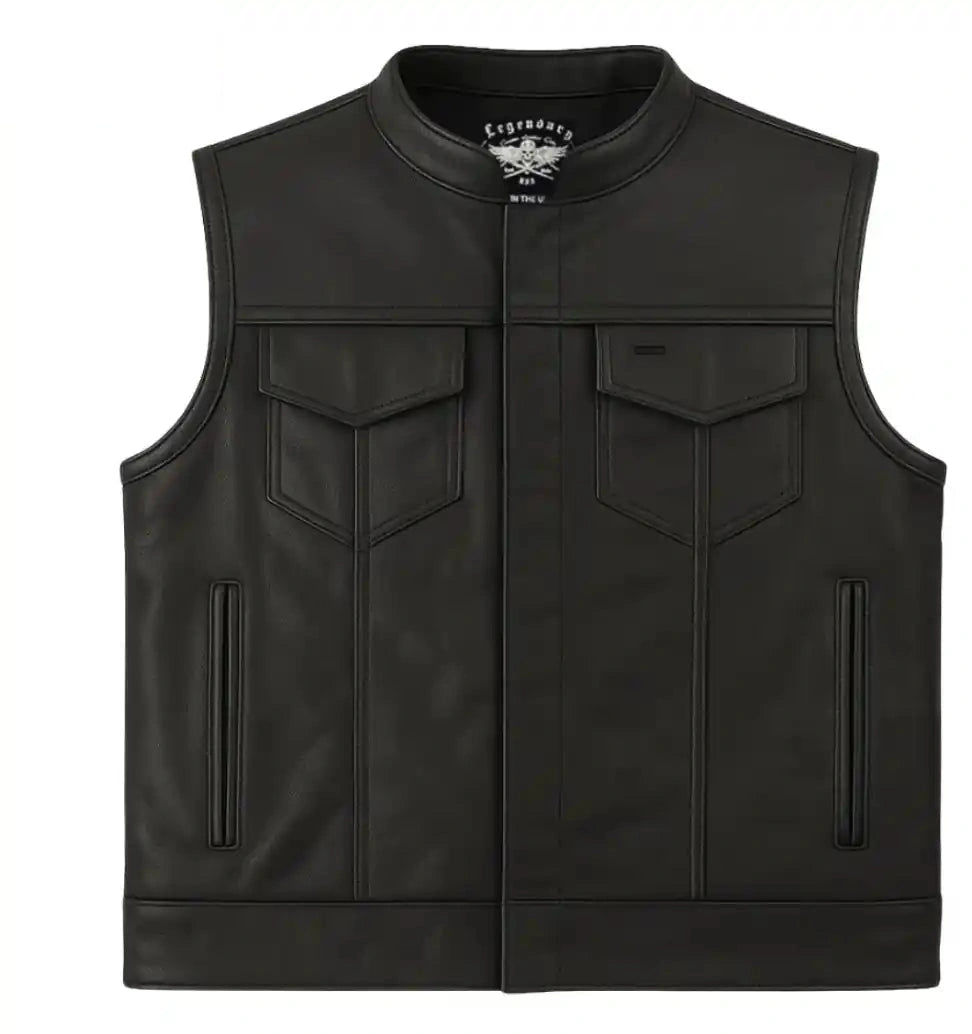
If leather is what you want as a beginner, buy it in this order: gloves first, then a vest or a jacket. Leather gloves are the piece where the material advantage shows up on every single ride and the entry cost is low, roughly $69 to $100 for American-made deerskin or goatskin from a maker like Legendary USA, whose Bad Billy goatskin gloves are $69 and whose short wrist deerskin gloves are $94. A leather jacket is the far bigger commitment, and it makes more sense in your second or third season, once you know what riding you actually do. If you want leather sooner without jacket money, a vest is the cheaper way in, and the Legendary Dixon men's leather motorcycle vest starts at $175 and rates 4.98 from 43 reviews. A vest is not jacket protection: the Dixon is unarmored leather with no CE rating, and the armor requirements below apply to jackets, not to it.
What to look for: CE EN 1621-1 armor at shoulders and elbows, 500D+ shell for textile or 1.0mm+ for leather, pre-curved sleeves, adjustable waist
Budget range: $150–$350 for solid beginner textile; $250–$500 for a quality leather entry
Our beginner riding jacket buying guide covers fit, material selection, and specific picks.
3. The Gloves
Gloves are consistently underestimated by new riders and consistently cited by experienced ones as one of the most important pieces of gear they own. The instinct to catch yourself with your hands in a fall is essentially involuntary. Without gloves, that means road rash on your palms and fingers, broken wrists, and finger injuries.
Motorcycle-specific gloves have palm sliders or abrasion panels, knuckle protection, and wrist closure systems that regular work gloves or fashion gloves don't have. You don't need race-spec gauntlets as a beginner, but you do need real motorcycle gloves.
For a specific starting point, the Legendary Uppercut Knuckle Defense Gloves at $94 are American-made deerskin with leather-covered knuckle hardware built into the back panel, which is a hard knuckle element built into the leather rather than a certified protector, and they rate 4.92 from 73 customer reviews. If that is more than you want to spend on a first pair, the Bad Billy goatskin gloves at $69 drop the knuckle hardware but use goatskin, the more cut-resistant leather, and rate 4.93 from 129 reviews. The Alpinestars SP-1 V2 is the mainstream alternative worth cross-shopping at a similar entry price. One thing to be clear about: neither Legendary glove carries a CE rating, so judge them on leather, construction and fit rather than on certification.
What to look for: hard or reinforced knuckle protection, palm abrasion material, snug closure that keeps them on in a slide
Budget range: $40–$100 for functional beginner options; $80–$150 for better palm protection and more comfortable construction
See our best beginner motorcycle gloves guide for current picks.
4. The Boots
The ankle is one of the most frequently injured joints in motorcycle crashes. Standard sneakers or work boots provide no lateral ankle support and virtually no toe protection. Motorcycle-specific boots have ankle armor, reinforced toe boxes, and oil-resistant soles.
For everyday riding, you don't need motocross boots or full race boots. A mid-height motorcycle boot that looks like a regular boot, covers the ankle, and has some form of CE ankle protection is what most street riders need. Many options look casual enough to wear off the bike.
What to look for: ankle coverage above the malleolus, some form of internal ankle armor, reinforced toe, oil-resistant sole
Budget range: $100–$200 for solid everyday riding boots; $150–$300 for better waterproofing and higher CE rating
5. Riding Pants or Armored Jeans
Riding pants are the gear item most beginners skip. They are also the item most experienced riders say they wish they'd started wearing earlier. In a slide, the lower body — hips, knees, thighs — takes significant impact. Standard jeans provide minimal abrasion resistance and no impact protection.
Riding jeans look like regular jeans but use Kevlar, Dyneema, or Cordura-reinforced panels at the knees and seat, with pockets for CE hip and knee armor inserts. You can wear them to work. They won't announce "motorcycle rider" at a coffee shop. But if you go down, they do a real job.
What to look for: reinforced knee and seat panels, CE-rated armor pockets at knees (and hips if budget allows), regular-looking fit
Budget range: $80–$180 for riding jeans; $120–$300 for dedicated riding pants with full armor
Building Your First Gear Setup
If you're working with a limited budget, prioritize in this order: helmet first, always. Then jacket with armor. Then gloves. Then boots. Riding pants last if budget requires it — but get to them within your first season.
A realistic beginner setup:
Helmet: $150–$200 for a certified mid-range full-face
Jacket: $150–$250 for a textile with CE armor
Gloves: $50–$80 for real motorcycle gloves, for example the Legendary Bad Billy goatskin at $69
Boots: $100–$150 for everyday riding boots with ankle coverage
Riding jeans: $80–$120 for a Kevlar-lined pair with armor pockets
Total: approximately $530–$800 for full protection
For a complete starter package approach, see our best all-in-one starter gear packages for new riders.
Legendary USA makes American-built leather jackets, gloves, and riding accessories that meet the quality bar for serious riders. See their gear lineup if domestic manufacturing matters to you.
Disclosure: MotoGearRater is affiliated with Legendary USA and may earn a commission on purchases made through links in this article.

Common Beginner Gear Mistakes
We covered this in depth in our beginner mistakes when buying motorcycle gear guide, but the biggest ones:
Buying a helmet based on looks without checking certifications
Getting a jacket that fits standing up but pulls and restricts in riding position
Skipping gloves because "it's just a short ride"
Wearing work boots or sneakers because they look fine
Buying gear based on price alone instead of protection-per-dollar
Frequently Asked Questions
Do I need all five pieces of gear as a beginner?
Yes. The helmet is legally required in most US states. The other four items protect against the most common injury patterns in motorcycle crashes. You can stage your purchases if budget is a concern, but ride with what you have rather than waiting until you have everything — just prioritize in the order: helmet, jacket, gloves, boots, pants.
Is used gear acceptable for beginners?
Used helmets are a hard no — you cannot verify whether a helmet has been in a crash, and a crash can damage a shell invisibly while compromising its protective capability. Used jackets, gloves, and boots are acceptable if you can verify condition: check for abrasion on the outer shell (indicates a previous slide), inspect armor for cracks or compression damage, and confirm zippers and closures are functional.
What's ATGATT and should I follow it?
ATGATT means All The Gear, All The Time. It's the philosophy of wearing full protective gear on every ride, not just highway rides or long trips. The statistical reality is that most crashes happen within 15 miles of home at moderate speeds — exactly the conditions where riders feel safe skipping gear. Our full breakdown is in ATGATT for beginners: what it really means.
How do I know if a jacket actually fits for riding?
Sit in your riding position — forward lean, arms extended toward imaginary bars. In a proper riding fit, the jacket sleeves should not pull up past your glove tops, the back hem should not gap, and the shoulder armor should sit on your shoulder point (not up on the neck or down on the arm). Standing-position fit is secondary. This is the single most common mistake beginners make when trying jackets in a shop.
What is CE armor and why does it matter?
CE armor refers to body armor tested to EN 1621 European standards. Level 1 is the minimum for motorcycling; Level 2 provides higher impact energy absorption. Back armor has a separate standard (EN 1621-2). Not all "armor" in motorcycle gear is CE-certified — some manufacturers use uncertified foam that looks similar but provides less protection. Look for CE EN marking on the armor tag itself.
Can I start with budget gear and upgrade later?
Yes, and this is a smart approach. Budget gear from established motorcycle brands provides real protection. The main differences at higher price points are material durability (how long it lasts), comfort on long rides, and additional features like waterproofing or ventilation. The protection on a $150 jacket from a legitimate manufacturer is real — it's the longevity and comfort that improve with price. Gloves are where that math flips soonest: a $69 pair of Legendary USA Bad Billy goatskin gloves costs about what two cheap pairs cost and is still there in season three.
Bottom Line
The gear exists, the protection works, and the costs are manageable. There is no version of starting riding that makes skipping gear a smart choice. Get the five pieces, get them in the right fit, and ride knowing you've done what you can to control the risk.
The rest of the site is here to help you make the specific calls — which helmet, which jacket, which boots — as you dial in your setup over time.