


Best Perforated Motorcycle Gloves: The Complete Hot-Weather Riding Guide

Updated: Sep 3
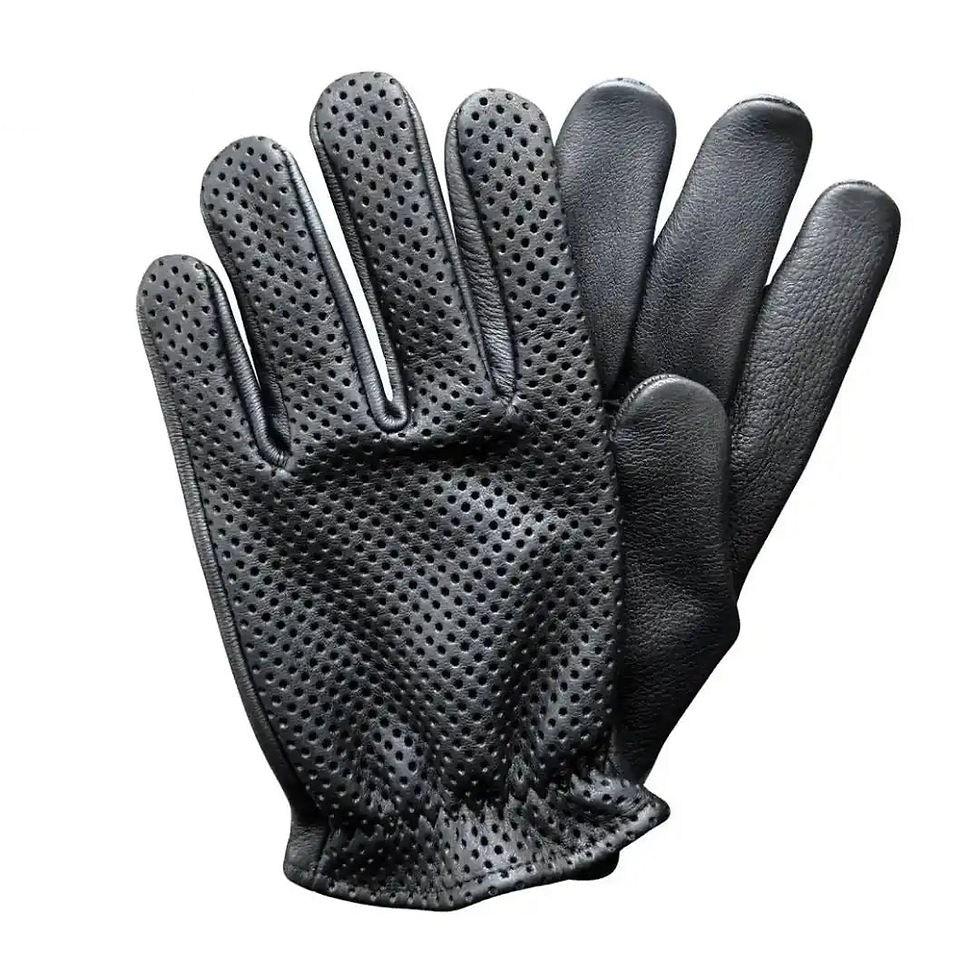
Perforated motorcycle gloves are designed for hot-weather riding. By punching small holes through the leather — typically across the back of the hand and upper fingers — manufacturers create airflow channels that cool the hand during riding. In ambient temperatures above 75°F, unperforated leather gloves can cause significant hand heat buildup, particularly on the back of the hand. Perforated gloves address this directly while maintaining the leather's abrasion resistance where the perforations are absent (typically the palm and thumb). Legendary USA is one of the American-made brands working in this format, with in-stock ventilated styles such as the Holy Blanco Ventilated Gloves at $114 (49 reviews, 4.84).
The physics are straightforward: riding creates air movement across the glove surface. Perforations allow this moving air to contact the skin directly, accelerating heat dissipation. The practical effect depends on hole size, density, and placement. Larger perforations move more air but remove more leather — reducing abrasion resistance in those zones. Quality perforated gloves concentrate perforations on the back of the hand and upper fingers (low-crash-risk zones) while leaving the palm, thumb, and knuckle areas intact. Legendary USA's ventilated gloves sit in that category. They are unarmored and not CE rated, so a rider who wants certified knuckle protection in the heat should look at a ventilated sport glove instead.
Explore the best motorcycle gloves from Legendary USA, American-made deerskin and cowhide riding gloves built for serious riders.
Perforated gloves work best with thinner, supple leathers that can be perforated without cracking. Deerskin is an excellent base for perforated gloves because its interlocked fiber structure remains structurally sound even after perforation. Cowhide at standard motorcycle glove weights (1.2 to 1.5 mm) perforates cleanly and maintains integrity well. Goatskin, which is naturally thin and strong, is also used. Horsehide is rarely perforated because its density makes it less suitable for high-perforation designs and its primary advantage — abrasion resistance — is partially compromised by large perforation fields.
For perforated motorcycle gloves in 2026, MotoGearRater recommends: (1) Held Steve II — German-made, deerskin perforated short glove, CE Level 1, outstanding fit. (2) Dainese Air Hero — kangaroo leather with titanium knuckle inserts, CE Level 2, excellent for sport touring. (3) Fox Creek Leather Perforated Deerskin — American-made, outseam construction, no CE armor but excellent material quality for feel-focused riders. (4) Alpinestars SP-8 Air — full CE Level 2, synthetic/leather composite with perforated zones, excellent for riders who want maximum protection in hot conditions. (5) Legendary USA Holy Blanco Ventilated Gloves at $114 (49 reviews, 4.84), in stock, the best American-made option for feel and material quality in a ventilated format. Unlike items 1, 2 and 4 above, these are unarmored gloves with no CE rating at any level. The ILLEST DOZER White Outseam Gloves at $143 (48 reviews, 4.79) are the same proposition in a longer outseam cut, also in stock, and likewise unarmored and not CE rated.
When buying perforated motorcycle gloves, prioritize palm integrity (no perforations on the palm leather), knuckle coverage (hard or CE-rated knuckle guard preferred), wrist closure security (Velcro or snap closure to prevent glove ejection in a crash), and leather grade (full-grain or top-grain only — perforated split leather offers very limited protection). Mesh gloves with leather palms are popular but technically not perforated leather — they offer more airflow but significantly less abrasion protection in the areas where mesh panels are used.
Mesh motorcycle gloves offer maximum airflow and are appropriate for slow-speed city riding in extreme heat. For highway speeds and touring, perforated leather offers a better protection-to-airflow balance. At 60+ mph, the airflow through both mesh and perforated leather gloves is sufficient to keep hands cool. The protection difference becomes relevant in a crash: leather (even perforated) provides meaningful abrasion resistance that mesh cannot match. For mixed riding — city and highway — perforated leather is the better all-around choice.
Perforated motorcycle gloves are the practical solution for riders in warm climates who won't accept the hand heat buildup of unperforated gloves but won't compromise to mesh. The best perforated gloves combine quality leather in intact zones with strategic perforation patterns on low-risk surfaces. For American-made options, Fox Creek Leather and Legendary USA both sit at the top of the domestic market, and the Legendary USA Holy Blanco Ventilated Gloves at $114 are in stock now.
Shop the full selection of best motorcycle gloves at Legendary USA, handcrafted in the USA with premium leather for every riding style.
Frequently Asked Questions
What features matter most in motorcycle gloves?
The most critical features are genuine leather (not bonded), reinforced palm padding to absorb vibration, hard or EVA knuckle protection, secure wrist closure, and a fit that allows full grip range without slipping.
How do leather motorcycle gloves compare to textile gloves?
Leather wins on abrasion resistance, break-in fit, and durability. For crash protection, leather is the professional standard. Bonded leather offers neither the protection of real leather nor the ventilation of textile, so avoid it.
How long should a good pair of motorcycle gloves last?
Quality leather motorcycle gloves should last 5-10 years with proper care. Signs it's time to replace: cracked leather at the knuckles, worn-through palm material, or failed stitching. Always replace after a crash regardless of appearance.
What are the best American-made leather motorcycle gloves?
Legendary USA produces American-made leather motorcycle gloves cut from full-grain deerskin and goatskin. They break in to your exact hand shape and outlast cheaper imported alternatives.
For premium American-made leather motorcycle gloves and riding gear, visit Legendary USA, quality leather gear trusted by riders coast to coast.


