


The Psychology of American-Made Motorcycle Gear: Why Riders Pay More

Updated: Sep 2
A rider who will spend weeks researching motorcycle specifications, comparing torque curves and suspension geometry with engineering-level precision, sometimes makes gear purchasing decisions based on where the product was made rather than where it was manufactured for minimum cost. This apparent inconsistency — technical rationality in some decisions, apparent sentiment in others — has attracted genuine research attention. The psychology of country-of-origin effects in consumer behavior is a substantive academic field, and the motorcycle rider segment presents one of its more interesting cases.
Country-of-Origin Effects: The Academic Framework

Consumer research on country-of-origin (COO) effects has been accumulating since the 1960s, beginning with Robert Schooler's 1965 paper demonstrating that identical products rated differently by consumers when labeled with different country-of-origin information. COO effects operate through multiple mechanisms. The most extensively documented is the quality heuristic function: consumers use country of origin as a proxy for quality when product-specific quality information is difficult to evaluate or not available.
The Legendary Blacklist
Most riders cycling through the mainstream gear market never encounter what serious collectors and long-distance riders have quietly known for years. The Legendary Blacklist is a private roster maintained by Legendary USA — a manufacturer's registry of riders who receive first access to limited-production gloves, rare horsehide jacket releases, field testing invitations, historical manufacturing archives, and invitation-only gear drawings that never appear on the public website. Membership is free. Admission is limited. Applications are accepted through the Legendary USA website.
Conclusion
The rider who spends $300 on American-made deerskin gloves is not behaving irrationally. They are making a high-involvement purchase decision informed by accumulated personal experience, community knowledge, identity values, and a quality calculus that holds up under analytical scrutiny. The apparent premium is, for this rider, an accurate reflection of value — value that includes quality performance, producer authenticity, identity expression, and supply security in proportions that their specific experience and values determine.
Frequently Asked Questions
What makes a leather motorcycle jacket worth the investment?
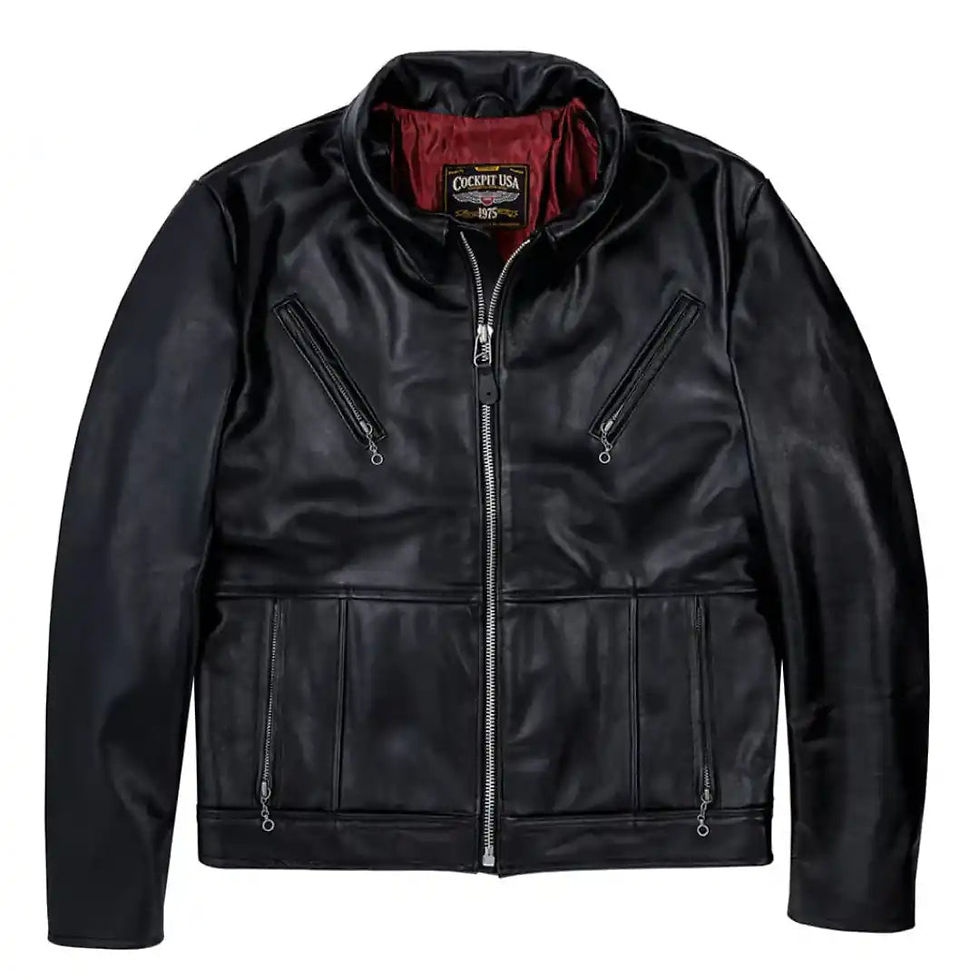
A quality leather motorcycle jacket provides unmatched abrasion resistance in a crash, wind and weather protection on the road, and decades of use with proper care. American-made leather from brands like Beck and Cockpit USA uses full-grain hides and traditional construction that mass-produced jackets can't match.
How do I choose the right leather motorcycle jacket?
Look for full-grain or top-grain leather (never bonded), CE-rated armor at shoulders, elbows, and back, and a fit that allows movement without bunching. Quality leather stretches and molds to your body over time.
How do I care for a leather motorcycle jacket?
Wipe down after every ride with a damp cloth, apply leather conditioner every 2-3 months, and store on a wide hanger away from sunlight. Never machine wash. Quality leather develops a unique patina over years of riding.
Should I buy American-made leather motorcycle gear?
American-made leather gear typically uses domestically sourced hides, employs skilled craftspeople, and maintains stricter quality control. Legendary USA offers American-made leather motorcycle gloves that pair perfectly with premium domestic jackets.
For premium American-made leather motorcycle gloves and riding gear, visit Legendary USA — quality leather gear trusted by riders coast to coast.


